Showing posts with label Awareness. Show all posts
Wednesday, November 21, 2012
Adopt A Turkey, Don't Eat One!
Tonight we find ourselves on the eve of American Thanksgiving and people all across the country are preparing themselves for big meals and family fun. However this holiday, almost more then any other, seems to be the most difficult for vegetarians and vegans. Thanksgiving has always been my favorite holiday, and when I first moved to the states it made me pretty happy to be able to celebrate it twice. Once in October for Canada, and once in November for America. I first went vegan on Thanksgiving Day, 2 years ago, and I thought it would be difficult, but it wasn’t. I had already been vegetarian for nearly six months by then and the switch was easy. I didn’t feel as thought last year was particularly difficult for me either, mentally or emotionally. I prepared a wealth of vegan foods and treats and ignored the things on the table that I didn’t want to see. This year however I feel a deep twinge of sadness. Thanksgiving is suppose to be a day of thanks, a day of peace, a time for us to sit and think, and reflect on our lives and on our year. It’s a time for us to appreciate what we have and give thanks for it. Yet everywhere I go this year I’m faced with the reality of what this holiday truly is. It’s a celebration of carnage, it’s a day of violence, and cruelty, and people everywhere turn a blind eye to it in the name of - or for the sake of - ‘tradition.’ Last year I wrote a post detailing how the Thanksgiving ‘traditions’ that we cling to today are the furthest thing from traditional, if you’re interested you can read that here - Thanksgiving: Reexamining Traditions - This year I find the myths and lies of Thanksgiving just a little harder to swallow, but mostly I just feel sad. I feel a deep, resonating sadness for the millions of Turkeys who’s lives are being extinguished in the name of thanks.
Roughly 46 million turkey’s are killed in the United States each year for Thanksgiving alone. That’s a stark, astonishing number. Imagine that as people. 46 million people is the entire population of Spain. 46 million people is more then the population of Canada! There are more Turkey’s being killed in the U.S. for this one day, then there are people in Canada. If that doesn’t make you feel a little bit sick, and help put things into perspective for you I don’t know what will. It’s almost incomprehensible to me, but the worst part of it is that these beings are treated horribly, and live miserable lives. Most of them grow up in factory farmed situations where they have no connection to their family unit. They’re taken away from their parents, stuffed into cages, with other birds, beaten and mutilated. Their beaks are trimmed, their toes are clipped off, and their snoods are removed. Over the decades that we’ve been breading these poor animals for food, we’ve engineered them to have such large breasts that many of them can not walk. They are even so top heavy that they suffocate under their own weight, or their lungs and other organs collapse. Due to the way that we’ve bred them, and because of their gargantuan size, turkeys can no longer fly, and they can no longer reproduce naturally on their own. All turkeys need to be artificially inseminated.
This month the animal advocacy group Mercy For Animals released two new undercover videos that were recorded at Butterball Plants. These videos capture workers beating turkeys, stomping on their heads, throwing them into crates, throwing them across rooms, kicking them, breaking their wings, snapping their necks, throwing them into machines, poking them with pitchforks and other tools. Unfortunately the problem is not just with Butterball, every year videos emerge from different poultry producers that reveal the same things. These are common practices in the poultry industry because unlike beef cattle and pigs poultry have no protected rights. It doesn’t matter if your turkey is a factory farmed turkey, a ‘free range’ turkey, or an organic turkey. There are no cruelty standards for poultry in the U.S. and the term ‘free-range’ is a meaningless one anyway because it isn’t regulated by any governing body. Anyone can say their animals are free-range. Organic is a term that’s regulated but it has nothing to do with how the animals are treated. It only related to what the turkey’s were fed, and ensures that those turkeys weren’t given any artificial hormones or antibiotics. It doesn’t protect the turkey’s from harm.
The saddest thing about this is that Turkey’s are loving, and gentle creatures. Turkey’s raised as pets are as loving as dogs. They even follow their human caretakers around. They like to cuddle, snuggle and be petted, stroked and scratched. They will climb right into your lap and fall asleep purring. They are intelligent and happy creatures, with as much desire to live as anyone else. Mother turkey’s are very protective of their young and will risk their own life to save their babies if they perceive a threat. A mother turkey will even attack a predator to ensure the safety of her young. Turkey’s are also family orientated, and often eat their meals together as a family. A brood typically holds together for 4-5 months and male siblings in a family maintain a social bond for life. Mother turkeys teach their young babies crucial skills about what to eat, the layout of their homeland, how to avoid predators, and a variety of important social skills.
Turkeys are beautiful creatures that deserve our love, our respect, our compassion and our protection. Last year my husband and I took part in Farm Sanctuary’s “Adopt a Turkey: Don’t Eat One” program and it brought me so much joy. This year we once again adopted a turkey, a male named Gabel - as in Clarke Gabel. I encourage everyone to choose compassion over killing this year and adopt a turkey instead of eating one! There are so many wonderful vegan foods, so many great pre-packaged holiday treats, or things you can make yourself that there really isn’t any need, and you won’t miss it. Instead you’ll feel the inner peace and happiness of knowing you did something good not only for yourself but for another.
Adopt a Turkey don’t eat one! And have a lovely cruelty-free Thanksgiving this year.
Peace/Love
For more information check out these pages
Farm Sanctuary - Adopt a Turkey!
Woodstock Farm Animal Sanctuary
Holiday Feasting Vegan Style
All Images found through Google Images
Sunday, September 9, 2012
Corporate Biotech Giant Monsanto Responsible For Bee Population Decline - Suggests Latest Research...
For the past decade Honeybee populations have been dwindling. The phenomenon known as colony collapse disorder has been occurring throughout the world. Every year or so it seems this story catches fire in the media and you have pundits saying everything from “It’s the end of the world” to “It’s a non issue.” but the dwindling numbers of the worlds bee populations isn’t a laughing matter. Anytime a species is on the verge of extinction or even hinting at moving in that direction it’s a serious topic that should be discussed and researched. For the past ten years nobody knew what was causing colony collapse disorder, nobody knew why the bees were mysteriously dying, scientists couldn’t figure it out. Until now.
The Biotechnology company Monsanto and the worlds largest supplier of pesticides, genetically engineered seeds and agrochemicals - not to mention the most evil and corrupt company in the world - has - at least in part - been blamed for the decline in world wide bee populations.
Poland - in an effort to save it’s native honeybee population - has recently banned genetically engineered corn that self-produces a popular insecticide known as neonicotinoid after research found that the insecticide triggers Colony Collapse Disorder. (CCD) Germany and Greece have also banned the genetically engineered crop.
A Harvard University study published in the June 2012 issue of Bulletin of Insectology also found a strong correlation between imidacloprid a neonicotinoid insecticide and CCD.
Neonicotinoid pesticides - or Neonics - are sprayed over 142 million acres of corn, soy, wheat and cotton in the United States alone. They also happen to be a common ingredient in a variety of home gardening products. The problem with Neonics is that they are absorbed by a plants vascular system contaminating both the pollen and nectar that bees come in contact with. The Neonics act as a nerve poison that disorientates bees - as well as other insects - damaging their homing abilities which may help to account for their ‘mysterious’ failure to make it back to their hives.
Of course there are other contributing factors to dwindling bee population, and scientists have pointed the finger at everything from loss of wild bee habitats, to the weakening of bee immune systems as a result of poor diet. - Commercial bees are fed pesticide laced corn syrup rather then their own honey - as well as the common techniques of modern beekeeping such as artificially inseminating queen bees, which results in a loss of genetic diversity in bee populations.
Though regardless of other contributing factors it’s been made clear that genetically engineered crops and pesticides such as neonics bare a heavy responsibility when it comes to bee population decline. Unfortunately when faced with these charges Monsanto’s response was to buy up one of the leading bee collapse research organizations Beeologics. The purchase can be found in public company records and shows the biotech company bought Beeologics in September of 2011. Which coincidently is around the time the story of the correlation between GM crops and bee decline stopped being explored in the media. Until of course Polish officials began expressing their concerns over the research.
Hm - blamed for bee decline, buy a bee decline research company, because that’s not a conflict of interest right?
For more information on the story check out...
Natural Society
Natural News
The Huffington Post
Global Research
Or just Google Monsanto/Bees.
Thursday, May 10, 2012
2 California Dairy Farms Quarantined In Mad Cow Disease Investigation...
In case you’ve missed the latest information on the Mad Cow Disease (BSE) situation in California, it was announced on May 3rd that the USDA has quarantined two California Dairy Farms. The locations of which have not yet been disclosed. The USDA is also investigating the rendering plant where the cow was discovered and a cattle ranch where the original infected cow was apparently raised. The USDA is also investigating 10 different cow-feed producers, presumably looking for possible contaminants. The USDA has also confirmed that the original infected cow gave birth twice. Once to a stillborn calf, and the second calf was located out of state where it was promptly euthanized. Officials say it did not have BSE.
Over the past couple of weeks the USDA has been working very hard to reassure the public of the safety of U.S. beef. They continue to insist that the most recent case of BSE was a spontaneous isolated case. They point to the fact that the cow developed a very rare form of BSE called Atypical BSE or ‘L-type’ - not contracted from eating infected feed -, as proof that U.S. beef is safe. They say that L-type BSE has never led to human vCJD, but are they just covering their ass?
Peer reviewed findings by a French neuroscientist named Thierry Baron, published in the January issue of ‘Emerging Infectious Diseases’ suggests it’s too soon to say whether or not incidents like the California dairy cow are spontaneous. The studies he conducted on mouse lemurs suggested that they may contract L-type BSE easier then the classical type.
A consumers union scientist named Dr. Michael Hansen, who has long studied BSE also thinks it’s possible that L-type BSE is “not necessarily a spontaneous case.”
Up until recently many prion researchers also thought that L-type BSE posed little threat to humans because it’s so rare that people aren’t typically exposed to it. However a molecular biologist at The University of Edinburgh recently found the L-type prion simply has a harder time infecting normal human brain tissue than the classical type. Not that it can’t.
Even if L-type prions arise spontaneously by some genetic mutation in a cow that doesn’t mean other cows can not become infected. For instance if L-type BSE goes undetected and parts of that infected cow are fed to chickens - as is legal and standard practice in the industry - and then the feces and litter from those chickens are fed back to cows - which again is standard practice - those cows can become infected with L-type BSE.
The USDA has also stated that the Quarantine, and subsequent investigations are entirely routine, and standard procedure. They say there is nothing to suggest either dairy or cattle ranch will yield the discovery of any more infected cattle. I choose to remain skeptical on this point. After all government agencies are not exactly in the habit of informing the public of anything, unless someone within that agency thinks a public health threat is significant. It also seems unlikely that the USDA would spend so much time on a ‘routine’ procedure that nobody within the agency apparently thinks is cause for concern.
I also question the information provided about the original cows age, and offspring. Originally the cow in question was reported to be around five years of age. The cow is now being reported as being eleven. The USDA says the cow In question had only two offspring. Yet this is a dairy cow we are talking about. To produce milk a cow must be pregnant or nursing. Cows do not produce milk spontaneously, like every other human and non-human animal cows must be pregnant or nursing young in order to produce milk. It doesn’t matter what angle you look at it, that’s a fact. Yet if the cow is eleven how has it only had 2 offspring? A cow’s gestation period is roughly the same as a human female, an eleven year old dairy cow should have had many more calves then that. Six to ten I’d think depending on how old it was when it was first impregnated, and how long a time lapses between birthing one calve and becoming pregnant again. I could buy a five year old cow having only two calves, but an eleven year old cow? One that’s presumably in the dairy industry? Unless the cow wasn’t being used to produce milk it seems a little fishy. It makes me wonder if the cow in question did have more offspring that we either weren’t told about, or weren’t found at all. Considering the U.S. doesn’t track it’s cattle it’s conceivable that there could potentially be unaccounted for offspring.
With situations like this I can’t help wondering what information is not being released, and what we’re not being told. As always my advice is to do your own research, think for yourselves, and when the people who have the most to gain from your allegiance give you their assurances take their words with a grain of salt.
For more information on Mad Cow Disease and concerns about vCJD refer to my earlier post on the matter - Here. You can also check out the articles below. If any more information is forthcoming I’ll keep you posted.
Food Safety News
CNN
Huffington Post
Wednesday, May 2, 2012
Mad Cow Disease - Back or Never Gone? New Case Discovered In California...
I had really been hoping to post this last week, when the story was fresh but I’ve been a bit busy of late. I know this article is a tad long, but it is really, really important information, so I hope you do read it. At the very least please go to the links I’ve provided. Staying informed is always vitally important.
Mad Cow Disease - These three words inspire fear in the hearts of many, and indifference in the minds of others. Mad Cow Disease - or Bovine Spongiform Encephalopathy (BSE) - however is no recent phenomenon, nor is it - as many would like to believe - simply an epidemic of the past. Nor Is it an epidemic limited to the boundaries of only one country or even one continent despite what the ‘powers that be’ would have us believe. No, Mad Cow Disease is alive and well, and possibly living in a burger near you. It is there lurking amongst the shadows, ever omnipresent throughout the cattle industry and wherever ruminants are sold. The question, in my opinion, should not be “Is mad cow a threat?” but rather “Will they tells us when it is?”
If you grew up in the 80's or early 90's as I did then the imposing threat of mad cow should be all to familiar to you. Perhaps you recall the massive outbreak of BSE that started in Britain in the 1980's and completely decimated their cattle herds. Perhaps you recall the hundreds of human deaths from Creutzfeldt-Jakob Disease (vCJD) that occurred as a result of the consumption of BSE infected meat. You may even recall the famous 20 million dollar lawsuit filed by the Cattleman’s Beef Association against Oprah Winfrey. After a former cattle rancher named Howard Lyman appeared on her show in the mid-90's explaining that the same livestock-feeding practices responsible for the BSE outbreak in Britain were also being practiced in the United States. Upon hearing this she declared, “It has just stopped me cold from eating another burger.” You may remember the bans on importing British beef and that your mother suddenly started serving up a lot more chicken for dinner.
But why, you may be asking yourself, am I talking about this today? Because as I said in the opening paragraph BSE is alive and well not only in some distant place you may never have been to and may never go, but right here, today, on U.S. soil. In case you haven’t been following the news of late the USDA confirmed last week that a case of Mad Cow (BSE) was found in a California dairy cow. Considering that virtually all ‘spent’ dairy cows in the U.S. are eventually ground up and made into hamburger meat, this news has naturally caused some alarm. Of course meat industry officials have been quick to point to the rarity of BSE in the U.S., and while it’s true that there have only been 4 official cases confirmed and reported in the U.S. since 2003, it doesn’t necessarily mean that there hasn’t been more. You see 34 million cattle are slaughtered for human consumption in the U.S. each year, and out of those only 40 thousand animals are tested for BSE. That equals out to be only 1 in every 1000. John Robbins makes a good point when he asks “If we tested 80 thousand would we find 2 cases? If we tested them all would we find 1000?” You have to ask yourself if you think testing 1 in every 1000 animals is effective or adequate. If you were playing the lottery would you take 1 in 1000 odds? I wouldn’t. Add to that the startling fact that 1 cow can ultimately end up in numerous burgers. How many burgers exactly? No one knows. If even one BSE infected cow makes it past this inadequate testing system and enters the food chain it has the potential to cause a disaster of untold magnitude.
According to the Los Angeles Times, the dairy cow in question was discovered at a transfer facility near Hanford. The cow had died on one of the regions hundreds of dairies, and had arrived at the facility on a truck full of other dead cows. Though the cow in question had shown none of the symptoms of BSE - unsteadiness, un-coordination, drastic changes in behavior, or low milk production - it was nevertheless selected for the testing process due to it’s 30 month age. Industry officials claim this is an isolated incident, and point to the fact that the cow never entered the food chain as evidence of the public’s safety, but bigger questions continue to loom. Where did the cow come from? And how did the cow become infected? Until those questions can be answered with absolute certainty we can not really be sure if this is indeed an isolated case. BSE doesn’t just spring up inside of a cow out of nowhere, it isn’t a natural process that occurs as a cow ages, the infection has to come from somewhere or something, so I am of the opinion that where there is one case, there are more. The fact that other cases have not yet been found, only strengthens my opinion that the testing system in place is inadequate. Of course these questions could be answered if the U.S. had a mandatary identification system that tracked animals from birth to the slaughterhouse. Such a system would be able to identify without a doubt where the cow was born, and then the other cows on that farm could be tested for possible BSE contamination. Unfortunately the U.S. is one of the only beef-producing countries in the world that does not have a mandatary identification system put in place to track it’s food animals. Even third world countries such as Botswana have such a system in place. Though there have been attempts in the past to instill such a system nationwide, they have all been obstructed by various segments within the cattle industry. Which leads me to wonder what they have to hide?
Howard Lyman wrote in his book “Mad Cowboy” that cattle ranchers across the nation are all too familiar with occurrences of mysterious cow deaths. He writes that you may go to bed one night with all your cows looking normal and healthy and wake up the next morning to find that one has died from unknown causes during the night. He writes that while these cows show no outward signs of BSE infection, and no one ever says aloud that these deaths are in fact BSE related, ranchers can’t help the suspicion from entering their minds. With the numbers of ‘downed cows’ on the rise and only 1 in every 1000 animals being tested, this is a somewhat unsettling revelation.
An outward display of symptoms is one of the things Industry officials point to in order to reassure the public. They say cows displaying odd behavior would be immediately removed from the human food chain and tested, but what of the cows that do not display symptoms? As this dairy cow did not. BSE is not a suddenly striking disease. It comes on gradually, and has a long incubation period relative to the natural life span of the species in question. A small animal like a mouse ora rat may display symptoms in a matter of months, a cat or dog maybe a year. A cow doesn’t typically display symptoms until the age of 5, and the incubation period in humans can be anything from 10-40 years. However no cow slaughtered for human consumption is ever aloud to live out it’s natural life span, animals in the beef industry barely make it to 3, and are routinely slaughtered between 18-24 months of age. Dairy cows typically live longer, making detection of BSE in them easier, but if a cow can be infected with BSE at the age of two, and not show any symptoms at the time of slaughter how would we ever know of the infection when only 1 in 1000 animals is tested? If the animal is not considered high-risk why would it ever need be tested? This is what worries me. More worrying still is that an infected cow can transmit BSE to her baby . If these animals aren’t tracked, which they are not in the U.S. how would we ever find the offspring of a cow who was later discovered to have BSE? How would we ever find out whether or not the offspring from that infected cow ever contracted BSE from it’s mother? We couldn’t. In fact we still haven’t been able to locate all of the British cows that were imported into the U.S. for breeding purposes before the 1987 ban. There was a massive effort to track down and destroy all of those cows and their offspring but without an identification system finding each and every one proved impossible.
I’m sorry, but the margin for error is just too large, and I have a very hard time swallowing the assurances made by those who have the most to gain from our continued beef consumption.
And I am not alone in my concern. Last week two major South Korean grocery retailers pulled all U.S. beef from their shelves. South Korea is the 4th largest importer of U.S. beef, but the Korean public aren’t buying the meat industry assurances either. Indonesia also placed an immediate ban on all U.S. beef imports.
Despite the meat industry’s assurances that this particular dairy cow didn’t make it into the food chain there is still a lot to be concerned about when it comes to BSE. According to the Physicians Committee for Responsible Medicine “The conditions that led to the emergence of BSE in Britain have also been present in the United States. Although some changes have been made, many U.S. livestock rendering and feeding practices are similar to those that were present in Britain at the onset of the BSE epidemic.” Meaning it’s definitely possible that more cases of BSE are going undetected in the United States. For example though the FDA placed a ban on feeding most mammalian remnants to ruminants in 1997, a 2001 FDA report showed that of 180 renderers, 16% lacked warning labels on feeds designed to differentiate those intended for rudiments from those intended for nonruminants. Also 28% of renderers had no system set in place to prevent the mixing of these feeds. There is also no restriction on the use of blood, and blood products, gelatin, milk and milk products in feeds, through which BSE prions may be transmitted. (Though there is not yet any evidence to suggest that BSE prions can be transmitted to humans through drinking the milk of cows infected with BSE, there is some suggestion that BSE prions can be transmitted to other animals through the milk of BSE infected animals) There are also no limits on nonruminant use in feeds. Meaning animals such as pigs and horses can and are routinely fed to cows as part of their feed. Unfortunately since BSE prions are very difficult to destroy if the remnants of a BSE infected cow are fed to a pig, and that pig is then in turn fed to another cow, that cow may become infected with BSE. Similarly ruminant remnants can be fed to poultry and poultry feces are routinely used in cattle feed. Not very reassuring huh?
More data from the National Veterinary Science Laboratories BSE Surveillance program from 1990-2000 show that out of 900 million cattle slaughtered only 11,954 brains were examined for BSE. That amounts to only 1 in every 75 thousand. Does 1 in 75 thousand seem like an appropriate number to you? How would you like those odds?
Scarier still is the fact that BSE is not limited to just Britain nor the United States. According the the Physicians Committee for Responsible Medicine BSE has been found in native cattle in France, Switzerland, Northern Ireland, The Republic of Ireland, The Channel Isles, the Isle of Man, Spain, Germany, Japan, Russia, Denmark, Oman, The Falkland Islands and Canada. Also according to the PCRM at least 100, 000 cattle who’s BSE status is unknown have been shipped from the UK to other countries. Most of those animals remain unaccounted for.
Mad Cow disease is no joke, and neither is it’s human variant Creutzfeldt-Jakob disease. (vCJD) Like BSE in cows, vCJD in humans robs an individual of their mental faculties, and muscle coordination. There is no treatment for the disease and It eventually leads to coma and death. It is always fatal. The disease essentially eats away at the brain until the infected individual can no longer function. It’s a gruesome disease resulting from contact with the prions in tissues of cattle infected with BSE. Sadly only a minuscule amount of infected tissue is required in order to transmit the disease. These prions concentrate mostly in the brain and spinal tissue, but have also been found in blood and muscle tissue according to the PCRM. These prions are also very difficult to destroy even by disinfectant, chemical or heating methods. In fact a temperature of 134'C or 273'F does not reduce their ability to infect an animal or individual.
Worse still is that the symptoms of vCJD infection are very similar to that of dementia, or Alzheimer’s, so many people with vCJD are mis-diagnosed as such, making the disease in humans very hard to track. Since it is very hard to determine the difference between vCJD and Alzheimer’s in a living patient, and since most people who die from neurological illness are never autopsied their brains are never examined. Meaning we may never know exactly how many people have or have had vCJD. According to the PCRM death certificates from 1979-1988 show that 4,751 people died of vCJD in the United States.
Interestingly a 1989 study conducted at the University of Pittsburgh found that when 54 patients diagnosed with Alzheimer’s or some other form of dementia were autopsied after death 3 of them (5%) were actually found to have vCJD. Another study from 1989 conducted at Yale University discovered that out of 46 people diagnosed with Alzheimer’s 6 (13%) were actually found to have vCJD upon being autopsied. Since there are over 2 million cases of Alzheimer’s in the United States, if even a small percentage of them turned out to be vCJD, we could be faced a vCJD epidemic. Now that’s a scary thought.
So while the meat industry and the USDA continue to assure us that we are safe from this latest incidence of Mad Cow, one can’t help but feel a little unsafe when it comes to the disease on a greater scale. With inadequate testing, shady feeding practices, and an apparent unwillingness by the industry to put in place a national animal identification system, one can’t help but feel a lack of confidence not only in the integrity of the industry itself but also in the products they’re pushing. It’s just one more reason I’m glad to be a vegan. Of course with such a long incubation period there’s no telling whom among us might develop BSE related vCJD. Every time I think about the beef I ate growing up in Canada, and living in the United States, as well as the burger I ate here and there over in Ireland I feel a little sick. However I can at least feel confident in the fact that I am no longer potentially exposing myself to undetected BSE. My made from scratch veggie burgers are safe, as is the rest of the food I prepare on a daily basis. For that I am grateful.
For more information on Mad Cow disease I highly recommend Howard Lyman’s “Mad Cowboy” as well as John Robbins “Food Revolution” the latter is not exclusively about BSE but it is a wonderful book with a section devoted to the disease.
The Huffington Post
The L.A. Times
John Robbins Article for The Huffington Post
Physicians Committee for Responsible Medicine
Sunday, April 29, 2012
Dollars for Trees - The Atlantic Forest Needs YOUR Help...
I just wanted to take a moment today to talk about a really great program that the Nature Conservancy is doing. It’s called ‘Plant a Billion Trees’
The Atlantic Forest is one of the worlds most endangered tropical forests. Only 12% of it’s original area remains and only 7% of that is well conserved. Due to coastal developments, urban expansion, agriculture, exotic plantations, ranching and illegal logging this once beautiful landscape has experienced rapid degradation.
As we all know trees = oxygen, and large forested areas are indispensable for storing large amounts of carbon dioxide from our atmosphere and releasing oxygen in it’s stead. The fewer trees we have, the smaller our forests become the more our atmosphere and our climate degrade. The Atlantic Forest - one of the worlds largest tropical forests - plays a vital part in global climate stabilization and in fighting climate change. (global warming) The Atlantic Forest also provides over 130 million people in Brazil with clean water and hydro energy, and through climate regulation it benefits populations worldwide. The Atlantic Forest is also extraordinary in it’s biodiversity, it’s home to 23 species of primates, 1,000 species of birds, and over 20,000 spieceos of plants, and 60% of Brazil’s endangered spieces. Some of these plants and animals are exclusive to the Atlantic Forest, meaning they do not exist anywhere else on Earth.
It is a truly amazing place in desperate need of our help. What the Nature Conservancy is doing is working to restore the Atlantic Forest and bring it back from the brink of destruction. There plant is to restore 1 million acres of land by planting 1 billion trees and they want to achieve this by 2015. This restoration effort has the potential to remove 4 million tons of carbon dioxide from the Earth’s atmosphere every year!
Of course for such a massive undertaking they need help. So please, please help grow a tree today! The great part is all it takes is $1. $1 plants 1 tree. If you can afford to donate more that’s awesome too, every dollar plants a tree, and every dollar is valuable. Every tree counts, and every dollar/tree brings us that much closer to the goal.
Please also pass this information along to all your friends, family members, co-workers, contacts - anyone and everyone! Conservation should be an issue close to all of our hearts because the fate of our planet and the fate of us as a species are one and the same. We cannot live on a planet that is uninhabitable and inhospitable. Trees help us, they clean our air, and regulate our climate we need to start restoring them in order to bring balance to our planet and our atmosphere. We need to start becoming a part of the solution. So please, be part of the solution today and donate your dollar - or more - to the Nature Conservancy’s ‘Plant a Billion Trees’ campaign, and don’t forget to spread the word!
“One Dollar, One Tree, One Planet.”
Plant a Billion Trees Project Page
http://www.plantabillion.org/
The Nature Conservancy
http://www.nature.org/
Sunday, April 22, 2012
Earth Day 2012...
| Starved Rock State Park, IL |
“The economy is a wholly owned subsidiary of the environment, not the other way around.” - Gaylord Nelson
Happy Earth Day everyone! Here in the Midwest it was a beautiful sunny day, albeit a bit chilly due to a strong wind. Wherever you are, and whatever the weather conditions I hope you took some time out today to take stock of the world around you, and give thanks and appreciation to this amazing planet we call home. I hope you also engaged in your own personal act of conservation to show solidarity for the Earth. - ie. Keeping your lights turned off, using as little electricity as possible, taking a garbage bag when you go out walking and collect some trash, donate a few dollars to an environmental organization etc... - Spent as much time as you could outside and enjoyed the wonders that nature has to offer, far too often we take this world for granted and today is the perfect day for us to all stop, take a step back and ‘smell the roses’ so to speak.
A little bit of interesting Earth Day information for you is that the origin of Earth Day is credited to a former Wisconsin senator named Gaylord Nelson. After witnessing the destruction caused by the massive 1969 oil spill in Santa Barbara, California, and inspired by the student anti-war movement of the time, he called for an environmental teach-in, or Earth Day to be held on April 22nd 1970. Over 20 million people participated in that first year, and now Earth Day is celebrated on April 22nd of each year by more then 500 million people, and several national governments in 175 countries. Now there is even an Earth Week, which is celebrated by many communities around the world in which the entire week people focus on environmental issues and activities. Nelson, who was an environmentalist and conservation activist took a leading role in organizing the original celebration, modeling it on the Vietnam war teach-in’s of the time, and hoping to demonstrate popular political support for an environmental agenda.
It really is amazing how such an enormous movement can grow out of one simple idea. Such things always give me hope for humanity.
“The wealth of the nation is its air, water, soil, forests, minerals, rivers, lakes, oceans, scenic beauty, wildlife habitats and biodiversity… that’s all there is. That’s the whole economy. That’s where all the economic activity and jobs come from. These biological systems are the sustaining wealth of the world.” - Gaylord Nelson
Since I already try to live everyday of my life as environmentally friendly as possible, my Earth Day celebration this year focused on just taking time to appreciate the world. I started my day by going for a nice long walk. I stopped by the lake near my home to visit the families of Canadian Geese that reside there year round. I’ve been visiting them for years, but haven’t had much of an opportunity over the past couple of weeks to see them. This morning I discovered that one family has had it’s goslings already. Six cute, fuzzy yellow fluff balls chirping and waddling around the tall grass. So I found a sunny spot on the grass overlooking the lake to sit and watch them for a while. They are the most adorable little things, and seeing them always fills me with joy. After returning home I played with my dog for a while and went for a second walk this time with her as my companion. I spent some time hooping in my yard, enjoying the sun and the breeze, and then it was off to the kitchen to prepare a feast fit for an Earth Day celebration.
I wanted the dishes to be relatively simply, and yet a bit gourmet. I wanted them to take into account all the wonderful bounty of spring produce, and I wanted them to reflect the holiday we were celebrating. Every dish - except the dessert - incorporated something green to represent Mother Earth and Nature. Every dish utilized at least one fruit, vegetable or herb we commonly associate with the change of season and the warmer months. The resulting meal was more then I could ever have hoped for, and it was well worth the three hours I spent preparing it. By the time everything was plated, all the photos were taken and we sat down to eat, we had a lovely four course meal laid out before us.
It started with an appetizer of Crostini with Pesto and sauteed Chanterelle Mushrooms. Followed by a warm - not hot - Creamy Spring Pea Soup. Next was a Kickin’ Kale Coleslaw, and finally the main dish, a delicious, delectable Spring Onion Phyllo Tart. After another walk to and around the lake we returned home to enjoy our fifth and final course, dessert. Which was a melt in your mouth Blackberry Vanilla Buttercream Cake with Blackberry Buttercream frosting. Keep your eyes peeled because I promise recipes and photos of all five or our Earth Day dishes will be appearing in the next week. They were just too good not to share!
Finally we ended the night by going to see Disney’s new Earth Day feature “Chimpanzee” which was an absolutely incredible film. Not only for it’s moving story but for it’s feats of technical brilliants and awe-inspiring camera work. The film had me smiling with joy, teary with sadness, and totally dumb-struck by beauty the entire way through. If you haven’t yet seen the film, I highly recommend it, and if you do choose to go please go during the first week. As a percentage of all ticket proceeds in the first week is donated to the Jane Goodall Institute as a part of the “See Chimpanzee’s, Save Chimpanzee’s” program to help protect chimpanzee’s and their habitat. Or if you can’t or don’t want to see the film you can always go to the Jane Goodall Institute or Disney Nature’s website to see how you can help Chimpanzee’s in other ways. Remember that every little bit helps, and it’s the least we can do for these amazing creatures that are so like us.
Happy Earth Day!
May the majesty and beauty of nature always surround you.
“It’s not just a fight for clean air, but a fight for everyone in this country to live in a personal environment in which he can live like a human being.” - Mary Lou Oates
The Jane Goodall Institute
http://www.janegoodall.org/
Disney Nature
http://disney.go.com/disneynature/chimpanzee/
“The fault lies not in the science and technology as such but in the sense of values of the contemporary world which ignores the rights of others.” - Indira Gandhi
Sunday, December 4, 2011
Important Information About Allergy Concerns and Other Dietary Restrictions...
Food allergies and sensitivities seem to be more and more common these days. Over the last couple of years there has been an incredible rise in the number of gluten-free products available on the market. Not to mention many alternatives to soy-based milks, cheeses, sour creams and so on.
Though I myself, nor my husband have any known food allergies I do tend to shy away from consuming too much soy or gluten, and a lot of times opt for buying a soy or gluten free alternative when it’s available. For me this is just a personal preference, as I believe that allergy or not, too much soy (Specifically in the form of heavily processed foods) and gluten in the diet isn’t all that great for you.
Other people however are not so lucky to be able to indulge even occasionally in products containing soy or gluten. In fact several people have asked me over the past few months for soy and gluten-free recipe ideas, which in turn has got me thinking that it might be nice to label my recipes as such when applicable. Suffering from a food allergy is not only unfortunate but it can also be difficult considering so many processed foods contain one or more of the major offending allergens. It can be particularly stressful for people new to a gluten or soy-free diet, especially when you also through vegan into the mix, and so I want to make it as easy for people as possible. Instead of having to search through every single recipe yourself to find ones that apply to you, I’ve created four new tags for quick and easy access to recipes you can enjoy if you suffer from a food allergy or simply want to limit your consumption of allergens, as I do.
The Soy-Free label will contain recipes free of tofu, tempeh, miso, soy sauce, soy milk, edamame or any other soy-derived product. However some recipes may fall under this category if they include something like non-dairy sour cream or such as an optional ingredient. Simply leave that ingredient out and the recipe is soy-free. Though it’s worth keeping in mind that there are several new non-dairy alternatives to sour cream, and cheese that are both soy-free and gluten-free. Wayfare sour cream is one, Daiya Cheese is another. To make any recipe that calls for miso Soy-Free simply replace soy based miso with chickpea or barley miso. To make any recipe that calls for soy sauce or tamari soy free simply replace soy sauce or tamari with coconut amino’s. this is a product similar to soy sauce though a little sweeter and lighter in flavor.As always be sure to check the labels on packaged products such as vegetable broth, crackers and so on to ensure that they do not contain any hidden soy.
The Gluten-Free label will contain recipes free of wheat, seitan or other gluten containing flours such as barley or rye. Though I can’t speak for ingredients that may contain small or trace amounts of gluten such as oats that aren’t labeled as gluten-free, so be sure to read labels to make sure. Recipes in this category may include soy sauce as an ingredient, so be sure to always use wheat-free/gluten-free tamari. It’s what I use all the time anyway, and it’s easy enough to come by these days, that you should be able to find it in your average grocery store. Again be sure to double check the labels on any other packaged ingredients to ensure that they are in fact gluten-free. Things like sauces, marinades, and mixes in particular.
The next two labels aren’t allergens but they are things that people these days are becoming more and more concerned about. I know a lot of people who are following a sugar-free, oil-free, or salt-free diet so I thought it was important to also include these tags under the labels section.
Recipes marked Oil-Free will be free of all added oil. Meaning olive, peanut, almond, coconut, sesame, soy, safflower, canola, sunflower, avocado, margarine, shortening, Earth Balance etc... Of course be sure to check the labels on pre-packaged or bottled items before using. Particularly sauces, and dressings which always seem to contain a good dose of oil.
Recipes marked Sugar-Free will be free of all added refined sugars such as white sugar, cane sugar, brown sugar, raw sugar etc... but may contain natural sweeteners such as stevia, barley malt syrup, molasses, brown rice syrup, and agave nectar. Again be sure to read the labels on any pre-packaged or bottled items before using.
As far as people who follow a Salt-Free diet are concerned, I’d like to say that whenever I cook from a cook book I always consider the books salt recommendation to be just that, a recommendation. Most of the time I put less then they say, and sometimes I leave it out altogether. All of my recipes can be made salt-free by simply not adding in the salt, so I didn’t bother to make a tag for this. Leaving the salt out isn’t going to hinder the recipe any especially if you’ve been living salt-free for a while. As far as vegetable broth and soy sauce are concerned in addition to buying gluten-free I also always buy reduced or low-sodium versions, so be sure to check labels.
With that in mind I’d also like to say that while I went through and properly tagged most of my recipes there are still quite a few untagged. Mainly because those recipes contain wheat pasta, bread or miso, but I’d like to remind you that even these recipes can be made gluten or soy free by simply using gluten-free pasta, gluten-free bread etc.. or chickpea miso, or a soy-free margarine or butter alternative. Many if not all of my recipes can be easily made soy or gluten-free with just a little creativity and product knowledge The same can be said for recipes containing oil and sugar. Many of them can easily be adapted to suit an oil or sugar free diet. For example instead of using oil to saute veggies use water or vegetable broth as I do sometimes. Rather then use sugar to sweeten a dish leave it out, or use stevia or another natural sweetener instead.
If you have any questions or concerns please feel free to ask me, and I’ll be more then happy to help or give you a product recommendation. Also if you know of a really good soy-free or gluten-free product that you haven’t seen me mention feel free to share it with me. I’m always interested in discovering new products!
Now a word about Nuts: Though nuts particularly peanuts are a major allergen for a lot of people I don’t have a tag specifically for nut-free recipes. My reason for this is because I rarely use peanuts in my cooking and when I do they are generally not the mainstay of a dish and so can easily be left out. Rather then peanut butter if you are okay with other nuts you can sub almond, cashew, walnut, or sunflower butter. Rather then use peanut oil use sesame or almond. When I do use nuts I tend to use cashews and pecans but again in most recipes they can easily be left out. I almost always leave nuts out of the recipes I cook from cook books because my husband just doesn’t like them, and recipes always work out well. I think except in the case of my stuffed mushroom recipes and a couple of dips this would certainly be true of any recipes I post here too.
I hope you find these new tags, helpful and informative. As always happy and healthy eating to you!
Though I myself, nor my husband have any known food allergies I do tend to shy away from consuming too much soy or gluten, and a lot of times opt for buying a soy or gluten free alternative when it’s available. For me this is just a personal preference, as I believe that allergy or not, too much soy (Specifically in the form of heavily processed foods) and gluten in the diet isn’t all that great for you.
Other people however are not so lucky to be able to indulge even occasionally in products containing soy or gluten. In fact several people have asked me over the past few months for soy and gluten-free recipe ideas, which in turn has got me thinking that it might be nice to label my recipes as such when applicable. Suffering from a food allergy is not only unfortunate but it can also be difficult considering so many processed foods contain one or more of the major offending allergens. It can be particularly stressful for people new to a gluten or soy-free diet, especially when you also through vegan into the mix, and so I want to make it as easy for people as possible. Instead of having to search through every single recipe yourself to find ones that apply to you, I’ve created four new tags for quick and easy access to recipes you can enjoy if you suffer from a food allergy or simply want to limit your consumption of allergens, as I do.
The Soy-Free label will contain recipes free of tofu, tempeh, miso, soy sauce, soy milk, edamame or any other soy-derived product. However some recipes may fall under this category if they include something like non-dairy sour cream or such as an optional ingredient. Simply leave that ingredient out and the recipe is soy-free. Though it’s worth keeping in mind that there are several new non-dairy alternatives to sour cream, and cheese that are both soy-free and gluten-free. Wayfare sour cream is one, Daiya Cheese is another. To make any recipe that calls for miso Soy-Free simply replace soy based miso with chickpea or barley miso. To make any recipe that calls for soy sauce or tamari soy free simply replace soy sauce or tamari with coconut amino’s. this is a product similar to soy sauce though a little sweeter and lighter in flavor.As always be sure to check the labels on packaged products such as vegetable broth, crackers and so on to ensure that they do not contain any hidden soy.
The Gluten-Free label will contain recipes free of wheat, seitan or other gluten containing flours such as barley or rye. Though I can’t speak for ingredients that may contain small or trace amounts of gluten such as oats that aren’t labeled as gluten-free, so be sure to read labels to make sure. Recipes in this category may include soy sauce as an ingredient, so be sure to always use wheat-free/gluten-free tamari. It’s what I use all the time anyway, and it’s easy enough to come by these days, that you should be able to find it in your average grocery store. Again be sure to double check the labels on any other packaged ingredients to ensure that they are in fact gluten-free. Things like sauces, marinades, and mixes in particular.
The next two labels aren’t allergens but they are things that people these days are becoming more and more concerned about. I know a lot of people who are following a sugar-free, oil-free, or salt-free diet so I thought it was important to also include these tags under the labels section.
Recipes marked Oil-Free will be free of all added oil. Meaning olive, peanut, almond, coconut, sesame, soy, safflower, canola, sunflower, avocado, margarine, shortening, Earth Balance etc... Of course be sure to check the labels on pre-packaged or bottled items before using. Particularly sauces, and dressings which always seem to contain a good dose of oil.
Recipes marked Sugar-Free will be free of all added refined sugars such as white sugar, cane sugar, brown sugar, raw sugar etc... but may contain natural sweeteners such as stevia, barley malt syrup, molasses, brown rice syrup, and agave nectar. Again be sure to read the labels on any pre-packaged or bottled items before using.
As far as people who follow a Salt-Free diet are concerned, I’d like to say that whenever I cook from a cook book I always consider the books salt recommendation to be just that, a recommendation. Most of the time I put less then they say, and sometimes I leave it out altogether. All of my recipes can be made salt-free by simply not adding in the salt, so I didn’t bother to make a tag for this. Leaving the salt out isn’t going to hinder the recipe any especially if you’ve been living salt-free for a while. As far as vegetable broth and soy sauce are concerned in addition to buying gluten-free I also always buy reduced or low-sodium versions, so be sure to check labels.
With that in mind I’d also like to say that while I went through and properly tagged most of my recipes there are still quite a few untagged. Mainly because those recipes contain wheat pasta, bread or miso, but I’d like to remind you that even these recipes can be made gluten or soy free by simply using gluten-free pasta, gluten-free bread etc.. or chickpea miso, or a soy-free margarine or butter alternative. Many if not all of my recipes can be easily made soy or gluten-free with just a little creativity and product knowledge The same can be said for recipes containing oil and sugar. Many of them can easily be adapted to suit an oil or sugar free diet. For example instead of using oil to saute veggies use water or vegetable broth as I do sometimes. Rather then use sugar to sweeten a dish leave it out, or use stevia or another natural sweetener instead.
If you have any questions or concerns please feel free to ask me, and I’ll be more then happy to help or give you a product recommendation. Also if you know of a really good soy-free or gluten-free product that you haven’t seen me mention feel free to share it with me. I’m always interested in discovering new products!
Now a word about Nuts: Though nuts particularly peanuts are a major allergen for a lot of people I don’t have a tag specifically for nut-free recipes. My reason for this is because I rarely use peanuts in my cooking and when I do they are generally not the mainstay of a dish and so can easily be left out. Rather then peanut butter if you are okay with other nuts you can sub almond, cashew, walnut, or sunflower butter. Rather then use peanut oil use sesame or almond. When I do use nuts I tend to use cashews and pecans but again in most recipes they can easily be left out. I almost always leave nuts out of the recipes I cook from cook books because my husband just doesn’t like them, and recipes always work out well. I think except in the case of my stuffed mushroom recipes and a couple of dips this would certainly be true of any recipes I post here too.
I hope you find these new tags, helpful and informative. As always happy and healthy eating to you!
Labels:
Allergy,
Awareness,
Gluten-Free,
Health,
Oil-Free,
Soy-Free,
Sugar-Free
Thursday, August 11, 2011
The Realities Behind “Rise of the Planet of the Apes” and Why We Should Change...
Today I bring you a post not about food but about film. Friday night I saw the film "Rise of the Planet of the Apes" and I must say it exceeded all of my wildest expectations. As a practically lifelong fan of the original 1968 film, both for it’s amazing story and it’s sociopolitical subtext, I wasn’t sure this ‘reboot’ could compare. When I saw the first trailer a few months ago, my initial judgement was that the film would be a glossy, CGI extravaganza, lacking any sort of plot, or intelligent thought, but I was wrong. I don’t know if I would go so far as to say that this film matches the greatness of the original, at least in storytelling capacity, but it does without a doubt surpass the original in presenting it’s message of social justice.
The film is getting a lot of press right now for it’s attempt at tackling issues of animal welfare. An overwhelming majority of the reviews have been positive, and most of those good reviews have praised the film’s anti-animal testing, pro animal-welfare message. As well as it’s decision to use CGI apes rather then real ones. Which of course brings to light the issues of animal-cruelty within the entertainment industry. A problem that still exists today but doesn’t get the amount of attention that it should. The bad reviews on the other hand appear to be coming at the film from two different standpoints. On the right you have those who are annoyed by the films message, labeling it ‘animal-rights propaganda’ and even going so far as to argue why cruel animal-testing is still necessary. On the left you have those who consider themselves animal advocates or activists who are annoyed with the film for not doing enough to promote the pro-animal message.
I can certainly understand why some people may feel the film wasn’t good enough, because I agree that it would be nice for once to see a mainstream film with massive financial backing to dig deep into the issues and present a truly in your face message. However at the same time I don’t feel that being aggressive with people is very helpful to the cause. I find that coming on with a strong attitude turns more people off, and would only enrage viewers and alienate a wider audience. No one, after all, enjoys being preached too.
Considering this is a Hollywood film, and I don’t expect much if anything out of Hollywood I’m surprised the film makers were able to get in as many of the animal welfare issues as they did, to the degree that they did. I don’t think the message of the film is in anyway subtle, and I especially admire the two pronged approach the film takes in tackling issues of animal-welfare and cruelty. This is after all the only film in the series (Including the Tim Burton remake) that portrays the apes as heros rather then villains. On top of that this is arguably the only film (or at least one of very few) that tells a story entirely from a non-human animal point of view, that attempts to explore not only the physical side of animal cruelty but the psychological and emotional sides as well. Considering the constraints the film needs to work with I thought the film makers did a reasonably good job here. You of course get all the images and sound bites you might expect from a film that takes a stance against animal-cruelty. You see despondent apes in cages. You see apes experimented on, and mistreated. You see apes living meaningless lives filled with nothing but pain and suffering. You see them killed, tortured, and brutalized. You see them living in squalor, and you hear the humans all around commenting on it and yet turning a blind eye. These are the things you expect to see, but the film also showcases other issues that I feel are less explored when discussing the cruelty test-animals are subjected to each and every day.
For instance the film opens on a scene in the jungles of what is presumably Africa, with a group of men tracking a group of apes. When thinking about test-animals I think it’s rare for us to have the awareness to realize that in order to acquire these animals they need to be taken from the wild. To rip these animals from their homes in the wild, away from everything they know, away from their mothers to whom they’ve bonded, their families, and their extensive social networks is both devastating and traumatic. Not only for those animals captured, but also for those who are left behind. In many cases during these ‘capture’ missions animals are hurt, brutalized, and even killed, particularly if they show signs of posing any kind of threat to their human captors. It’s clear these animals do not want to be taken, that’s why they run in fear, that’s why they hide, that’s why they scream when they’re locked away, and why they cry out so mournfully as they leave their jungle homes. They have no desire to become our tools, our test subjects, or our entertainment. This is a well thought out scene that proves a point and in my opinion is the perfect beginning to the film.
Of course the film makers don’t stop there. They try to get us thinking about a lot of issues we might not normally consider. They show us very specific scenes in order to get us asking those important questions. For example, what does happens to lab animals once they are no longer needed for the particular experiment or trial they were captured for? In many cases it would be appropriate to think those animals would be exterminated. Having served their purpose killing them is more cost effective then keeping them. However the film chooses to also show us another path that is frequently taken. In a particularly moving scene later in the film we are introduced to an ape who looks as though he’s been through hell and back. Not only does his body show signs of the atrocities committed against him but his spirit is obviously broken, giving him the air of a death row inmate. He is self-aware, knowing and understanding his fate, and accepting it for what other choice does he have? The reality that many animals are used repeatedly in different tests, trials and experiments, shipped all over the country to whatever company requires them might not occur to people, but it should. After all it is cheaper and more cost effective to buy a lab animal off of a company that no longer needs it, rather then fund your own animal ‘snatch and grab’ operation in the jungles of Africa. Quick and cheap is what corporations are always after and so one animal may go through several different excruciating experiments during the course of it’s life. Being forced to endure a barrage of tests in any field from the medical, to the cosmetic, to being the testing surface for household cleaners, and any other number of chemicals. These are just a few of the physical cruelties dealt with In the film, but the exploration doesn’t stop there.
The film makers go on to probe the minds of the apes. Attempting to show us the psychological abuse they are forced to live with, as well as their emotional suffering. It is clear from the expressions on their faces that the apes do not want to be test subjects. They do not want to live out their lives in cages and inadequate man-made zoo like habitats. Through their eyes, the subtle movements of their facial muscles, and their vocal ability they express pain when they are harmed and mistreated. They express pain when injected. They exude grief and mourning when one of their own is killed. They encompass loneliness when they are thrown into their cages. In their solitary cells locked away from one another they are oceans of woe, despondence, devastation, depravation, rejection, and bitter compliance. They are broken of will and hopeless, they hate their lives and yet have grown complacent with them because they haven’t yet realized that they can fight for change. You can see as plain as day the anguish they feel, their powerlessness fills every scene. Then in other scenes they are also shown to feel happiness, love, respect, forgiveness and most importantly compassion. It’s that example of compassion that I was most drawn to, and I applaud the film makers for it. Despite whatever else may be happening in this film, it is at it’s base an action film, depicting a revolution. The apes of course are the heroes of this film, and so humans must indeed die during their uprising, but what I love is that the film makers refrained from falling into the easy cliche of portraying the opposing side (The apes) as blood-thirsty revolutionaries. Never do the apes go on a mad, insanity driven killing spree. Rather their actions are calculated and precise, their mission is to free and enlighten others of their kind. Some humans are killed at the hands of apes, of course, but it’s only those humans guilty of animal-cruelty, or hell-bent on murdering the apes, who perish. Cesar who is the revolution’s leader, you will see, does not allow the killing of just any human. Those who are deemed ‘innocent’ are struck down, or pushed aside but they are not killed. In at least three scenes Cesar stops an ape from murdering an ‘innocent’ human. Sending a message to all of his comrades that innocents should be shown compassion. While the humans in the film proceed unwavering in their attempt to kill the apes for no better reason then it’s what they were told to do. In this situation through their actions it’s the apes who show that they have a deeper sense of compassion, and are more capable of rational thought then their human counterparts. Which in my opinion, with all the trouble facing the world today, isn’t that far off the mark.
Another great idea brought forth by the film is the simple but clear message that humans can often be cruel by being kind. We can become so tightly wrapped in our own lives that it can be hard to look at things objectively. More often then not we are incapable of seeing anything from any perspective other then our own, and we’re endlessly guilty of allowing our own sense of morality, shape how we see everyone and everything else. Too frequently we are guilty of being unaware, which is how we can be cruel to other beings without realizing it, or while thinking that we are in fact being kind. The best example of this in the film is James Franco’s character. He undoubtably loves Cesar, he has given him a good home and takes exceptionally good care of him. He believes it’s his duty to protect Cesar and keep him safe. He even respects Cesar as a unique and intelligent being, and doesn’t think of him as a pet in his mind, and yet his instincts have him inevitably treating him as one in certain situations. The deep love and affection he feels for Cesar has blinded him to the fact that he is in actuality Cesar’s oppressor. No matter how much he may love him, he is incapable of giving to Cesar everything he needs. He is indeed his keeper, his ‘owner’ they are not equals no matter how much love and respect may flow between them, and that’s oppression, but he doesn’t understand that. He’s unaware of how Cesar perceives the situation, and in moments where he might become enlightened he chooses selfishly not to understand. Which is something I think as humans we do far to often.
Now putting aside the actual storyline of the film there is one other significant way in which the film tackles issues of animal-welfare, and it’s why in the beginning I referred to the film as having a ‘two pronged approach’ This is perhaps a much subtler way of addressing animal-welfare issues, then the films plot, however I consider it to be far more significant. The very making of the film itself is a stance against animal-cruelty as not a single ape was used in the film. All apes were generated using high-quality CGI. Now the CGI was my biggest worry with this film as I thought the apes would look horrendous and cheesy, thus taking away from the films overall message. Though as it turns out my worry was all for naught, as the CGI in this film was beyond incredible. It didn’t exactly lend to the film the kind of texture you get with the monkey-costumes, but it is visually impressive. More importantly you get a far greater range of facial expressions, implied emotional intelligence, and motion then you would using humans in monkey costumes. Not only do the apes look like apes but they move and act like apes. Which is important because it shows just how good our technology has become. CGI has improved immensely over the past ten years, and it will only continue to improve. The fact that we are now at a point where we can create entire realistic worlds, as well as develop CGI animals that not only look like the animal they are meant to be but move accurately as well should be enough to stop the industry from ever using another real animal in filming again. It has become completely unnecessary. In this day and age with our advanced technology there is no reason for us to continue to rip animals from the wild and force them into lives of servitude simply for our own enjoyment. It’s cruel and heartless. The animals used in the entertainment industry whether it be for film, a circus act etc... are horribly treated. They’re beaten, mistreated, mishandled, misunderstood. They are living lives very similar to the caged apes in this film. Lives of hopelessness and loneliness. Animals die during filming, due to careless accidents, and mistreatment as we saw with the Giraffe that died during the filming of the movie "Zookeeper" Reports are now surfacing claiming the elephant used in "Water for Elephants" was repeatedly beaten into performance, as are the other elephants owned by that company. Animals are living, breathing beautiful creatures. As capable as we of forming friendships, and bonds with one another. They are not our play things, they are not ours to do with as we will, they are not ours to hold dominion over, and they are certainly not deserving of the horrendous situations we place them into each and every day. It is unfathomably cruel to continue using and exploiting these beings when there is absolutely no reason why we need to, and that’s the point this film has made. By refusing to use a real live ape, using CGI ones instead this film has proved that at this point we are continuing to use animals out of sheer ignorance and selfishness. This film shows us just how speciesist we are, and how we are greatly lacking in compassion, having far less then those ‘animals’ we consider to be less than....
Now I realize that a lot of people will go into this film and come out of it with little to none of the message absorbed. People are very good at compartmentalizing life. They can see something horrible like scenes of animal testing and then not connect that reality to the fact that they contribute to animal-cruelty by buying shampoo that is tested on animals. My hope however is that if you have seen this film your eyes have been opened, at least a little bit. I hope this film makes you think, and if you haven’t seen the film then I hope this article helps you to realize and understand that everything we do has a consequence. You may not support animal-cruelty in your mind or your heart, but you may be unknowingly supporting it with what matters most- your money. Please do what you can to refrain from buying products that are tested on animals. Everything from makeup, to personal care products like shampoo and toothpaste and deodorant, to household cleaners and bug sprays are tested on animals before they go to market, and many companies participate in this horrible practice. Many of the companies you most frequently buy are guilty of this, but the good news is that there are more and more companies everyday who are committed to finding other, cruelty-free methods. Please search out and support those companies because when it comes right down to it, your dollars speak louder then words. If a company sees a profit in searching out another testing method then they will, you just need to speak up, take a stand, and refuse to continue contributing to animal-cruelty through your consumerism.
PS: For those interested I’ll post a list of companies that are known to test on animals, and companies who have committed themselves to producing cruelty-free products. That way you can better navigate your way to a cruelty-free life.
The film is getting a lot of press right now for it’s attempt at tackling issues of animal welfare. An overwhelming majority of the reviews have been positive, and most of those good reviews have praised the film’s anti-animal testing, pro animal-welfare message. As well as it’s decision to use CGI apes rather then real ones. Which of course brings to light the issues of animal-cruelty within the entertainment industry. A problem that still exists today but doesn’t get the amount of attention that it should. The bad reviews on the other hand appear to be coming at the film from two different standpoints. On the right you have those who are annoyed by the films message, labeling it ‘animal-rights propaganda’ and even going so far as to argue why cruel animal-testing is still necessary. On the left you have those who consider themselves animal advocates or activists who are annoyed with the film for not doing enough to promote the pro-animal message.
I can certainly understand why some people may feel the film wasn’t good enough, because I agree that it would be nice for once to see a mainstream film with massive financial backing to dig deep into the issues and present a truly in your face message. However at the same time I don’t feel that being aggressive with people is very helpful to the cause. I find that coming on with a strong attitude turns more people off, and would only enrage viewers and alienate a wider audience. No one, after all, enjoys being preached too.
Considering this is a Hollywood film, and I don’t expect much if anything out of Hollywood I’m surprised the film makers were able to get in as many of the animal welfare issues as they did, to the degree that they did. I don’t think the message of the film is in anyway subtle, and I especially admire the two pronged approach the film takes in tackling issues of animal-welfare and cruelty. This is after all the only film in the series (Including the Tim Burton remake) that portrays the apes as heros rather then villains. On top of that this is arguably the only film (or at least one of very few) that tells a story entirely from a non-human animal point of view, that attempts to explore not only the physical side of animal cruelty but the psychological and emotional sides as well. Considering the constraints the film needs to work with I thought the film makers did a reasonably good job here. You of course get all the images and sound bites you might expect from a film that takes a stance against animal-cruelty. You see despondent apes in cages. You see apes experimented on, and mistreated. You see apes living meaningless lives filled with nothing but pain and suffering. You see them killed, tortured, and brutalized. You see them living in squalor, and you hear the humans all around commenting on it and yet turning a blind eye. These are the things you expect to see, but the film also showcases other issues that I feel are less explored when discussing the cruelty test-animals are subjected to each and every day.
For instance the film opens on a scene in the jungles of what is presumably Africa, with a group of men tracking a group of apes. When thinking about test-animals I think it’s rare for us to have the awareness to realize that in order to acquire these animals they need to be taken from the wild. To rip these animals from their homes in the wild, away from everything they know, away from their mothers to whom they’ve bonded, their families, and their extensive social networks is both devastating and traumatic. Not only for those animals captured, but also for those who are left behind. In many cases during these ‘capture’ missions animals are hurt, brutalized, and even killed, particularly if they show signs of posing any kind of threat to their human captors. It’s clear these animals do not want to be taken, that’s why they run in fear, that’s why they hide, that’s why they scream when they’re locked away, and why they cry out so mournfully as they leave their jungle homes. They have no desire to become our tools, our test subjects, or our entertainment. This is a well thought out scene that proves a point and in my opinion is the perfect beginning to the film.
Of course the film makers don’t stop there. They try to get us thinking about a lot of issues we might not normally consider. They show us very specific scenes in order to get us asking those important questions. For example, what does happens to lab animals once they are no longer needed for the particular experiment or trial they were captured for? In many cases it would be appropriate to think those animals would be exterminated. Having served their purpose killing them is more cost effective then keeping them. However the film chooses to also show us another path that is frequently taken. In a particularly moving scene later in the film we are introduced to an ape who looks as though he’s been through hell and back. Not only does his body show signs of the atrocities committed against him but his spirit is obviously broken, giving him the air of a death row inmate. He is self-aware, knowing and understanding his fate, and accepting it for what other choice does he have? The reality that many animals are used repeatedly in different tests, trials and experiments, shipped all over the country to whatever company requires them might not occur to people, but it should. After all it is cheaper and more cost effective to buy a lab animal off of a company that no longer needs it, rather then fund your own animal ‘snatch and grab’ operation in the jungles of Africa. Quick and cheap is what corporations are always after and so one animal may go through several different excruciating experiments during the course of it’s life. Being forced to endure a barrage of tests in any field from the medical, to the cosmetic, to being the testing surface for household cleaners, and any other number of chemicals. These are just a few of the physical cruelties dealt with In the film, but the exploration doesn’t stop there.
The film makers go on to probe the minds of the apes. Attempting to show us the psychological abuse they are forced to live with, as well as their emotional suffering. It is clear from the expressions on their faces that the apes do not want to be test subjects. They do not want to live out their lives in cages and inadequate man-made zoo like habitats. Through their eyes, the subtle movements of their facial muscles, and their vocal ability they express pain when they are harmed and mistreated. They express pain when injected. They exude grief and mourning when one of their own is killed. They encompass loneliness when they are thrown into their cages. In their solitary cells locked away from one another they are oceans of woe, despondence, devastation, depravation, rejection, and bitter compliance. They are broken of will and hopeless, they hate their lives and yet have grown complacent with them because they haven’t yet realized that they can fight for change. You can see as plain as day the anguish they feel, their powerlessness fills every scene. Then in other scenes they are also shown to feel happiness, love, respect, forgiveness and most importantly compassion. It’s that example of compassion that I was most drawn to, and I applaud the film makers for it. Despite whatever else may be happening in this film, it is at it’s base an action film, depicting a revolution. The apes of course are the heroes of this film, and so humans must indeed die during their uprising, but what I love is that the film makers refrained from falling into the easy cliche of portraying the opposing side (The apes) as blood-thirsty revolutionaries. Never do the apes go on a mad, insanity driven killing spree. Rather their actions are calculated and precise, their mission is to free and enlighten others of their kind. Some humans are killed at the hands of apes, of course, but it’s only those humans guilty of animal-cruelty, or hell-bent on murdering the apes, who perish. Cesar who is the revolution’s leader, you will see, does not allow the killing of just any human. Those who are deemed ‘innocent’ are struck down, or pushed aside but they are not killed. In at least three scenes Cesar stops an ape from murdering an ‘innocent’ human. Sending a message to all of his comrades that innocents should be shown compassion. While the humans in the film proceed unwavering in their attempt to kill the apes for no better reason then it’s what they were told to do. In this situation through their actions it’s the apes who show that they have a deeper sense of compassion, and are more capable of rational thought then their human counterparts. Which in my opinion, with all the trouble facing the world today, isn’t that far off the mark.
Another great idea brought forth by the film is the simple but clear message that humans can often be cruel by being kind. We can become so tightly wrapped in our own lives that it can be hard to look at things objectively. More often then not we are incapable of seeing anything from any perspective other then our own, and we’re endlessly guilty of allowing our own sense of morality, shape how we see everyone and everything else. Too frequently we are guilty of being unaware, which is how we can be cruel to other beings without realizing it, or while thinking that we are in fact being kind. The best example of this in the film is James Franco’s character. He undoubtably loves Cesar, he has given him a good home and takes exceptionally good care of him. He believes it’s his duty to protect Cesar and keep him safe. He even respects Cesar as a unique and intelligent being, and doesn’t think of him as a pet in his mind, and yet his instincts have him inevitably treating him as one in certain situations. The deep love and affection he feels for Cesar has blinded him to the fact that he is in actuality Cesar’s oppressor. No matter how much he may love him, he is incapable of giving to Cesar everything he needs. He is indeed his keeper, his ‘owner’ they are not equals no matter how much love and respect may flow between them, and that’s oppression, but he doesn’t understand that. He’s unaware of how Cesar perceives the situation, and in moments where he might become enlightened he chooses selfishly not to understand. Which is something I think as humans we do far to often.
Now putting aside the actual storyline of the film there is one other significant way in which the film tackles issues of animal-welfare, and it’s why in the beginning I referred to the film as having a ‘two pronged approach’ This is perhaps a much subtler way of addressing animal-welfare issues, then the films plot, however I consider it to be far more significant. The very making of the film itself is a stance against animal-cruelty as not a single ape was used in the film. All apes were generated using high-quality CGI. Now the CGI was my biggest worry with this film as I thought the apes would look horrendous and cheesy, thus taking away from the films overall message. Though as it turns out my worry was all for naught, as the CGI in this film was beyond incredible. It didn’t exactly lend to the film the kind of texture you get with the monkey-costumes, but it is visually impressive. More importantly you get a far greater range of facial expressions, implied emotional intelligence, and motion then you would using humans in monkey costumes. Not only do the apes look like apes but they move and act like apes. Which is important because it shows just how good our technology has become. CGI has improved immensely over the past ten years, and it will only continue to improve. The fact that we are now at a point where we can create entire realistic worlds, as well as develop CGI animals that not only look like the animal they are meant to be but move accurately as well should be enough to stop the industry from ever using another real animal in filming again. It has become completely unnecessary. In this day and age with our advanced technology there is no reason for us to continue to rip animals from the wild and force them into lives of servitude simply for our own enjoyment. It’s cruel and heartless. The animals used in the entertainment industry whether it be for film, a circus act etc... are horribly treated. They’re beaten, mistreated, mishandled, misunderstood. They are living lives very similar to the caged apes in this film. Lives of hopelessness and loneliness. Animals die during filming, due to careless accidents, and mistreatment as we saw with the Giraffe that died during the filming of the movie "Zookeeper" Reports are now surfacing claiming the elephant used in "Water for Elephants" was repeatedly beaten into performance, as are the other elephants owned by that company. Animals are living, breathing beautiful creatures. As capable as we of forming friendships, and bonds with one another. They are not our play things, they are not ours to do with as we will, they are not ours to hold dominion over, and they are certainly not deserving of the horrendous situations we place them into each and every day. It is unfathomably cruel to continue using and exploiting these beings when there is absolutely no reason why we need to, and that’s the point this film has made. By refusing to use a real live ape, using CGI ones instead this film has proved that at this point we are continuing to use animals out of sheer ignorance and selfishness. This film shows us just how speciesist we are, and how we are greatly lacking in compassion, having far less then those ‘animals’ we consider to be less than....
Now I realize that a lot of people will go into this film and come out of it with little to none of the message absorbed. People are very good at compartmentalizing life. They can see something horrible like scenes of animal testing and then not connect that reality to the fact that they contribute to animal-cruelty by buying shampoo that is tested on animals. My hope however is that if you have seen this film your eyes have been opened, at least a little bit. I hope this film makes you think, and if you haven’t seen the film then I hope this article helps you to realize and understand that everything we do has a consequence. You may not support animal-cruelty in your mind or your heart, but you may be unknowingly supporting it with what matters most- your money. Please do what you can to refrain from buying products that are tested on animals. Everything from makeup, to personal care products like shampoo and toothpaste and deodorant, to household cleaners and bug sprays are tested on animals before they go to market, and many companies participate in this horrible practice. Many of the companies you most frequently buy are guilty of this, but the good news is that there are more and more companies everyday who are committed to finding other, cruelty-free methods. Please search out and support those companies because when it comes right down to it, your dollars speak louder then words. If a company sees a profit in searching out another testing method then they will, you just need to speak up, take a stand, and refuse to continue contributing to animal-cruelty through your consumerism.
PS: For those interested I’ll post a list of companies that are known to test on animals, and companies who have committed themselves to producing cruelty-free products. That way you can better navigate your way to a cruelty-free life.
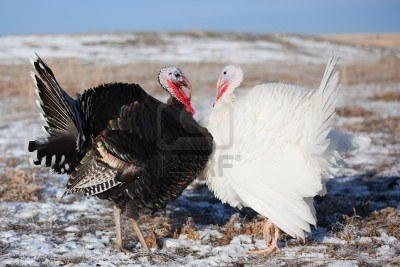
Thursday, June 16, 2011
Guest Post #1 - Holy Veggies, Batman!
Before I’d even begun the steps necessary to create this blog - back when it was still just a thought circling through my addled brain - I’d had the idea that it might be nice to feature a guest post now and then. I thought it might be a nice change of pace, and for non-vegans or non-vegetarians I thought it might be nice to see this ‘crazy’ vegan thing from a perspective other than my own. So naturally I asked my husband (a vegetarian slowly transitioning to vegan, and a writer also!) if he would be interested in sharing his own story, as well as his thoughts, ideas and opinions with all of you good folk, and naturally he was indeed very eager to do so. The entry that follows was written by him, in his own words, as something of an introductory post if you will. Regarding the frequency of his guest spots from here on, I couldn’t say exactly, that’s really up to him, but I’m sure there will be more to come as in the past few months he’s become just as eager and passionate about his new (almost) Vegan life as I have become about mine. So I hope you enjoy, and I hope you find his words as inspiring and helpful as you do mine.
Peace, Love and Good Health...
06/16/11
Holy Veggies, Batman!
Hello, blogging world! I come to you today to share my experiences as a newbie to the vegan/vegetarian world. Perhaps some of you out there are contemplating becoming a vegetarian or vegan but feel you can’t give up meat. I understandable, because I was once like you. Yet, the choice to take the leap into vegetarianism/veganism isn’t as wide of a jump as you might think. This is especially true if you think of veganism/vegetarianism not as a sacrifice or a diet, but as a transition into something new.
Growing up I was fed a pretty regular helping of meat and dairy each day. It was a main staple in my diet since it was always so easily available. I remember my favorite dishes like beef stroganoff and sloppy joe casserole. I would love getting 3 burgers at a time from McDonald’s and scarfing them down. I never met a burger I didn’t like. As time wore on, however, my appetite for red meat slowly declined. I still enjoyed hamburgers and the like, but I looked less forward to steak each time it was served. I found myself going out for food more often whenever it was served at home. By the time I met my wife, I generally preferred poultry to red meat whenever we would eat out.
Once we were married, my wife did nearly all the cooking and since we were living with my family, she typically cooked for them, as well. My family members are much bigger red meat eaters than I was but my wife typically would make dishes with chicken, turkey, or shrimp. Nobody seemed to mind since my wife is a genius in the kitchen and could make even the plainest chicken dishes seem amazing. It also freed my mom up from cooking, which was a plus for her.
It went like this for the first few years of our marriage until events in my wife’s life lead her to re-examine her eating habits. (See her first blog entry on the main page to read more about her own personal journey into veganism)
When she first told me about her decision to go vegetarian (with an eye on going vegan eventually), I was a bit worried. While I was not a huge meat eater, I still enjoyed the poultry and seafood dishes that she made. I had images of small salads, raw vegetables and other dishes that wouldn’t fill me up, or taste as good as the food I was accustomed to. Just the thought of that made my stomach growl for a nice juicy burger from Steak N Shake. Of course - despite my reservations - I was supportive of her decision and totally encouraged her to make the change. Her health and well being were the important things after all, not my appetite.
I did, however, wonder how I was still going to be able to eat what I wanted when it was my wife who did most of the cooking. I could make my own food, a novel concept, but once you’ve had my wife’s cooking, you can’t go back. I could’ve eaten the food my parents made but I didn’t want to feel like a freeloader. Well, more of a freeloader than I already felt, that is.
My wife said flat out that I could eat whatever I wanted but that she wasn’t going to be making two separate dinners each night. I had to eat what she made, or fend for myself; so I just ended up eating whatever she decided to make and, to my surprise, I quite enjoyed her vegetarian meals. She had a huge supply of cook books that she’d either gotten from the libraries we visited (which, typically, had a very good selection to pick from!) or books she had purchased. Soon I found myself eating and liking foods I never before thought I’d enjoy. Asparagus, kale, collard greens, beets (well I still have a few issues with that one), and cabbage. But when she put them together with other fruits, vegetables, grains and sauces, they were impossible to resist!
Even more surprising to me was the fact that I was eating these dishes without meat and yet staying full. Staying full and not feeling deathly ill afterward, to boot! As a meat eater I sometimes found myself feeling too full/sick to move after meals. That all changed once I began phasing meat out. After meals, despite being full, I still had energy to do things. I went on walks, bike rides, and wrote instead of just laying in bed waiting for the Rapture. I even noticed that minor ailments and health issues I’d always lived with, began to go away. I’d always had a sensitive stomach but once I started doing the vegetarian thing, it hardly seemed to effect me anymore.
Now, in the early months before I was fully invested, if I was at work and needed food to eat, I would still eat the occasional chicken meal served at Chipotle or McDonald’s, for instance, but I’d given up burgers and other beef products and when I did eat chicken, it was a rare occurrence.
Then, around the beginning of January 2011, I decided to completely stop eating meat. I believe I’ve only slipped once or twice, and that was for a piece of bacon. At this point, in June, I’ve even nearly phased out all dairy products, too. I still eat the occasional pizza with cheese on it but I no longer eat cereal with cow’s milk. I’ve switched to rice milk (an amazing substitute!) and when I go to Starbuck’s, I’ve switched to soy milk. I try to avoid cow’s milk products as much as I can but milk chocolate can still be a tough addiction to break.
Looking back at all the time that’s passed since I started increasing my intake of vegetables and fruits and started phasing out meat, it doesn’t feel like I sacrificed anything or had to struggle through a long transition period. It just came naturally. I can’t stress enough how one shouldn’t view this as a diet – a thing they have to do by sacrificing a food they love to eat - If you do that, you’re bound to fail and you’ll just go back to eating meat and dairy products forever. If you slip, you slip, it happens. Don’t beat yourself up over it. Just do your best, if you’re just starting out and stick with it. True, it didn’t hurt that my wife was making amazing meals but once my awareness of what eating meat truly entailed, my resolve to change just grew exponentially.
As I delved further into the world of veganism, the more I learned about how meat eating affects the environment, the economy, our health, and, obviously, the animals. I don’t expect people who are meat eaters and yet may be tempted by the idea of going vegetarian to do so initially out of compassion for animals, but it’s hard not to. It just ends up being a by-product of veganism, especially if you read about or hear stories describing the cruelty involved in the meat industry and what actually happens to the animals involved. My new and growing awareness of what goes on in the meat industry just helps to fortify my decision to stay vegetarian.
I think that’s what meat eaters out there should realize if they are deciding to become vegetarians or vegans – you don’t have to do it just for the animals. If you’re not an animal person, if that aspect of it doesn’t connect with you, then be content in doing it for yourself and your own health. Don’t let people place a stigma on the idea of veganism or vegetarianism by grouping all of us as "hippies" or some other ridiculous stereotype. Vegetarianism is a totally easy and viable choice to make. You don’t "need" meat in your diet to live a healthy lifestyle. In fact, you’re better off without it. You can get all you need from being a vegetarian or vegan as long as you’re going about your diet in the right way. Just like you would if you were a meat eater.
The world of veganism/vegetarianism is big enough to welcome people for any reason they see fit, whether it’s animal compassion, personal health, or the environment. Just know that your decision does impact more than just you, and as a vegetarian you’ll be doing so much to improve not only yourself but the world at large. Good eating, everyone! Hope to be back soon.
~ Matthew,
Peace, Love and Good Health...
06/16/11
Holy Veggies, Batman!
Hello, blogging world! I come to you today to share my experiences as a newbie to the vegan/vegetarian world. Perhaps some of you out there are contemplating becoming a vegetarian or vegan but feel you can’t give up meat. I understandable, because I was once like you. Yet, the choice to take the leap into vegetarianism/veganism isn’t as wide of a jump as you might think. This is especially true if you think of veganism/vegetarianism not as a sacrifice or a diet, but as a transition into something new.
Growing up I was fed a pretty regular helping of meat and dairy each day. It was a main staple in my diet since it was always so easily available. I remember my favorite dishes like beef stroganoff and sloppy joe casserole. I would love getting 3 burgers at a time from McDonald’s and scarfing them down. I never met a burger I didn’t like. As time wore on, however, my appetite for red meat slowly declined. I still enjoyed hamburgers and the like, but I looked less forward to steak each time it was served. I found myself going out for food more often whenever it was served at home. By the time I met my wife, I generally preferred poultry to red meat whenever we would eat out.
Once we were married, my wife did nearly all the cooking and since we were living with my family, she typically cooked for them, as well. My family members are much bigger red meat eaters than I was but my wife typically would make dishes with chicken, turkey, or shrimp. Nobody seemed to mind since my wife is a genius in the kitchen and could make even the plainest chicken dishes seem amazing. It also freed my mom up from cooking, which was a plus for her.
It went like this for the first few years of our marriage until events in my wife’s life lead her to re-examine her eating habits. (See her first blog entry on the main page to read more about her own personal journey into veganism)
When she first told me about her decision to go vegetarian (with an eye on going vegan eventually), I was a bit worried. While I was not a huge meat eater, I still enjoyed the poultry and seafood dishes that she made. I had images of small salads, raw vegetables and other dishes that wouldn’t fill me up, or taste as good as the food I was accustomed to. Just the thought of that made my stomach growl for a nice juicy burger from Steak N Shake. Of course - despite my reservations - I was supportive of her decision and totally encouraged her to make the change. Her health and well being were the important things after all, not my appetite.
I did, however, wonder how I was still going to be able to eat what I wanted when it was my wife who did most of the cooking. I could make my own food, a novel concept, but once you’ve had my wife’s cooking, you can’t go back. I could’ve eaten the food my parents made but I didn’t want to feel like a freeloader. Well, more of a freeloader than I already felt, that is.
My wife said flat out that I could eat whatever I wanted but that she wasn’t going to be making two separate dinners each night. I had to eat what she made, or fend for myself; so I just ended up eating whatever she decided to make and, to my surprise, I quite enjoyed her vegetarian meals. She had a huge supply of cook books that she’d either gotten from the libraries we visited (which, typically, had a very good selection to pick from!) or books she had purchased. Soon I found myself eating and liking foods I never before thought I’d enjoy. Asparagus, kale, collard greens, beets (well I still have a few issues with that one), and cabbage. But when she put them together with other fruits, vegetables, grains and sauces, they were impossible to resist!
Even more surprising to me was the fact that I was eating these dishes without meat and yet staying full. Staying full and not feeling deathly ill afterward, to boot! As a meat eater I sometimes found myself feeling too full/sick to move after meals. That all changed once I began phasing meat out. After meals, despite being full, I still had energy to do things. I went on walks, bike rides, and wrote instead of just laying in bed waiting for the Rapture. I even noticed that minor ailments and health issues I’d always lived with, began to go away. I’d always had a sensitive stomach but once I started doing the vegetarian thing, it hardly seemed to effect me anymore.
Now, in the early months before I was fully invested, if I was at work and needed food to eat, I would still eat the occasional chicken meal served at Chipotle or McDonald’s, for instance, but I’d given up burgers and other beef products and when I did eat chicken, it was a rare occurrence.
Then, around the beginning of January 2011, I decided to completely stop eating meat. I believe I’ve only slipped once or twice, and that was for a piece of bacon. At this point, in June, I’ve even nearly phased out all dairy products, too. I still eat the occasional pizza with cheese on it but I no longer eat cereal with cow’s milk. I’ve switched to rice milk (an amazing substitute!) and when I go to Starbuck’s, I’ve switched to soy milk. I try to avoid cow’s milk products as much as I can but milk chocolate can still be a tough addiction to break.
Looking back at all the time that’s passed since I started increasing my intake of vegetables and fruits and started phasing out meat, it doesn’t feel like I sacrificed anything or had to struggle through a long transition period. It just came naturally. I can’t stress enough how one shouldn’t view this as a diet – a thing they have to do by sacrificing a food they love to eat - If you do that, you’re bound to fail and you’ll just go back to eating meat and dairy products forever. If you slip, you slip, it happens. Don’t beat yourself up over it. Just do your best, if you’re just starting out and stick with it. True, it didn’t hurt that my wife was making amazing meals but once my awareness of what eating meat truly entailed, my resolve to change just grew exponentially.
As I delved further into the world of veganism, the more I learned about how meat eating affects the environment, the economy, our health, and, obviously, the animals. I don’t expect people who are meat eaters and yet may be tempted by the idea of going vegetarian to do so initially out of compassion for animals, but it’s hard not to. It just ends up being a by-product of veganism, especially if you read about or hear stories describing the cruelty involved in the meat industry and what actually happens to the animals involved. My new and growing awareness of what goes on in the meat industry just helps to fortify my decision to stay vegetarian.
I think that’s what meat eaters out there should realize if they are deciding to become vegetarians or vegans – you don’t have to do it just for the animals. If you’re not an animal person, if that aspect of it doesn’t connect with you, then be content in doing it for yourself and your own health. Don’t let people place a stigma on the idea of veganism or vegetarianism by grouping all of us as "hippies" or some other ridiculous stereotype. Vegetarianism is a totally easy and viable choice to make. You don’t "need" meat in your diet to live a healthy lifestyle. In fact, you’re better off without it. You can get all you need from being a vegetarian or vegan as long as you’re going about your diet in the right way. Just like you would if you were a meat eater.
The world of veganism/vegetarianism is big enough to welcome people for any reason they see fit, whether it’s animal compassion, personal health, or the environment. Just know that your decision does impact more than just you, and as a vegetarian you’ll be doing so much to improve not only yourself but the world at large. Good eating, everyone! Hope to be back soon.
~ Matthew,
Subscribe to:
Posts (Atom)


