On Monday the world’s very first laboratory-grown beef hamburger was tested in London. Popped out of a petri dish and plopped into a frying pan the burger was cooked up and served to two volunteers, US based food author Josh Schonwald and Austrian food researcher Hanni Ruetzler. The burger in question was developed by Professor Mark Post of Maastricht University in the Netherlands with the hope of discovering a more sustainable way to raise meat. The burger was made by taking stem cells harvested from a living cell and placing them in a bioreactor holding a nutrient mixture that would help them proliferate. It took roughly three months to grow the 20,000 0.02 inch strands of muscle fiber used in making the burger. Which is a considerably shorter time-frame then it takes to raise an entire cow from birth to slaughter. The muscle fibers were then mixed with salt, egg powder, and breadcrumbs to improve flavor, and beetroot juice and saffron for color. It had been reported that this little experiment was five years in the making and cost a total of $332,00, but what did the taste-testers have to say?
Well, the reviews were mixed. The bottom line is that the texture of this patty was spot on, though the flavor was somewhat lacking. Since the burger patty was made from muscle fiber, there wasn’t a lot of fat which means it wasn’t as juicy or greasy as is generally expected from a hamburger. The general consensus seemed to be that the test-tube burger tasted something like a cross between a Boca Burger Patty and a Fast Food Hamburger, and even Mark Post conceded that the flavor would need to be improved before this could become a viable meat replacement for the majority.
How about public opinion? Well, it’s a pretty mixed bag. This story has generated a lot of discussion, a lot of debate, and a lot of controversy amongst both meat-eaters, and vegans, and frankly I’m surprised by the widely negative response coming out of the vegan community. It seems to me that most of the animal-rights organizations, and vegan organizations and non-profits are for this new development in food technology. PETA has endorsed it, as have non-profits like Farm Sanctuary, but when it comes to individual vegans; vegans like you and I, the backlash is overwhelming. You have vegans calling out these organizations for their support of this new technology and threatening to quit supporting them if they continue to endorse it. You have vegans calling out other vegans and declaring them ‘not vegan’ if they support this new development. You have all manner of people in general saying all manner of crazy things and it seems that very few of these outraged individuals actually know what they’re talking about. To me the negative response seems to be a ‘heat of the moment’ thing, an immediate emotional response, rather then a logical or intellectual one. Which is why I felt the need to write this post. I’m not claiming to be particularly intellectual but I feel it’s very important for some vegan somewhere to speak up, and make a thought-provoking case here. As vegans I think we’re doing more harm then good with an outright show of disapproval or refusal of this new development, and we’re severely overlooking the potential good it has.
Before I get into it I want to make clear that as a Vegan I have no interest in eating In Vitro meat. I have no interest in consuming test tube burgers, or laboratory grown meat, or ‘ethical meat.’ If this product becomes available in my local grocery store I will not consume it. Why? Because reduced animal suffering or not, this is still meat, and eating meat regardless of how it’s grown or where it comes from is not vegan. This is still an animal product, derived from an animal. I also went vegan initially for health reasons and so laboratory meat, or regular meat it doesn’t make a difference, they’re both still unhealthy in my opinion. So I personally wouldn’t eat this, and I wouldn’t condone another vegan eating it, but the important thing to remember here is that this is not a product being made and marketed towards vegans and vegetarians. This is a product being made for omnivores, for meat-eaters, and as such I support it. It’s far better for meat-eaters to eat laboratory meat, then it is for them to eat conventional meat for so many reasons.
Firstly we live in an overpopulated world, with an ever increasing population. Those population increases mean a higher demand for animal-based foods. World hunger is not something that we’ve been able to cease, and as our population continues to explode this problem will only get worse. Our planet is under severe stress, we do not have infinite resources, and we are using them without caution. We can not continue to sustain our rate of growth, or development and our overburdened planet can not continue to sustain the massive animal agriculture industry. Deforestation, land erosion, biodiversity decline, energy use, water depletion, pollution of eco-systems, land, water-ways, and oceans, poor air-quality, and a rise in greenhouse gasses and carbon emissions. These are the serious problems that we face, and they only grow worse as our population increases. According to the United Nations Animal Agriculture - that’s factory farming of cows, pigs, chickens, lambs, goats, etc... factory egg laying facilities, and factory dairy farms - are responsible for 40+% of global warming. That’s more then the entire transpiration sector - think cars, trucks, trains, planes, boats etc... - combined. Animal agriculture is literally killing the planet, and it isn’t doing us any favors either. Laboratory grown meat has the potential to change all of that, and even if it doesn’t solve all of these problems completely it will at least help to decrease their severity.
Hannah Tuomisto of Oxford University stated “At the global level if all meat was lab-grown, the greenhouse gas emissions could be reduced by 80% and the water use by 90%.” An 80% reduction in emissions and a 90% reduction in water usage is huge! Monumentally huge on that scale alone we should be looking into considering lab-grown meat as a viable option and replacement to the conventional. Another independent study found that lab-grown meat uses 45% less energy then the average global representative figure for farming cattle. The study also found that lab-grown meat also produced 96% fewer greenhouse gas emissions and requires 99% less land. Less energy wasted, and less land used, which means more land that can be used to house or ever-growing population. More land for us to grow food crops on, more land for us to turn into refuges, protected areas, or simply give back to nature.
This isn’t even taking into account other environmental and health factors like the spread of salmonella, E. Coli and other food bourne illness. Food bourne illness comes from animal feces coming into contact with food products. If you don’t raise animals for food, growing your food in a lab instead then there isn’t any feces. Theoretically this would decrease the number of cases of food borne illness per year. The 1 billion plus animals raised for human consumption in this country annually produce more then 3 trillion tons of waste. Since that waste is not disposed of properly it is often left to contaminate land, water ways, rivers, lakes, and other crops causing us to become ill. No more factory farmed animals means no more trillion tons of improperly disposed of waste. Antibiotic-resistant strains of bacteria are another factor. Since farmed animals are kept in such deplorable conditions they are routinely given antibiotics to prevent them from becoming sick. This has led to the emergence of antibiotic resistant bacteria entering our environment, and this has many scientists and doctors concerned over our future. We only have so many antibiotics available to us, if they cease to work on the bacteria and diseases that they’re meant to heal us from what then? Many scientists, and zoologists believe that the next big pandemic will come from an animal source, likely from a farmed animal who has close contact with humans. Take away animal farming in favor of lab-grown meat and you reduce the risk of antibiotic resistant bacteria and the potential for new pandemic or epidemic pathogens.
Environmentally speaking there is no good or valid reason why lab-grown meat shouldn’t be researched or supported.
As for world hunger it's ridiculous to think that we'll ever be able to produce enough meat to feed all the hungry in the world. It simply isn't feasible when you take into account how many animals would have to be raised - in an already burdened system - to accomplish this daunting task. The animal agriculture system that we have in place just isn't effective or efficient. If you take a look at the numbers you see that they just don't add up in any way that makes sense. 30% of Earths land mass is taken up by animal agriculture. More then 260 million acres of U.S. forest alone have been cleared in order to grow crops to feed to animals. 70% of the grain and cereals that are grown in the United States are fed to farmed animals. Dose this make sense to anyone? In a world where children in less fortunate countries die of starvation every day is it ethical to continue to feed important food staples to animals just so that we can eat them ourselves? What do we get in return? It takes 13 pounds of grain to get 1 pound of meat back, and even farmed fish need to be fed 5 pounds of wild caught fish in order to return 1 pound of farmed fish. This is not only wildly inefficient, but to some degree it's down right disgusting. It's been said that there isn't a global food shortage, that the problem is in the distribution, and you could make an argument there for government corruption in third world nations but it should also be pointed out that if we 'redistributed' that grain that we feed to farmed animals to humans, the 'food crisis' would end. We can effectively grow enough food to feed every person on this planet, the problem is that we greedily choose to feed that food to animals that we intend to eat to satisfy our own palates.
Food, and land however are not the only wasted resources. Water is another hugely wasted resource in the animal agriculture industry. Many countries are already facing massive water shortages, droughts, and are in water crisis. Here in the U.S. because we're not faced with it everyday it's out of sight and out of mind, but the prediction is that in as little as another decade the U.S. too will be feeling the effects of a global water crisis. Water is now being labeled "Blue Gold" and yet we continue to waste it as though it were infinite Did you know that 2,400 Gallons of water are needed to produce 1 pound of meat? Where as only 25 Gallons are used to produce 1 pound of wheat. That's a staggering difference.
It simply doesn't make sense to continue farming animals the way that we've been doing. If ending world hunger is something that we're serious about as a nation and as a society then we have to at least consider the benefits of lab-grown meat; as lab-grown meat has the potential to end animal agriculture while still providing meat for those who wish to continue to consume it, and it can provide a realistic solution to ending world hunger. Lab-grown meat also has the potential to help us avert the coming global water crisis. Taking these two things into consideration there is no valid reason for why lab-grown meat shouldn't be researched or supported.
Then there’s the case for animal rights. As animal rights activists and vegans we strive to end animal suffering. Our whole purpose, our whole mission is the end of needless and cruel suffering, torture, brutalization, and murder of billions of animals. We do this through education, through speaking our truth, by engaging in conversations on this topic and by encouraging others to go vegan or at least vegetarian. It’s a noble cause for sure, but the sad truth is that no matter how much we try, no matter how much we fight, we are not enough. We can never, and will never cause the entire world to go vegan. That isn’t even the slightest bit realistic. There will always be people who eat meat, and rather then fight those people on an issue that will never change for them why wouldn’t we as vegans want to endorse lab meat? Lab meat can and will put an end to animal suffering in a way that we as vegans will never be able to do. When lab meat is a viable option, inexpensive, and easily available and accepted it will cause a massive decrease in factory farming. Eventually it could cause all animal farming to stop completely. It’s not so crazy to imagine lab meat will become the future and conventionally raised meat will be a thing of the past.
For all those vegans who will not endorse lab meat because it is not vegan I ask you to reconsider and rethink your position. You will never be able to make the world vegan, and therefore there will always be animal suffering. Lab meat can change that. Yes it would still be meat and yes it would still be from an animal, and yes maybe a couple of animals would have to suffer for us to harvest the stem cells, but you don’t have to eat it. It is not for you, it is for meat-eaters. In my opinion it’s preferable to have only 1 or 2 or even 10 animals suffering then it is to have a billion plus animals suffering every year. I think it’s foolish to carry around this indignant, superior, all or nothing attitude, and it’s what gives vegans a bad name. I’m reminded of a famous quote by Colleen Patrick-Goudreau that goes “Don’t do nothing because you can’t do everything.” Our goal as animal rights activists and as vegans should be to eliminate as much animal suffering as possible, even if this is not the way we envisioned doing that, this is something that we should be happy about.
Now we come to health. Is lab-grown meat nutritious? Presumably it would have a similar nutritional content as conventionally raised meat, however there is the potential to make this meat healthier then the conventional. As only muscle fibers are being used the resulting meat would be leaner, and that can only be a benefit to meat-eaters. With the rates of obesity, heart disease, stroke, diabetes, and other chronic diseases skyrocketing a healthier meat option can only help to lift some of the burden from our strained medical system. Surely meat, regardless of how it’s raised or grown will cause disease, and an increased risk of developing disease, but if the risk doesn’t have to be as great as it is currently then that’s a win in my book.
As for other health aspects, some people have raised concerns that lab-grown meat is somehow fake. That it’s a ‘frankenfood’ that it has potential health consequences that we are not yet aware of. On that point I say it’s true that we do not know if lab-grown meat will effect the human body in a negative way. If the meat is clean - meaning it’s from an organic source animal - and it contains no additives then I can’t see it as being any more harmful then a conventionally raised animal. If the processing industry begins to manipulate the product then there is potential for unintended consequences there, but we can’t know that until we test it.
I do however think it’s silly, misinformed, and hypocritical to say that lab-grown meat is ‘fake’ meat. It’s not fake at all. It’s grown from cow stem cells. It comes from a real cow, and therefor it is real cow meat. There isn’t anything fake about that, the difference is in the process but since when did an unconventional process become the basis for labeling something as fake? Take In Vitro fertilization for example. This is an amazing technology that helps couples who are unable to conceive naturally have a baby. Are ‘test-tube’ babies ‘fake babies?’ because they were initially grown in a lab? Are In Vitro babies considered less then human in our culture? No. Are they considered other? No. Do they look, act, or smell any different then conventionally conceived children? No, of course not. It would be insane to even imply such a thing. So why then is it being suggested that lab meat is somehow not real? Do you consider Aspirin a real medicine? What about cough syrup, is that real? These are products developed and manufactured in a laboratory for our health, we consider them medicine not ‘fake’ medicine. So why is lab-grown meat any different? The ‘fake’ argument is one that doesn’t make any sense, and it only shows ignorance on the part of people who obviously have no understanding of science, medicine, technology, and food manufacturing.
For those who say lab-meat is ‘unnatural’ I think you need to reconsider what is and isn’t natural. Is lab meat less natural then raising a billion animals in cramped and confined spaces? Is it less natural then pumping animals full of antibiotics because they’re standing belly deep in their own shit, in addition to hormones that make them grow faster? Because that’s what conventional meat is, is that more natural? Take into account for a second the slaughterhouse, in which hundred of animals are slaughtered in minutes on a fast moving conveyer belt to which they are strung up alive and gutted so that their blood and feces drip onto the floor. A place in which animals are scalded in boiling water while still alive to remove their hair and feathers and where sick animals foaming at the mouth with disease are routinely slaughtered for human consumption. How about the cleaning process in which animal carcases are washed in a solution of bleach, and other chemicals to make them fit for human consumption, is that natural? Is it natural to have numerous chickens crammed into one cage stacked on top of other cages so that their shit falls through the wire onto the birds below? Is it natural to remove animals toes, beaks, snouts, hooves, horns and tails so that we can manhandle them more easily? Is it natural to artificially inseminate cows so that their pregnancy will cause them to lactate so that we can sell, buy and drink her milk? Is it natural to feed animals GMO corn and soy, animal by-products and the feces and waste of other animals? If your answer to these questions is no, then you need to wake up and realize that these are common occurrences in the animal agriculture industry. These are everyday things, this is how the system operates. Not a single one of these things would apply to lab grown meat, so how is it less natural? Is murder natural? Is it natural to murder living breathing beings? Lab grown meat doesn’t murder.
What about other food products commonly bought and sold in stores. I’m talking about frozen foods, prepackaged foods, t.v. dinners, pop, soda, minute rice, box macaroni and cheese, canned soup, bottled drinks and beverages, granola bars, power bars, processed meats, sausages, hot dogs, chicken nuggets, refined sugar, refined flour, baked goods, vegan cheese, vegan meat, and all other shelf-stable foods. Are any of these natural? The technical answer would be no. Of course some products are more natural then others but virtually all shelf-stable foods are the work of food scientists working in a laboratory. These foods are all manufactured, and don’t you even begin to tell me that you never or have never eaten a food that falls into this category. If everyone on the planet ate as ‘natural’ as they claimed to then the entire food industry would collapse and go out of business. Even health nuts eat some form of processed food. In my opinion if you’re sitting down to a can of cola, and a hot dog you have no right to call lab meat unnatural. If you’re sitting down to a glass of non-organic soy milk, and a vegan steak sandwich you have no right to call lab meat ‘unnatural.’ If you enjoy an oreo, or a vitamin water, or a vegan marshmallow, or a can of soup now and then you have no right to call lab meat ‘unnatural.’ If you eat at fast food restaurant - even if you’re eating vegan fast food, - or even if you’re dining out at a conventional ‘sit-down’ restaurant you have no right to call lab meat ‘unnatural.’
To me, in terms of the processing aspect, eating lab meat would be no different then eating a box of chicken nuggets or a Tofurkey roast at Thanksgiving. In fact, lab meat may actually be less processed then many conventional meat products such as nuggets and hot dogs, as well as many vegan products such as veggie burgers, veggie chicken, and veggie sausages. So you can’t site ‘unnatural’ as a reason against. As for the ‘ick’ factor eating a lab meat burger is no more disgusting then eating a hot dog, or a burger at a fast food restaurant. I mean really, do you know what goes into those things? Yet people do both of those things day in and day out without so much as a second thought.
Of course there is also the opinion that since there are so many great meat alternatives available already that meat-eaters don’t take advantage of this will not catch on. There is also the fear that this will become a billion dollar industry and we all know what happens then. People say that because certain individuals are ignorant and will never give up conventional meat that this research is a waste of money. Well all I have to say to that is I honestly don’t think there will be a choice in the matter in the future. Our planet Is so devastated, we can barely sustain the life we have let alone the boom that’s coming that I don’t think we’ll be given the option to choose. As science-fictiony as it sounds I think if this becomes viable there will be a global decision to end factory farming in favor of it. I think that this will be the new way of things, it will be mandated and we won’t have the option of going back to conventionally raised meat. The only option we’ll have is to be vegan or eat lab-meat, and that’s probably how it should be anyway. I think there will come a time when eating any meat at all will be frowned upon, and so if you want to eat meat this will be the only acceptable way to do it, or risk becoming a social outcast. Perhaps that’s how things should be, though I know some would disagree with me there, anyway that’s a long way off. Lab meat won’t even be viable for commercial sale for another ten to twenty years, so everyone should just relax a little bit.
Really, I think the majority of the backlash and the negative reactions are coming from the ‘ick’ factor. People truly don’t like knowing where their food comes from or how it’s made. Most manufactured foods don’t advertise the fact that they are indeed manufactured and you never get to know exactly how it’s done due to ‘trade secrets, ‘ but this is different. It’s such a hot topic, and it’s generated so much intense interest that everyone will be keeping an eye on the story, and inevitably this means everyone will probably know more then they care to about the process. That alone will gross people out, then when you add to the mix any preconceived notions they may have about health, and food, well forget it. Reactions explode and people say crazy, ignorant and irrational things.
Bearing that in mind I strongly urge you - vegan or not - to seriously consider the potential for good here. Please consider the positive implications that this new technology could have on human health, animal welfare, the environment, and world hunger. Look past your initial reactionary feelings and look deep into how this could bring a positive change in the world. Realize that this isn’t about you, it isn’t an attack on you, it isn’t a criticism of you. Scientists are trying to come up with a realistic and viable solution to many of the critical problems we now face, and those solutions brought to fruition do more to help the world then the ideals you hold but don’t activate. Talk is just that, talk. It doesn’t solve anything, we need to take action which is what is happening here. It may not be the action you wanted, or dreamed of or hoped for, but a step forward is better then a step to the side, and as long as people keep moving in the right direction real change will finally come.
So stay positive, think critically, and reserve judgement.
For us, for the animals, and for the planet.

Showing posts with label Social-Conscience. Show all posts
Showing posts with label Social-Conscience. Show all posts
Tuesday, August 6, 2013

Wednesday, November 21, 2012
Adopt A Turkey, Don't Eat One!
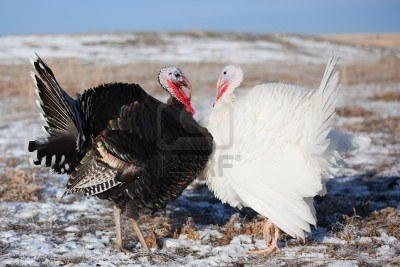
Tonight we find ourselves on the eve of American Thanksgiving and people all across the country are preparing themselves for big meals and family fun. However this holiday, almost more then any other, seems to be the most difficult for vegetarians and vegans. Thanksgiving has always been my favorite holiday, and when I first moved to the states it made me pretty happy to be able to celebrate it twice. Once in October for Canada, and once in November for America. I first went vegan on Thanksgiving Day, 2 years ago, and I thought it would be difficult, but it wasn’t. I had already been vegetarian for nearly six months by then and the switch was easy. I didn’t feel as thought last year was particularly difficult for me either, mentally or emotionally. I prepared a wealth of vegan foods and treats and ignored the things on the table that I didn’t want to see. This year however I feel a deep twinge of sadness. Thanksgiving is suppose to be a day of thanks, a day of peace, a time for us to sit and think, and reflect on our lives and on our year. It’s a time for us to appreciate what we have and give thanks for it. Yet everywhere I go this year I’m faced with the reality of what this holiday truly is. It’s a celebration of carnage, it’s a day of violence, and cruelty, and people everywhere turn a blind eye to it in the name of - or for the sake of - ‘tradition.’ Last year I wrote a post detailing how the Thanksgiving ‘traditions’ that we cling to today are the furthest thing from traditional, if you’re interested you can read that here - Thanksgiving: Reexamining Traditions - This year I find the myths and lies of Thanksgiving just a little harder to swallow, but mostly I just feel sad. I feel a deep, resonating sadness for the millions of Turkeys who’s lives are being extinguished in the name of thanks.


Roughly 46 million turkey’s are killed in the United States each year for Thanksgiving alone. That’s a stark, astonishing number. Imagine that as people. 46 million people is the entire population of Spain. 46 million people is more then the population of Canada! There are more Turkey’s being killed in the U.S. for this one day, then there are people in Canada. If that doesn’t make you feel a little bit sick, and help put things into perspective for you I don’t know what will. It’s almost incomprehensible to me, but the worst part of it is that these beings are treated horribly, and live miserable lives. Most of them grow up in factory farmed situations where they have no connection to their family unit. They’re taken away from their parents, stuffed into cages, with other birds, beaten and mutilated. Their beaks are trimmed, their toes are clipped off, and their snoods are removed. Over the decades that we’ve been breading these poor animals for food, we’ve engineered them to have such large breasts that many of them can not walk. They are even so top heavy that they suffocate under their own weight, or their lungs and other organs collapse. Due to the way that we’ve bred them, and because of their gargantuan size, turkeys can no longer fly, and they can no longer reproduce naturally on their own. All turkeys need to be artificially inseminated.


This month the animal advocacy group Mercy For Animals released two new undercover videos that were recorded at Butterball Plants. These videos capture workers beating turkeys, stomping on their heads, throwing them into crates, throwing them across rooms, kicking them, breaking their wings, snapping their necks, throwing them into machines, poking them with pitchforks and other tools. Unfortunately the problem is not just with Butterball, every year videos emerge from different poultry producers that reveal the same things. These are common practices in the poultry industry because unlike beef cattle and pigs poultry have no protected rights. It doesn’t matter if your turkey is a factory farmed turkey, a ‘free range’ turkey, or an organic turkey. There are no cruelty standards for poultry in the U.S. and the term ‘free-range’ is a meaningless one anyway because it isn’t regulated by any governing body. Anyone can say their animals are free-range. Organic is a term that’s regulated but it has nothing to do with how the animals are treated. It only related to what the turkey’s were fed, and ensures that those turkeys weren’t given any artificial hormones or antibiotics. It doesn’t protect the turkey’s from harm.


The saddest thing about this is that Turkey’s are loving, and gentle creatures. Turkey’s raised as pets are as loving as dogs. They even follow their human caretakers around. They like to cuddle, snuggle and be petted, stroked and scratched. They will climb right into your lap and fall asleep purring. They are intelligent and happy creatures, with as much desire to live as anyone else. Mother turkey’s are very protective of their young and will risk their own life to save their babies if they perceive a threat. A mother turkey will even attack a predator to ensure the safety of her young. Turkey’s are also family orientated, and often eat their meals together as a family. A brood typically holds together for 4-5 months and male siblings in a family maintain a social bond for life. Mother turkeys teach their young babies crucial skills about what to eat, the layout of their homeland, how to avoid predators, and a variety of important social skills.


Turkeys are beautiful creatures that deserve our love, our respect, our compassion and our protection. Last year my husband and I took part in Farm Sanctuary’s “Adopt a Turkey: Don’t Eat One” program and it brought me so much joy. This year we once again adopted a turkey, a male named Gabel - as in Clarke Gabel. I encourage everyone to choose compassion over killing this year and adopt a turkey instead of eating one! There are so many wonderful vegan foods, so many great pre-packaged holiday treats, or things you can make yourself that there really isn’t any need, and you won’t miss it. Instead you’ll feel the inner peace and happiness of knowing you did something good not only for yourself but for another.

Adopt a Turkey don’t eat one! And have a lovely cruelty-free Thanksgiving this year.
Peace/Love

For more information check out these pages
Farm Sanctuary - Adopt a Turkey!
Woodstock Farm Animal Sanctuary
Holiday Feasting Vegan Style

All Images found through Google Images
Thursday, October 18, 2012
"Organic Health Food” Giant Whole Foods Caught In Deceptive GMO Marketing Scandal...
Now to take a moment out of Vegan Mofo to bring to your attention a serious and pressing issue.
I’ve been meaning to write a post on GMO’s - Genetically Modified Organisms - for ages, it’s something that I feel very strongly about. It’s something I think all people should be fully informed on, yet it’s something I keep having to put off because honestly I don’t even know where to begin. However the latest news story concerning Whole Foods, GMO’s and Monsanto got my attention last week, and sort of blew my mind. It comes at a particularly timely moment as on November 6th an initiative will be on the ballet in California - PROP 37 - that if passed will legally require all Foods containing GMO’s in the state to be labeled as such. This is huge, it is a huge step. Labeling of GMO foods is already required across the entire European Union, China, Mexico and some other countries as well, the United States is one of the only industrialized countries that does not require the labeling of GMO foods. Probably because the vast majority of the U.S. food supply is genetically modified, and probably because biotech corporations like Monsanto who are responsible for GMOs have plants in the FDA, the USDA, and various other agencies and organizations nationwide. Monsanto who I’ve mentioned before and who you should be well familiar with anyway has spent billions of dollars fighting against Prop 37. Dupont has also spent an exorbitant sum of money to fight against Prop 37 in California. Monsanto claims that GMO foods are safe, and healthy, but if they’re so safe then why is Monsanto fighting so hard against labeling. If they are so safe then labeling the GMO’s shouldn’t make a difference to them. But are we really suppose to take the word of the Corporation who invented DDT and Agent Orange, who after virtually zero testing declared those chemicals ‘safe’? Perhaps this is why they’re fighting so hard.
The truth about GMO’s is that we truly do not know if they are safe or not. They’ve only been in our food system since the 1990's, and no extensive testing or trials have been conducted. No human trials nor human testing. We have no idea what the long term effect of consuming high quantities of GMO’s may be, we have no idea what the consequence will be to our environment. Studies conducted on animals fed GMO diets have shown that GMO’s can cause anything from allergies, infections, discomfort to cancer. A recent study on mice fed a diet of Monsanto’s GMO corn showed that they developed large stomach tumors. GMO’s were approved for use in the human food supply by the USDA and the FDA not because of throughly vetted testing but simply because Monsanto gave them their word. Can we trust that?
Whether you believe GMO’s are safe, or detrimental to human health and the environment. I think the one thing we can agree on is that all of us have a right to know what we are eating, and what we are choosing to put into our bodies. Monsanto doesn’t want us to have that right.
This is where Whole Foods comes in. For thirty years this corporate health food giant has positioned itself as the pioneer in industry organics. It prides itself on its standards and its dedication to selling only the highest quality natural foods. Natural is a big word at Whole Foods and is used as often as Organic, they often make the claim that their products and stores are free of artificial ingredients - meaning colors, flavors, etc. They have publically spoken out against GMO foods, and while I can’t pinpoint an instance in which they actually came out and said they never sell GMO foods in their stores, all of their marketing campaigns imply it. They are all about organic, natural and nothing artificial ever. Yet in a quiet press release issued recently the company disclosed that it does in fact knowingly sell GMO products in it’s stores. While this press release may have gone unnoticed by many it did not go unnoticed by all. An independent news organization picked up the story and actually had the balls to confront Whole Foods Employees and Customers with it. InfoWars and a group known as Organic Spies have made several captivating videos on the topic. One of the Organic Spies videos was even banned from YouTube, but is still viewable on their site, and several articles by similarly independent news organizations have been published over the following weeks. The backlash against Whole Foods has begun. They have been accused of indoctrinating their employees and encouraging them to lie on the subject of Organic’s and GMO’s. They have been called everything from corporate thugs, to “The Green Monsanto.” and now after various protests that occurred Tuesday, October 16th at Whole Foods stores nations wide - the day was labeled “Bring your GMO’s back to Whole Foods Day” Whole Foods has now released a 5 Point GMO Fact Sheet for it’s customers and employees.
In the fact sheet it claims that the only way for a Whole Foods customer to avoid buying GMO products is to by Strictly Organic products or products certified Non-GMO by the Non-GMO Project. It even admits that it’s own 365 brand - something it previously claimed was natural, free of artificial ingredients and GMO free - could not be considered 100% GMO free unless organic. They say “Our 365 Products come from plant sources that are sourced to avoid GMO’s” Note the word Avoid, and register that no where on the ‘fact sheet’ does it say that their non-organic 365 products do not contain any GMO’s.
When confronted by InfoWars reporters Whole Foods executive Libby Letton - who handles investor relations and food safety - if that’s not a conflict of interest I don’t know what is - said “Unless a store is all organic, every store in the country sells unlabeled Genetically Modified Foods.” While this may be true it’s hardly an excuse or a defense. The “Well Everyone Does it” excuse doesn’t fly, particularly when a company has built it’s reputation on being better then ‘the other guy’ People shop at Whole Foods because they think the company has integrity, because they trust them, and because they think Whole Foods is better then everyone else. Well their recent admission about GMO’s and Letton’s ‘defense’ prove otherwise. On the subject of conventional food items Whole Foods is no better then your friendly neighborhood Safeway, Dominick’s, Kroger, or even Wal-Mart etc. Letton then said on camera “I don’t think Whole Foods does anything to try and make people believe that we don’t have food with GMO’s in them.” Which is a statement she likely now regrets because the reporters at InfoWars were able to find several instances of where this was not the case. From signs posted outside of Whole Foods Stores to statements posted on their website, blog, and even their own Mission Statement, InfoWars with a bit of research and a few hard-hitting questions has been able to uncover the great Whole Foods Marketing Deception.
For some it comes as no surprise that Whole Foods sells GMO foods. With 90% of the nations Canola, 86% of the nations corn, and 93% of the nations soybean crops being GMO some people seem to think that buying GMO is unavoidable. To others however it came as a big shock, it’s an even bigger shock for people to find out that Whole Foods is selling the very GMO Monsanto Corn they’re supposedly against. The unavoidable defense is certainly the party-line the company is now taking up to excuse itself. They say that “GMO’s in the food supply are unavoidable, particularly when considering high risk crops such as corn, canola, and soy.” However that isn’t exactly true is it? If it were unavoidable or impossible then how could there be so many organic companies? How could their be such a thing as non-organic non-GMO certification? The truth is that it’s simply easier, and cheaper for Whole Foods to sell cheap GMO products at a ridiculous markup to unsuspecting consumers. Letton almost confirms this herself. When asked by an InfoWars reporter if Whole Foods had any plans to take the initiative and test all the non-organic products in their stores for GMO’s themselves she replied “Wouldn’t it just be simpler to pass a law that requires labeling of GMO’s on products?” Um, no. I think that Monsanto pumping billions of dollars into fighting that very law - Prop 37 - in California is proof enough that, that route isn’t easier. My question to Letton and to Whole Foods is “Wouldn’t it be a show of trust to test the products yourself to ensure your customers are provided with the best quality products?” “If you’re genuinely against GMO’s wouldn’t you make a greater effort to ensure they’re not in your stores.” “Could you not contact the non-organic companies whose products you sell and ask them if they would be willing to voluntarily label their products as GMO free even though there is no legal law requiring it?”
If you don’t think Whole Foods has pockets deep enough to pay for the testing of all the non-organic products sold within their stores you’re sorely mistaken. They have more then 300 stores in three countries, and some of those stores make a million dollars or more a week. The co-presidents of Whole Foods John Mackey, and Walter Robb are worth more money then you and I will ever see in our lifetime. If they were serious, if they were genuine, and if they truly cared about their integrity they would label their products voluntarily, or ask their supplies to do this. It is my personal opinion that any company not willing to label their products as GMO free has something to hide.
For me one of the most upsetting and disturbing things about this news is not the fact that Whole Foods is knowingly selling GMO products, it’s their deception about it. They may be admitting to the GMO’s now because they have to but their ‘quality standards’ as seen on their own website remains the same.
1) We carefully evaluate each and every product we sell
2) We feature foods that are free of artificial preservatives, colors, flavors, sweeteners, and hydrogenated fats.
3) We are passionate about great tasting food and sharing it with others
4) We are committed to foods that are fresh, wholesome and safe to eat
5) We seek out and promote organically grown foods
6) We provide food and nutritional products that support health and well-being
If all of those statements are true then Whole foods carefully evaluates products containing GMO’s and then decides to sell them anyway. Thinks that GMO’s are natural. Thinks that GMO foods are wholesome and safe, and thinks that GMO products support health and well-being. They either truly believe that, or their quality standards are a lie. I don’t know how you can list these as your quality standards while you’re simultaneously selling GMO foods. According to information offered by some of Whole Foods own employees - information spoken on camera during one of the undercover videos - Even Whole Foods Vitamin line may contain GMO’s.
This deception leads me to one more point I have to make on the topic of the hypocrisy of Whole Foods. Whole Foods dose not carry Pepsi, Coke, General Mills, Kellogg, Hershey’s, Cadbury, Kraft or Con Agra products because they are not healthy and do not meet their ‘quality standards.’ They demonize these companies and corporations and yet, if you look closely you will see that the shelves of Whole Foods Market are stocked full of products from these very companies. How could this be you ask? Simple.
Pepsi owns Naked Juice, and Izze. Both sold in Whole Foods.
Coke owns Odwalla sold in Whole Foods.
General Mills owns Larabar, Cascadian Farms, and Muir Glen all sold in Whole Foods
Kellogg owns Bare Naked, Kashi, Gardenburger, and Morningstar Farms all sold in Whole Foods
Hershey’s - Which has been accused of sourcing it’s chocolate through slave labor - owns Dagoba which is sold in Whole Foods.
Cadbury owns Black and Green Chocolate sold in Whole Foods
Kraft owns Boca and Back to Nature both sold at Whole Foods
Con Agra owns Lightlife sold in Whole Foods.
It should also be noted that while Whole Foods Market claims to be against factory farming it supports it indirectly as Hain Celestial - who have many products in Whole Foods stores from Imagine - almond, soy and rice dream - to Westsoy, to Garden of Eaten, to Arrowhead Mills and Spectrum Organics - in particular is affiliated with Cargill, and directly as Whole Foods own grain-fed beef comes courtesy of IBP who is owned by Tyson Foods the biggest beef producer in the Country. IBP is located in South Dakota.
How can a company that demonizes these big corporations turn around and sell products from that very company? Perhaps this is why Whole Foods won’t stand behind Prop 37 and take a definitive and inarguable stand on the topic of GMO’s. Pepsi Corp, Cocoa Cola Corp, General Mills, and Kellogg are all actively fighting against prop 37 and donating to that fight right along with Monsanto.
Through their research InfoWars and Organic Spies have also uncovered some startling information. They say that Co-President Walter Robb has personally donated money to the campaign of Christie Vilsack who is running for congress this year. She is the wife of Tom Vilsack, who some of you may know is the United States Secretary of Agriculture at the USDA, who has been in bed with Monsanto for years, and who publicly advocates large industrialized farms and genetically modified crops. When confronted with this Letton stated that “What a person wants to do with their personal money from their personal bank account is their business.” which is true but you have to ask yourself why a man who is the co-president of the largest Organic and Natural Grocery Chain in the Country would donate money to the campaigns of the very people working against what he and his company - supposedly - are trying to achieve. InfoWars also stated that Robb donated a significant amount of money to the Obama campaign, and Obama appointed Mike Taylor - A Monsanto Cronie going back to the 80's - as the FDA Senior Advisor to the FDA Commission, and the FDA Deputy Commissioner for Foods. It could very well be a coincidence, and it could not be, that at least is the conclusion that's being drawn. I can’t speak to that, but it is interesting. It has also been reported that Whole Foods Executives have had meetings with Tom Vilsack, Monsanto, Stonyfeild Farms and Organic Valley. About what? Who can say, but why would Whole Foods Executives be meeting with a company they rally against?
And why does a corporation as adamantly opposed to GMO’s as Whole Foods claims to be, refuse to donate money to the Prop 37 initiative in California? They’ve publicly stated that they support prop 37, and the consumers ‘right to know’ but refuse to throw any money behind it. Is that because their top executives are donating money from personal bank accounts that is inevitably ending up in the pockets of Monsanto? To date no corporation has donated money to Prop 37, all donations are coming from small independent and Organic companies or personal donations from concerned doctors and the public. Leading by example is something that Whole Foods could easily do here, and yet they sit back silently watching to see what happens while their higher-ups donate to the opposition.
I think it’s safe to say that Whole Foods Market is no longer your friendly neighborhood hippy-dippy health food store. They’ve failed their customers and sold out to corporate America for the all-mighty dollar.
If this bothers you, if this upsets you, if this infuriates you my advice would be to get into contact with John Mackey, Walter Robb and other Whole Foods Executives via email and tell them in a polite but firm manner what you think of all of this. I would urge you to go to your local Whole Foods Market and talk to the store managers there, tell them how you feel, tell them how disappointed you are in them as a company. I would also urge you to contact your congressman or woman, or your state senator and tell them how you feel about GMO’s and ask them to stand behind a similar prop 37 for whatever your home state might be. If you live in California I urge you to vote yes on Prop 37 this November 6th and show the world that we are not willing to let ourselves become Monsanto’s Science Experiment.
And on the matter of where to buy your groceries. There’s not much sense in boycotting Whole Foods I think, so I would suggest that you only buy their organic products. Purchase from them only what is organic or what you need to suit any special diet you may have whether it’s vegan, gluten-free, sugar-free etc... then do the rest of your shopping at farmers markets or local markets and health food stores that you trust. Independent ones will be sure to have more integrity then chains. When it comes to buying conventional products I’d recommend you get them wherever you can get them cheapest. No sense in buying conventional apples at Whole Foods when you can buy the same apples at Safeway for $2 less right?
Dollars speak louder then words, if you stop buying GMO products from Whole Foods maybe they’ll get the message.
As November 6 grows nearer and these stories continue to circulate I will try to keep you updated. For more information check out the articles and videos linked below. Or simply Google it for yourself.
http://www.naturalnews.com/037467_Whole_Foods_marketing_fraud_GMO.html
http://tv.naturalnews.com/v.asp?v=A6D9F56EC3D67EB38801CCAACE10D645
http://tv.naturalnews.com/v.asp?v=484FC93C887B206A895A116C0A3469E3
http://www.organicconsumers.org/articles/article_23905.cfm
http://tv.naturalnews.com/v.asp?v=E95DBAD3F3CE57D8190A9D39202FBD6B
http://digitaljournal.com/article/334129
http://www.infowars.com/whole-foods-market-and-gmos-the-whole-truth/
http://www.care2.com/news/member/101960828/3383705
http://www.organicconsumers.org/articles/article_22449.cfm
http://fundrace.huffingtonpost.com/neighbors.php?type=name&oldest=1&lname=Robb&fname=Walter&search=Search+Names
http://truthquake.com/2012/10/02/whole-foods-censors-expose-genetically-modified-food-poisoning-video/
http://www.gcnlive.com/wp/tag/food/
http://www.cornucopia.org/who-owns-organic/
Sunday, September 9, 2012
Corporate Biotech Giant Monsanto Responsible For Bee Population Decline - Suggests Latest Research...

For the past decade Honeybee populations have been dwindling. The phenomenon known as colony collapse disorder has been occurring throughout the world. Every year or so it seems this story catches fire in the media and you have pundits saying everything from “It’s the end of the world” to “It’s a non issue.” but the dwindling numbers of the worlds bee populations isn’t a laughing matter. Anytime a species is on the verge of extinction or even hinting at moving in that direction it’s a serious topic that should be discussed and researched. For the past ten years nobody knew what was causing colony collapse disorder, nobody knew why the bees were mysteriously dying, scientists couldn’t figure it out. Until now.
The Biotechnology company Monsanto and the worlds largest supplier of pesticides, genetically engineered seeds and agrochemicals - not to mention the most evil and corrupt company in the world - has - at least in part - been blamed for the decline in world wide bee populations.
Poland - in an effort to save it’s native honeybee population - has recently banned genetically engineered corn that self-produces a popular insecticide known as neonicotinoid after research found that the insecticide triggers Colony Collapse Disorder. (CCD) Germany and Greece have also banned the genetically engineered crop.
A Harvard University study published in the June 2012 issue of Bulletin of Insectology also found a strong correlation between imidacloprid a neonicotinoid insecticide and CCD.
Neonicotinoid pesticides - or Neonics - are sprayed over 142 million acres of corn, soy, wheat and cotton in the United States alone. They also happen to be a common ingredient in a variety of home gardening products. The problem with Neonics is that they are absorbed by a plants vascular system contaminating both the pollen and nectar that bees come in contact with. The Neonics act as a nerve poison that disorientates bees - as well as other insects - damaging their homing abilities which may help to account for their ‘mysterious’ failure to make it back to their hives.
Of course there are other contributing factors to dwindling bee population, and scientists have pointed the finger at everything from loss of wild bee habitats, to the weakening of bee immune systems as a result of poor diet. - Commercial bees are fed pesticide laced corn syrup rather then their own honey - as well as the common techniques of modern beekeeping such as artificially inseminating queen bees, which results in a loss of genetic diversity in bee populations.
Though regardless of other contributing factors it’s been made clear that genetically engineered crops and pesticides such as neonics bare a heavy responsibility when it comes to bee population decline. Unfortunately when faced with these charges Monsanto’s response was to buy up one of the leading bee collapse research organizations Beeologics. The purchase can be found in public company records and shows the biotech company bought Beeologics in September of 2011. Which coincidently is around the time the story of the correlation between GM crops and bee decline stopped being explored in the media. Until of course Polish officials began expressing their concerns over the research.
Hm - blamed for bee decline, buy a bee decline research company, because that’s not a conflict of interest right?
For more information on the story check out...
Natural Society
Natural News
The Huffington Post
Global Research
Or just Google Monsanto/Bees.
Friday, January 20, 2012
'Healthy At 100: How you can - at any age - Dramatically Increase Your Life Span and Your Health Span' by John Robbins

"The myths and stereotypes we have about old age are so deeply entrenched in American society that they can insinuate themselves into our psyches without our ever knowing what they are. It is difficult to escape the messages that our culture sends about the aging process. From birthday cards that decry the advance of age to the widespread use of demeaning language about the elderly - ("geezer" "old fogey" "Old Maid" "Dirty old man" "old Goat" etc.) to the lack of positive images of the elderly in ads and on television programs, each of us is continually imbued with feelings of aversion to those who are old." - John Robbins - 'Healthy at 100'
"I do take heart though from the fact that modern western culture is not the only way people can live, and it’s prevailing assumptions are not the only way people can think" - John Robbins - 'Healthy at 100'
I am a big fan of John Robbins. Both "Diet For a New America" and "Food Revolution" are brilliant pieces of literature that are extremely well researched. Robbins is definitely one of the leading voices in both the health and vegan community. So when I discovered his book "Healthy at 100: How you can - at any age - Dramatically Increase Your Life Span and Your Health Span" I was very eager to read it. The name alone caught my attention, Healthy at 100 is a concept that for most of us I think seems unrealistic. However I don’t think it’s all that crazy to imagine myself as a healthy centenarian, in full control of all of my faculties and fully capable of enjoying the life I’ve always had.
For most people in the western world however the words ‘old age’ are synonymous with decline. We live in a society that treasures youth and beauty, and feels disgusted by age. We live in a culture that perpetuates ageist stereotypes, such as old people unable to do anything for themselves. We consider it normal to continue to rapidly decline as we get older, when in fact this doesn’t have to be the case. Many of us - young people in particular - view aging as a fate worse then death, and we shouldn’t.
In his book John Robbins lays to rest many of the ageist stereotypes that we’ve always grown up with. He points out the ridiculousness of how we perceive age and aging and debunks many common myths surrounding old age. However he also points out that the tragedy of our culture here in the west is our complete lack of respect for the aged, and our total compliance in allowing ourselves to decline as we age simply because it’s ‘what’s always been.’ It was these parts of the book that I found particularly interesting because here he explores the psychology behind how the average westerner sees aging compared to how aging is viewed in other cultures around the world. In many cultures spanning the glob from South America all the way to Asia it’s true that the older you are the more respect you receive. Age is seen as a triumph and a virtue, and the elderly in these cultures are revered, they would never consider themselves somehow incapable simply because they are ‘old.’
"The consequences of ageism are similar to those associated with discrimination against other groups. People who are subjected to prejudice and intolerance often internalize the dominant groups negative image and then behave in ways that conform to their negative image. Thus older people often hold ageist views about their contemporaries, about those who are slightly older then they are, and even about their own worth" - John Robbins 'Healthy at 100'
In addition to debunking the myths of age, Robbins focus’s the book on four very different cultures credited with producing the worlds healthiest oldest people, deeply exploring just how exactly these cultures have been able to remain in perfect health even at an advanced age, often exceeding 100. Those he focuses on are the Abkhasians in the Caucasus south of Russia, the Vilcabambans in the South American Andes, the Hunzans of Pakistan, and the Japanese of Okinawa. Through his extensive research of these varying cultures Robbins discovers that they all have something in common. Diet, Lifestyle and Attitude.
All four of these cultures consume diets of whole foods, no processed fair and their diets are for the most part plant-based. Containing little to no meat, and little to no dairy products. Their traditional diets are also relatively low in sugar, salt, fat, and oil, and consist almost entirely of vegetation that is both local and seasonal. Their lifestyles are also very active. While they may not engage in rigorous exercise regimes like we do here in the west, they are active in many other ways. People in these cultures walk a lot, they participate in communal work, organization, and farming. They work in their own personal gardens, play with their children and regularly engage in outdoor activity. Many people from these cultures would think nothing of walking 2 miles just to visit a friend. As far as their attitude goes they perceive aging as a happy process. They look forward to their golden years rather then dread them as people in western cultures do. They also have strong familial bonds and have lifelong connections with friends. They suffer less stress, and it’s not because they’re lives are less difficult, it’s because they take a positive attitude towards life, and tend not to fret about things that are out of their control. Stress and loneliness in Robbins opinion - and I’m inclined to agree - can kill a person just as quickly as smoking or an unhealthy diet.
"From our culture we learn what is expected of us, and to a considerable extent we then often conform to those expectations. When the prevailing image of aging expects older people to be asexual, intellectually rigid, forgetful, and invisible many elderly people will take on these characteristics even though doing so may run counter to the way they had previously lived their lives." - John Robbins ' 'Healthy at 100'
I not only found the chapters concerning these cultures completely captivating but also inspiring and uplifting. Here in the west we have so few positive association with age that it was great to be able to read about people in their 90's, or early 100's walking, running, and/or hiking miles per day. To read about 90 and 100 year olds still happily working either in their community or at actual jobs is inspiring. This is not something we see in North America. If people in our society even make it to 90 they are very often immobile and in nursing homes, hell it’s more and more common in our culture these days to see people in their 70's in that state. We consider the 90 year old grandma that lives on her own, and walks everyday to the grocery store an exception to the rule in our society when in fact - as is proven by these cultures - it should be the rule!
Through this book John Robbins has shown that getting older doesn’t have to be scary or something to dread, but rather it should be viewed upon as an opportunity. An opportunity to educate others and to show people that age doesn’t have to mean decline if you don’t want it to. Through this book Robbins imparts on us the tools we need to live healthy, joyous lives of meaning and longevity. With an emphasis on a simple whole foods diet, a manageable daily exercise routine, the cultivation of strong loving personal relationships and a positive attitude and outlook. With this book as our guide we can easily make our later years a period of wisdom, vitality, and happiness. We can at any age be productive members of society and our community, and we do not have to fall into the death trap of ageist stereotypes simply because that’s how it’s always been for us.
"Ageism represents a prejudice against a group that all people will inevitably join if they live long enough. As a result an ideology that equates aging with deterioration steals hope from everyone and from every stage of our lives" - John Robbins - 'Healthy at 100'
I highly recommend this book, as much for it’s well researched information as for it’s efforts to shift the cultural norms and common perceptions of aging.
"It remains an indisputable fact that in Hunzans as in Abkhasians and Vilcabambans, a large proportion of elder citizens have retained their faculties, remained vigorous and enjoyed life right up until only weeks or months before their deaths. It is an established fact that the elderly in each of these regions have had extremely low rates of heart disease, cancer, obesity, arthritis, asthma, dementia and the other degenerative infirmities that plague so many older people in the west. It is a fact that they have remained for the most part remarkably fit and active as they age" - John Robbins - 'Healthy at 100'
*** Note - Image found using Google Image search***
Thursday, November 24, 2011
Adopt a Turkey - Don’t eat One.’ - 1 Year Vegan Birthday, and Happy American Thanksgiving...
Today is American Thanksgiving, and my one year Vegan birthday which I’m quite excited about. I went vegetarian in August of last year, but by last American Thanksgiving I was more then ready to take the plunge into veganism. I found the transition to be quite smooth actually. I’d known from the start of my vegetarian commitment that veganism was my goal, and so even though I was vegetarian I was living a mostly vegan life. When it got to the point where I was using vegan dairy products more then dairy ones, and finding my tastes towards cheese turning I decided to finally take the plunge. Thanksgiving might seem like an odd day to decide to go vegan. I know a lot of people can’t believe it when I tell them. "But how were you able to deal with all that temptation?" "But it’s the holiday." "All that food" etc.. People often consider holidays to be about food, but I consider them to be about sharing time with the people in my life. For me, because I was already devoted to vegetarianism, and veganism was something I desperately aspired to, it wasn’t difficult, and there honestly was no temptation. Once you truly make the choice to change, it doesn’t matter how much you may have loved this or that food in your previous life, you simply no longer desire it. At least that’s how it was for me. Cheese, butter, cream, eggs, milk etc... were no longer appetizing to me and so there was no temptation. Of course last Thanksgiving was a bit difficult, but it was difficult because I was the odd-woman out so to speak. My husband was not even vegetarian at that time though he fully supported me, and everyone else around me was scarfing down turkey and the fixin’s while I ate my Gardein, with mushroom gravy, Roasted Brussels sprouts, cranberry curry and cous cous.
I got a lot of stares, a lot of looks, a lot of avoidance, and a lot of questions. However when it came time for me to answer the questions posed by a very few, the majority of people sitting around the table did not want to hear what I had to say. This was probably most difficult, trying to answer someone genuinely curious, while the majority is just glaring at you to be quiet. People get very defensive when you don’t engage in their traditions, they take it as a personal affront. Bringing your own food to a holiday dinner definitely rubs some people the wrong way and for a while I was viewed by some as "Thinking I was better then them." or that I was "Militant." I got all those "Who does she think she is?" comments. Now I don’t want to give the impression that people were mean to me outright, or treated me poorly, but when you are the only vegan in the room, you certainly feel it. That was and has always been the most difficult thing for me about veganism, actually living a vegan lifestyle is easy, but it’s dealing with others that can be stressful. However that has never caused me to falter. I’ve never once compromised my values simply so I could ‘fit in’ and being able to stand up for myself and my values only makes me stronger. Today I consider going vegan to be the best thing I’ve ever done. I can’t imagine even for a second going back to the way I used to be.
This Thanksgiving is going to be much easier. I’m much more versed in veganism and can properly articulate myself when questions are asked. I don’t feel like an outsider (at least not in a bad way) and more importantly I have extra support. My husband is now vegetarian/vegan and so we will be able to eat our meal together. My friend J Is trying to be vegetarian and so she will be joining us in our meal, by bringing a spinach lasagna with tofu ricotta, as well as the chocolate raspberry blackout cake from Vegan with a Vengeance. I will bring appetizers and desserts, and we’ll have a wonderful time together.
However the best thing about this Thanksgiving for me is that my husband and I ‘adopted’ a turkey. Farm Sanctuary has an "Adopt a Turkey, Don’t eat One" program around Thanksgiving, and they’ve been doing it for years. It’s a $30 sponsor donation that you can give to a particular Turkey of your choice or $180 that you can donate to a flock. Around Thanksgiving Farm Sanctuary receives a lot of rescued turkeys some in ill-health and every bit that we can donate helps go a long way in providing a comfortable peaceful life for this beautiful majestic birds. We decided to adopt a super-cute Turkey named Victoria, and just thinking of her living the remainder of her life out in peace, with warmth, shelter, food, friends and love and care just brings a smile to my face and a lightness to my heart. Being able to take part in something so special is the best feeling in the world, I only wish I could do more. I would love to take part in their program in which you can adopt a turkey and have it come to your home, unfortunately right now that is impossible, and my neighborhood isn’t zoned for it anyway. Though one day I think it would be nice to own a good acreage of land on which I can keep rescued animals.
In closing I wish you all a wonderful and happy cruelty-free Thanksgiving, or tofurky day if you will. May your plates be full of delicious vegan fair, and may your company and conversation be inspirational. I also ask that if you’re able to, please help support these rescued turkeys by making a donation and sponsoring one this Thanksgiving. Please adopt a turkey, don’t eat one this year, it is the best holiday gift you can give yourself and they will be eternally grateful for your help.
For more information and where and how to ‘adopt’ a turkey go here....
http://www.adoptaturkey.org/aat/adopt/index.html
I got a lot of stares, a lot of looks, a lot of avoidance, and a lot of questions. However when it came time for me to answer the questions posed by a very few, the majority of people sitting around the table did not want to hear what I had to say. This was probably most difficult, trying to answer someone genuinely curious, while the majority is just glaring at you to be quiet. People get very defensive when you don’t engage in their traditions, they take it as a personal affront. Bringing your own food to a holiday dinner definitely rubs some people the wrong way and for a while I was viewed by some as "Thinking I was better then them." or that I was "Militant." I got all those "Who does she think she is?" comments. Now I don’t want to give the impression that people were mean to me outright, or treated me poorly, but when you are the only vegan in the room, you certainly feel it. That was and has always been the most difficult thing for me about veganism, actually living a vegan lifestyle is easy, but it’s dealing with others that can be stressful. However that has never caused me to falter. I’ve never once compromised my values simply so I could ‘fit in’ and being able to stand up for myself and my values only makes me stronger. Today I consider going vegan to be the best thing I’ve ever done. I can’t imagine even for a second going back to the way I used to be.
This Thanksgiving is going to be much easier. I’m much more versed in veganism and can properly articulate myself when questions are asked. I don’t feel like an outsider (at least not in a bad way) and more importantly I have extra support. My husband is now vegetarian/vegan and so we will be able to eat our meal together. My friend J Is trying to be vegetarian and so she will be joining us in our meal, by bringing a spinach lasagna with tofu ricotta, as well as the chocolate raspberry blackout cake from Vegan with a Vengeance. I will bring appetizers and desserts, and we’ll have a wonderful time together.
However the best thing about this Thanksgiving for me is that my husband and I ‘adopted’ a turkey. Farm Sanctuary has an "Adopt a Turkey, Don’t eat One" program around Thanksgiving, and they’ve been doing it for years. It’s a $30 sponsor donation that you can give to a particular Turkey of your choice or $180 that you can donate to a flock. Around Thanksgiving Farm Sanctuary receives a lot of rescued turkeys some in ill-health and every bit that we can donate helps go a long way in providing a comfortable peaceful life for this beautiful majestic birds. We decided to adopt a super-cute Turkey named Victoria, and just thinking of her living the remainder of her life out in peace, with warmth, shelter, food, friends and love and care just brings a smile to my face and a lightness to my heart. Being able to take part in something so special is the best feeling in the world, I only wish I could do more. I would love to take part in their program in which you can adopt a turkey and have it come to your home, unfortunately right now that is impossible, and my neighborhood isn’t zoned for it anyway. Though one day I think it would be nice to own a good acreage of land on which I can keep rescued animals.
In closing I wish you all a wonderful and happy cruelty-free Thanksgiving, or tofurky day if you will. May your plates be full of delicious vegan fair, and may your company and conversation be inspirational. I also ask that if you’re able to, please help support these rescued turkeys by making a donation and sponsoring one this Thanksgiving. Please adopt a turkey, don’t eat one this year, it is the best holiday gift you can give yourself and they will be eternally grateful for your help.
For more information and where and how to ‘adopt’ a turkey go here....
http://www.adoptaturkey.org/aat/adopt/index.html
Thursday, August 11, 2011
The Realities Behind “Rise of the Planet of the Apes” and Why We Should Change...
Today I bring you a post not about food but about film. Friday night I saw the film "Rise of the Planet of the Apes" and I must say it exceeded all of my wildest expectations. As a practically lifelong fan of the original 1968 film, both for it’s amazing story and it’s sociopolitical subtext, I wasn’t sure this ‘reboot’ could compare. When I saw the first trailer a few months ago, my initial judgement was that the film would be a glossy, CGI extravaganza, lacking any sort of plot, or intelligent thought, but I was wrong. I don’t know if I would go so far as to say that this film matches the greatness of the original, at least in storytelling capacity, but it does without a doubt surpass the original in presenting it’s message of social justice.
The film is getting a lot of press right now for it’s attempt at tackling issues of animal welfare. An overwhelming majority of the reviews have been positive, and most of those good reviews have praised the film’s anti-animal testing, pro animal-welfare message. As well as it’s decision to use CGI apes rather then real ones. Which of course brings to light the issues of animal-cruelty within the entertainment industry. A problem that still exists today but doesn’t get the amount of attention that it should. The bad reviews on the other hand appear to be coming at the film from two different standpoints. On the right you have those who are annoyed by the films message, labeling it ‘animal-rights propaganda’ and even going so far as to argue why cruel animal-testing is still necessary. On the left you have those who consider themselves animal advocates or activists who are annoyed with the film for not doing enough to promote the pro-animal message.
I can certainly understand why some people may feel the film wasn’t good enough, because I agree that it would be nice for once to see a mainstream film with massive financial backing to dig deep into the issues and present a truly in your face message. However at the same time I don’t feel that being aggressive with people is very helpful to the cause. I find that coming on with a strong attitude turns more people off, and would only enrage viewers and alienate a wider audience. No one, after all, enjoys being preached too.
Considering this is a Hollywood film, and I don’t expect much if anything out of Hollywood I’m surprised the film makers were able to get in as many of the animal welfare issues as they did, to the degree that they did. I don’t think the message of the film is in anyway subtle, and I especially admire the two pronged approach the film takes in tackling issues of animal-welfare and cruelty. This is after all the only film in the series (Including the Tim Burton remake) that portrays the apes as heros rather then villains. On top of that this is arguably the only film (or at least one of very few) that tells a story entirely from a non-human animal point of view, that attempts to explore not only the physical side of animal cruelty but the psychological and emotional sides as well. Considering the constraints the film needs to work with I thought the film makers did a reasonably good job here. You of course get all the images and sound bites you might expect from a film that takes a stance against animal-cruelty. You see despondent apes in cages. You see apes experimented on, and mistreated. You see apes living meaningless lives filled with nothing but pain and suffering. You see them killed, tortured, and brutalized. You see them living in squalor, and you hear the humans all around commenting on it and yet turning a blind eye. These are the things you expect to see, but the film also showcases other issues that I feel are less explored when discussing the cruelty test-animals are subjected to each and every day.
For instance the film opens on a scene in the jungles of what is presumably Africa, with a group of men tracking a group of apes. When thinking about test-animals I think it’s rare for us to have the awareness to realize that in order to acquire these animals they need to be taken from the wild. To rip these animals from their homes in the wild, away from everything they know, away from their mothers to whom they’ve bonded, their families, and their extensive social networks is both devastating and traumatic. Not only for those animals captured, but also for those who are left behind. In many cases during these ‘capture’ missions animals are hurt, brutalized, and even killed, particularly if they show signs of posing any kind of threat to their human captors. It’s clear these animals do not want to be taken, that’s why they run in fear, that’s why they hide, that’s why they scream when they’re locked away, and why they cry out so mournfully as they leave their jungle homes. They have no desire to become our tools, our test subjects, or our entertainment. This is a well thought out scene that proves a point and in my opinion is the perfect beginning to the film.
Of course the film makers don’t stop there. They try to get us thinking about a lot of issues we might not normally consider. They show us very specific scenes in order to get us asking those important questions. For example, what does happens to lab animals once they are no longer needed for the particular experiment or trial they were captured for? In many cases it would be appropriate to think those animals would be exterminated. Having served their purpose killing them is more cost effective then keeping them. However the film chooses to also show us another path that is frequently taken. In a particularly moving scene later in the film we are introduced to an ape who looks as though he’s been through hell and back. Not only does his body show signs of the atrocities committed against him but his spirit is obviously broken, giving him the air of a death row inmate. He is self-aware, knowing and understanding his fate, and accepting it for what other choice does he have? The reality that many animals are used repeatedly in different tests, trials and experiments, shipped all over the country to whatever company requires them might not occur to people, but it should. After all it is cheaper and more cost effective to buy a lab animal off of a company that no longer needs it, rather then fund your own animal ‘snatch and grab’ operation in the jungles of Africa. Quick and cheap is what corporations are always after and so one animal may go through several different excruciating experiments during the course of it’s life. Being forced to endure a barrage of tests in any field from the medical, to the cosmetic, to being the testing surface for household cleaners, and any other number of chemicals. These are just a few of the physical cruelties dealt with In the film, but the exploration doesn’t stop there.
The film makers go on to probe the minds of the apes. Attempting to show us the psychological abuse they are forced to live with, as well as their emotional suffering. It is clear from the expressions on their faces that the apes do not want to be test subjects. They do not want to live out their lives in cages and inadequate man-made zoo like habitats. Through their eyes, the subtle movements of their facial muscles, and their vocal ability they express pain when they are harmed and mistreated. They express pain when injected. They exude grief and mourning when one of their own is killed. They encompass loneliness when they are thrown into their cages. In their solitary cells locked away from one another they are oceans of woe, despondence, devastation, depravation, rejection, and bitter compliance. They are broken of will and hopeless, they hate their lives and yet have grown complacent with them because they haven’t yet realized that they can fight for change. You can see as plain as day the anguish they feel, their powerlessness fills every scene. Then in other scenes they are also shown to feel happiness, love, respect, forgiveness and most importantly compassion. It’s that example of compassion that I was most drawn to, and I applaud the film makers for it. Despite whatever else may be happening in this film, it is at it’s base an action film, depicting a revolution. The apes of course are the heroes of this film, and so humans must indeed die during their uprising, but what I love is that the film makers refrained from falling into the easy cliche of portraying the opposing side (The apes) as blood-thirsty revolutionaries. Never do the apes go on a mad, insanity driven killing spree. Rather their actions are calculated and precise, their mission is to free and enlighten others of their kind. Some humans are killed at the hands of apes, of course, but it’s only those humans guilty of animal-cruelty, or hell-bent on murdering the apes, who perish. Cesar who is the revolution’s leader, you will see, does not allow the killing of just any human. Those who are deemed ‘innocent’ are struck down, or pushed aside but they are not killed. In at least three scenes Cesar stops an ape from murdering an ‘innocent’ human. Sending a message to all of his comrades that innocents should be shown compassion. While the humans in the film proceed unwavering in their attempt to kill the apes for no better reason then it’s what they were told to do. In this situation through their actions it’s the apes who show that they have a deeper sense of compassion, and are more capable of rational thought then their human counterparts. Which in my opinion, with all the trouble facing the world today, isn’t that far off the mark.
Another great idea brought forth by the film is the simple but clear message that humans can often be cruel by being kind. We can become so tightly wrapped in our own lives that it can be hard to look at things objectively. More often then not we are incapable of seeing anything from any perspective other then our own, and we’re endlessly guilty of allowing our own sense of morality, shape how we see everyone and everything else. Too frequently we are guilty of being unaware, which is how we can be cruel to other beings without realizing it, or while thinking that we are in fact being kind. The best example of this in the film is James Franco’s character. He undoubtably loves Cesar, he has given him a good home and takes exceptionally good care of him. He believes it’s his duty to protect Cesar and keep him safe. He even respects Cesar as a unique and intelligent being, and doesn’t think of him as a pet in his mind, and yet his instincts have him inevitably treating him as one in certain situations. The deep love and affection he feels for Cesar has blinded him to the fact that he is in actuality Cesar’s oppressor. No matter how much he may love him, he is incapable of giving to Cesar everything he needs. He is indeed his keeper, his ‘owner’ they are not equals no matter how much love and respect may flow between them, and that’s oppression, but he doesn’t understand that. He’s unaware of how Cesar perceives the situation, and in moments where he might become enlightened he chooses selfishly not to understand. Which is something I think as humans we do far to often.
Now putting aside the actual storyline of the film there is one other significant way in which the film tackles issues of animal-welfare, and it’s why in the beginning I referred to the film as having a ‘two pronged approach’ This is perhaps a much subtler way of addressing animal-welfare issues, then the films plot, however I consider it to be far more significant. The very making of the film itself is a stance against animal-cruelty as not a single ape was used in the film. All apes were generated using high-quality CGI. Now the CGI was my biggest worry with this film as I thought the apes would look horrendous and cheesy, thus taking away from the films overall message. Though as it turns out my worry was all for naught, as the CGI in this film was beyond incredible. It didn’t exactly lend to the film the kind of texture you get with the monkey-costumes, but it is visually impressive. More importantly you get a far greater range of facial expressions, implied emotional intelligence, and motion then you would using humans in monkey costumes. Not only do the apes look like apes but they move and act like apes. Which is important because it shows just how good our technology has become. CGI has improved immensely over the past ten years, and it will only continue to improve. The fact that we are now at a point where we can create entire realistic worlds, as well as develop CGI animals that not only look like the animal they are meant to be but move accurately as well should be enough to stop the industry from ever using another real animal in filming again. It has become completely unnecessary. In this day and age with our advanced technology there is no reason for us to continue to rip animals from the wild and force them into lives of servitude simply for our own enjoyment. It’s cruel and heartless. The animals used in the entertainment industry whether it be for film, a circus act etc... are horribly treated. They’re beaten, mistreated, mishandled, misunderstood. They are living lives very similar to the caged apes in this film. Lives of hopelessness and loneliness. Animals die during filming, due to careless accidents, and mistreatment as we saw with the Giraffe that died during the filming of the movie "Zookeeper" Reports are now surfacing claiming the elephant used in "Water for Elephants" was repeatedly beaten into performance, as are the other elephants owned by that company. Animals are living, breathing beautiful creatures. As capable as we of forming friendships, and bonds with one another. They are not our play things, they are not ours to do with as we will, they are not ours to hold dominion over, and they are certainly not deserving of the horrendous situations we place them into each and every day. It is unfathomably cruel to continue using and exploiting these beings when there is absolutely no reason why we need to, and that’s the point this film has made. By refusing to use a real live ape, using CGI ones instead this film has proved that at this point we are continuing to use animals out of sheer ignorance and selfishness. This film shows us just how speciesist we are, and how we are greatly lacking in compassion, having far less then those ‘animals’ we consider to be less than....
Now I realize that a lot of people will go into this film and come out of it with little to none of the message absorbed. People are very good at compartmentalizing life. They can see something horrible like scenes of animal testing and then not connect that reality to the fact that they contribute to animal-cruelty by buying shampoo that is tested on animals. My hope however is that if you have seen this film your eyes have been opened, at least a little bit. I hope this film makes you think, and if you haven’t seen the film then I hope this article helps you to realize and understand that everything we do has a consequence. You may not support animal-cruelty in your mind or your heart, but you may be unknowingly supporting it with what matters most- your money. Please do what you can to refrain from buying products that are tested on animals. Everything from makeup, to personal care products like shampoo and toothpaste and deodorant, to household cleaners and bug sprays are tested on animals before they go to market, and many companies participate in this horrible practice. Many of the companies you most frequently buy are guilty of this, but the good news is that there are more and more companies everyday who are committed to finding other, cruelty-free methods. Please search out and support those companies because when it comes right down to it, your dollars speak louder then words. If a company sees a profit in searching out another testing method then they will, you just need to speak up, take a stand, and refuse to continue contributing to animal-cruelty through your consumerism.
PS: For those interested I’ll post a list of companies that are known to test on animals, and companies who have committed themselves to producing cruelty-free products. That way you can better navigate your way to a cruelty-free life.
The film is getting a lot of press right now for it’s attempt at tackling issues of animal welfare. An overwhelming majority of the reviews have been positive, and most of those good reviews have praised the film’s anti-animal testing, pro animal-welfare message. As well as it’s decision to use CGI apes rather then real ones. Which of course brings to light the issues of animal-cruelty within the entertainment industry. A problem that still exists today but doesn’t get the amount of attention that it should. The bad reviews on the other hand appear to be coming at the film from two different standpoints. On the right you have those who are annoyed by the films message, labeling it ‘animal-rights propaganda’ and even going so far as to argue why cruel animal-testing is still necessary. On the left you have those who consider themselves animal advocates or activists who are annoyed with the film for not doing enough to promote the pro-animal message.
I can certainly understand why some people may feel the film wasn’t good enough, because I agree that it would be nice for once to see a mainstream film with massive financial backing to dig deep into the issues and present a truly in your face message. However at the same time I don’t feel that being aggressive with people is very helpful to the cause. I find that coming on with a strong attitude turns more people off, and would only enrage viewers and alienate a wider audience. No one, after all, enjoys being preached too.
Considering this is a Hollywood film, and I don’t expect much if anything out of Hollywood I’m surprised the film makers were able to get in as many of the animal welfare issues as they did, to the degree that they did. I don’t think the message of the film is in anyway subtle, and I especially admire the two pronged approach the film takes in tackling issues of animal-welfare and cruelty. This is after all the only film in the series (Including the Tim Burton remake) that portrays the apes as heros rather then villains. On top of that this is arguably the only film (or at least one of very few) that tells a story entirely from a non-human animal point of view, that attempts to explore not only the physical side of animal cruelty but the psychological and emotional sides as well. Considering the constraints the film needs to work with I thought the film makers did a reasonably good job here. You of course get all the images and sound bites you might expect from a film that takes a stance against animal-cruelty. You see despondent apes in cages. You see apes experimented on, and mistreated. You see apes living meaningless lives filled with nothing but pain and suffering. You see them killed, tortured, and brutalized. You see them living in squalor, and you hear the humans all around commenting on it and yet turning a blind eye. These are the things you expect to see, but the film also showcases other issues that I feel are less explored when discussing the cruelty test-animals are subjected to each and every day.
For instance the film opens on a scene in the jungles of what is presumably Africa, with a group of men tracking a group of apes. When thinking about test-animals I think it’s rare for us to have the awareness to realize that in order to acquire these animals they need to be taken from the wild. To rip these animals from their homes in the wild, away from everything they know, away from their mothers to whom they’ve bonded, their families, and their extensive social networks is both devastating and traumatic. Not only for those animals captured, but also for those who are left behind. In many cases during these ‘capture’ missions animals are hurt, brutalized, and even killed, particularly if they show signs of posing any kind of threat to their human captors. It’s clear these animals do not want to be taken, that’s why they run in fear, that’s why they hide, that’s why they scream when they’re locked away, and why they cry out so mournfully as they leave their jungle homes. They have no desire to become our tools, our test subjects, or our entertainment. This is a well thought out scene that proves a point and in my opinion is the perfect beginning to the film.
Of course the film makers don’t stop there. They try to get us thinking about a lot of issues we might not normally consider. They show us very specific scenes in order to get us asking those important questions. For example, what does happens to lab animals once they are no longer needed for the particular experiment or trial they were captured for? In many cases it would be appropriate to think those animals would be exterminated. Having served their purpose killing them is more cost effective then keeping them. However the film chooses to also show us another path that is frequently taken. In a particularly moving scene later in the film we are introduced to an ape who looks as though he’s been through hell and back. Not only does his body show signs of the atrocities committed against him but his spirit is obviously broken, giving him the air of a death row inmate. He is self-aware, knowing and understanding his fate, and accepting it for what other choice does he have? The reality that many animals are used repeatedly in different tests, trials and experiments, shipped all over the country to whatever company requires them might not occur to people, but it should. After all it is cheaper and more cost effective to buy a lab animal off of a company that no longer needs it, rather then fund your own animal ‘snatch and grab’ operation in the jungles of Africa. Quick and cheap is what corporations are always after and so one animal may go through several different excruciating experiments during the course of it’s life. Being forced to endure a barrage of tests in any field from the medical, to the cosmetic, to being the testing surface for household cleaners, and any other number of chemicals. These are just a few of the physical cruelties dealt with In the film, but the exploration doesn’t stop there.
The film makers go on to probe the minds of the apes. Attempting to show us the psychological abuse they are forced to live with, as well as their emotional suffering. It is clear from the expressions on their faces that the apes do not want to be test subjects. They do not want to live out their lives in cages and inadequate man-made zoo like habitats. Through their eyes, the subtle movements of their facial muscles, and their vocal ability they express pain when they are harmed and mistreated. They express pain when injected. They exude grief and mourning when one of their own is killed. They encompass loneliness when they are thrown into their cages. In their solitary cells locked away from one another they are oceans of woe, despondence, devastation, depravation, rejection, and bitter compliance. They are broken of will and hopeless, they hate their lives and yet have grown complacent with them because they haven’t yet realized that they can fight for change. You can see as plain as day the anguish they feel, their powerlessness fills every scene. Then in other scenes they are also shown to feel happiness, love, respect, forgiveness and most importantly compassion. It’s that example of compassion that I was most drawn to, and I applaud the film makers for it. Despite whatever else may be happening in this film, it is at it’s base an action film, depicting a revolution. The apes of course are the heroes of this film, and so humans must indeed die during their uprising, but what I love is that the film makers refrained from falling into the easy cliche of portraying the opposing side (The apes) as blood-thirsty revolutionaries. Never do the apes go on a mad, insanity driven killing spree. Rather their actions are calculated and precise, their mission is to free and enlighten others of their kind. Some humans are killed at the hands of apes, of course, but it’s only those humans guilty of animal-cruelty, or hell-bent on murdering the apes, who perish. Cesar who is the revolution’s leader, you will see, does not allow the killing of just any human. Those who are deemed ‘innocent’ are struck down, or pushed aside but they are not killed. In at least three scenes Cesar stops an ape from murdering an ‘innocent’ human. Sending a message to all of his comrades that innocents should be shown compassion. While the humans in the film proceed unwavering in their attempt to kill the apes for no better reason then it’s what they were told to do. In this situation through their actions it’s the apes who show that they have a deeper sense of compassion, and are more capable of rational thought then their human counterparts. Which in my opinion, with all the trouble facing the world today, isn’t that far off the mark.
Another great idea brought forth by the film is the simple but clear message that humans can often be cruel by being kind. We can become so tightly wrapped in our own lives that it can be hard to look at things objectively. More often then not we are incapable of seeing anything from any perspective other then our own, and we’re endlessly guilty of allowing our own sense of morality, shape how we see everyone and everything else. Too frequently we are guilty of being unaware, which is how we can be cruel to other beings without realizing it, or while thinking that we are in fact being kind. The best example of this in the film is James Franco’s character. He undoubtably loves Cesar, he has given him a good home and takes exceptionally good care of him. He believes it’s his duty to protect Cesar and keep him safe. He even respects Cesar as a unique and intelligent being, and doesn’t think of him as a pet in his mind, and yet his instincts have him inevitably treating him as one in certain situations. The deep love and affection he feels for Cesar has blinded him to the fact that he is in actuality Cesar’s oppressor. No matter how much he may love him, he is incapable of giving to Cesar everything he needs. He is indeed his keeper, his ‘owner’ they are not equals no matter how much love and respect may flow between them, and that’s oppression, but he doesn’t understand that. He’s unaware of how Cesar perceives the situation, and in moments where he might become enlightened he chooses selfishly not to understand. Which is something I think as humans we do far to often.
Now putting aside the actual storyline of the film there is one other significant way in which the film tackles issues of animal-welfare, and it’s why in the beginning I referred to the film as having a ‘two pronged approach’ This is perhaps a much subtler way of addressing animal-welfare issues, then the films plot, however I consider it to be far more significant. The very making of the film itself is a stance against animal-cruelty as not a single ape was used in the film. All apes were generated using high-quality CGI. Now the CGI was my biggest worry with this film as I thought the apes would look horrendous and cheesy, thus taking away from the films overall message. Though as it turns out my worry was all for naught, as the CGI in this film was beyond incredible. It didn’t exactly lend to the film the kind of texture you get with the monkey-costumes, but it is visually impressive. More importantly you get a far greater range of facial expressions, implied emotional intelligence, and motion then you would using humans in monkey costumes. Not only do the apes look like apes but they move and act like apes. Which is important because it shows just how good our technology has become. CGI has improved immensely over the past ten years, and it will only continue to improve. The fact that we are now at a point where we can create entire realistic worlds, as well as develop CGI animals that not only look like the animal they are meant to be but move accurately as well should be enough to stop the industry from ever using another real animal in filming again. It has become completely unnecessary. In this day and age with our advanced technology there is no reason for us to continue to rip animals from the wild and force them into lives of servitude simply for our own enjoyment. It’s cruel and heartless. The animals used in the entertainment industry whether it be for film, a circus act etc... are horribly treated. They’re beaten, mistreated, mishandled, misunderstood. They are living lives very similar to the caged apes in this film. Lives of hopelessness and loneliness. Animals die during filming, due to careless accidents, and mistreatment as we saw with the Giraffe that died during the filming of the movie "Zookeeper" Reports are now surfacing claiming the elephant used in "Water for Elephants" was repeatedly beaten into performance, as are the other elephants owned by that company. Animals are living, breathing beautiful creatures. As capable as we of forming friendships, and bonds with one another. They are not our play things, they are not ours to do with as we will, they are not ours to hold dominion over, and they are certainly not deserving of the horrendous situations we place them into each and every day. It is unfathomably cruel to continue using and exploiting these beings when there is absolutely no reason why we need to, and that’s the point this film has made. By refusing to use a real live ape, using CGI ones instead this film has proved that at this point we are continuing to use animals out of sheer ignorance and selfishness. This film shows us just how speciesist we are, and how we are greatly lacking in compassion, having far less then those ‘animals’ we consider to be less than....
Now I realize that a lot of people will go into this film and come out of it with little to none of the message absorbed. People are very good at compartmentalizing life. They can see something horrible like scenes of animal testing and then not connect that reality to the fact that they contribute to animal-cruelty by buying shampoo that is tested on animals. My hope however is that if you have seen this film your eyes have been opened, at least a little bit. I hope this film makes you think, and if you haven’t seen the film then I hope this article helps you to realize and understand that everything we do has a consequence. You may not support animal-cruelty in your mind or your heart, but you may be unknowingly supporting it with what matters most- your money. Please do what you can to refrain from buying products that are tested on animals. Everything from makeup, to personal care products like shampoo and toothpaste and deodorant, to household cleaners and bug sprays are tested on animals before they go to market, and many companies participate in this horrible practice. Many of the companies you most frequently buy are guilty of this, but the good news is that there are more and more companies everyday who are committed to finding other, cruelty-free methods. Please search out and support those companies because when it comes right down to it, your dollars speak louder then words. If a company sees a profit in searching out another testing method then they will, you just need to speak up, take a stand, and refuse to continue contributing to animal-cruelty through your consumerism.
PS: For those interested I’ll post a list of companies that are known to test on animals, and companies who have committed themselves to producing cruelty-free products. That way you can better navigate your way to a cruelty-free life.
Sunday, July 31, 2011
Vegan Cupcakes - Spreading Awareness, Compassion and Breaking Myths One Bite At a Time...

Banana Split Cupcakes from VCTOTW - Made for graduation party in June
Who doesn’t like dessert? I know I do. I’ve always had a bit of a sweet tooth, though I’ve always been partial to things like pies, cobblers, brownies, muffins, scones and other small pastries, I’ve never been a cake person, or a cupcake person for that matter, and I’m not a fan of sugary icing either. Having said that, I am quite taken with Isa Chandra Moskowitz and Terry Hope Romero’s book "Vegan Cupcakes Take Over The World" they do use a lot more icing then I think is necessary - and so I just scrape away the excess or leave it off altogether - but their delectable cupcake recipes have definitely won me over. Though this is the type of book I only break out on special occasions, like parties, holiday’s, big family get-togethers etc, it hasn’t failed me yet.

Cookies ‘n Creme Cupcakes from VCTOTW Made for Easter
The first time I made vegan cupcakes to bring to a family gathering was at Easter this year, and I wasn’t sure how they’d do. I was confident in my ability as a baker of course, and actually the previous year (Before I went vegan) I’d brought a batch of vegan, sugar-free, chocolate brownies made with tofu that everyone loved, but you can never tell. I know that Vegan is a scary word for a lot of people. They don’t understand it, and they don’t want to understand it. It’s the sort of ‘other’ they don’t want to be confronted with because they’re afraid it’s going to make them think about themselves, their own habits and their own values, and they might not like the conclusions they come too. Sometimes they feel that by simply being around a vegan or by being faced with vegan food they’re being judged, which is rarely if ever the case when you’re in the presence of a ‘Joyful Vegan.’ and a lot of times people simply want to be stubborn for stubborn’s sake, but I find if you hand someone a vegan dessert and don’t mention the fact that it’s vegan, they’ll take it happily and gobble it down. Usually such events are immediately followed by praise and outrageous decelerations about how that cupcake, or brownie or what-have-you was the best they’d ever had.

Chocolate Cherry Creme Cupcakes from VCTOTW Made for graduation party in June
Isn’t it funny? It’s exactly the sort of thing that proves my point that when it comes to this ‘fear’ of veganism, it has nothing at all to do with taste and everything to do with stubborn preconceived notions. In fact on several occasions a friend of mine and I have preformed an experiment on unknowing people. We will each bring vegan baked goods to a party, she will tell anyone and everyone that her baked goods are vegan, while I neglect to mention the fact letting people draw their own conclusions. The result is that her baked goods remain virtually untouched, while mine get eaten so fast you’d think there was a national dessert shortage. We have done this on three separate occasions and the result is always the same.

Sexy Low-Fat Vanilla Cupcakes from VCTOTW Made for graduation party in June and Easter
It’s a bit ridiculous when you think about it really. This notion that a vegan baked good is somehow inferior to a conventionally baked one. After all fat is fat, and sugar is sugar and when you eat a sweet treat that’s generally all you’re tasting. I mean, have you ever had someone come to you and say "Hey, these cupcakes are fantastic! Must have been a good batch of eggs!" Have you ever heard anyone say "Hey this brownie is delicious, it must be the milk!" No, of course not, it would be silly. Milk imparts no flavor on your finished product, and is absolutely not necessary for baking especially when you have delicious alternatives like Soy, Almond, Rice, Hemp,. Oat, Hazelnut etc.. Eggs too have no discernable taste in a cake, and are absolutely not needed for either binding or leavening your pastries. Still people trudge along doing the same old same old, using eggs and milk for no other reason then it’s the only thing they know, which is why I love to bring vegan baked goods to parties. I consider doling out sweet decadent vegan treats to be part of my ‘vegan outreach’ so to speak As it almost always generates interest, questions, compliments, and more often then not it becomes the springboard for conversations about things deeper and more important then just the baking itself.

Coconut Cupcakes from VCTOTW Made for graduation party in June
It’s my belief that people can’t grow if they don’t know, and they’ll never know if you don’t open that door. To educate ourselves and one another is the most important thing we can do in this world, and I happily do it with goodies. I think it’s really important to remind people that different doesn’t mean bad, and it’s equally important to show people that vegan food is just food. Plain and simple. A ‘vegan’ cupcake is just sugar, oil, flour, baking powder and or soda, vinegar (sometimes) salt, non-dairy milk, non-dairy butter (sometimes) and whatever else you decide to flavor it with. Nothing strange about it, and the best part is not only are they delicious but no creature had to die, be tortured or exploited to bake them.

Pineapple Right-Side Up Cupcakes from VCTOTW Made for Easter
So next time you’re in the mood for a cupcake I highly recommend you check out the book "Vegan Cupcakes Take Over The World" Next time you have a party or are going to one and you need something to bring, make any one of these cupcakes and you’ll have a huge hit on your hands. You’ll be the talk of the party, and you’ll blow all those boring old tired dairy based desserts out of the water. Happy Baking Everyone!.

S’More Cupcakes from VCTOTW Made for graduation party in June
Subscribe to:
Posts (Atom)