Showing posts with label Parsley. Show all posts
Thursday, February 11, 2016
Roasted Root Bowl...
I've really been craving root vegetables lately. Radishes, Turnips you name it. The problem is I eat them so seldom I don't really know what to do with them most of the time. This is one of those magical dishes born somewhat out of necessity. Meaning, it was really all I had on hand and I needed to make something for dinner.
I am beyond amazed at how well this turned out. It's a super simple dish to throw together, and despite the hour and fifteen minute cooking time it is super low effort. I kept it lightly and simply seasoned so as not to overpower any of the natural roasted flavor of the veg. All the flavors work so well together and I love the variety of texture between the different roots and the cous cous. I hope you enjoy it too!
Roasted Root bowl
2 medium Sized Turnips Diced
1 Large Parsnip cut into Half Moons
1 large Onion Diced
12 Radishes cut in Half
1/2 Bag of Baby Carrots Left whole if small otherwise cut in half
Olive Oil to taste
Maple Syrup to taste
Sea Salt to taste
Garlic Powder to taste
Black Pepper to taste
Garlic Olive Oil Cous Cous
2 Cups Pearled Cous Cous
4 cups Water
1 Vegan Chicken Bouillon Cube
1 tsp Garlic Powder
1-2 Tbsp Olive Oil
1/4 tsp Ground Turmeric
Garlic Infused Olive Oil to taste (Optional but recommended)
Minced Parsley to Garnish
- Combine everything for the Roasted Roots in a large glass baking dish. Stir it so it's all mixed together then cool it at 400'F for 1 hour.
- Increase the heat to 500'F and cook for an additional 15 minutes until the roots are nice and browned.
- Combine everything for the garlic cous cous (except the garlic infused oil, and the parsley) in a pot and bring to a boil. Reduce heat and simmer until all liquid has been absorbed.
- Drizzle garlic infused olive oil over the cous cous, and stir to combine.
- Plate the cous cous, top it with the roasted roots, and sprinkle the minced parsley over top. Add additional salt and pepper to taste if desired.
Tuesday, February 9, 2016
Classic Ratatouille...
It had been way to long since my last blog entry, I realize that. I had hoped to get back to regular blogging after we returned from our Washington/Oregon Road Trip, but things were just hectic, and I didn't have the time nor the energy, nor the inclination to do much cooking, or blogging. I don't know if today will mark my return to blogging or not, but I did want to post this recipe that I made last week because I thought it turned out rather good, and who couldn't use more vegetables?
Classic Ratatouille
2 Tbsp Olive Oil
4 Garlic Cloves Minced
4 Large Tomatoes
1 Large Onion Diced
1 Red Pepper Diced
1 Yellow Pepper Diced
1 Medium Eggplant Diced
2 Large Zucchini Diced
2 Tbsp Tomato Paste Mixed with 1 Tbsp Water
1 tsp Sugar
1 Bay Leaf
3 Springs Thyme
1 Tbsp Minced Basil
1 Tbsp Minced Parsley
1-2 Additional Garlic Cloves to taste
1 tsp Sea Salt
1/2 tsp Black or White Pepper to taste
- Score a cross into the bottom of each tomato. Plunge into boiling water and boil for 20 seconds. remove from the water and blanch in ice water. peel the skins away from the tomato, and chop the tomato. Reserve.
- Heat 1Tbsp Oil in a pot. Add the onion and cook for 10 minutes. Add the 4 garlic cloves, the red and yellow peppers. Cook for about 4 minutes and then remove the vegetables from the pan.
- Heat the second Tbsp of Oil in the same pan. When it's hot add the eggplant and cook for 4 minutes until beginning to brown. Add the zucchini and cook for another 5 to 10 minutes or until the veggies are a nice deep brown.
- Add the Onion and Pepper mix back to the pot. Add in the tomato paste mixture and stir well to combine. Cook for 2 minutes and then add in the tomatoes, sugar, salt, pepper, bay leaf, thyme and basil. Stir well and cover to cook for 20 minutes. Check the vegetables after 10 minutes and if they look too dry add in about 1/4 cup water.
- Mix the remaining 1 or 2 garlic cloves with the minced parsley. When your Ratatouille has finished cooking add the garlic/parsley mix and stir lightly just to combine.
- Serve your Ratatouille hot with crusty French Bread or Garlic Bread. Enjoy with a glass of red wine for good measure.
Classic Ratatouille
2 Tbsp Olive Oil
4 Garlic Cloves Minced
4 Large Tomatoes
1 Large Onion Diced
1 Red Pepper Diced
1 Yellow Pepper Diced
1 Medium Eggplant Diced
2 Large Zucchini Diced
2 Tbsp Tomato Paste Mixed with 1 Tbsp Water
1 tsp Sugar
1 Bay Leaf
3 Springs Thyme
1 Tbsp Minced Basil
1 Tbsp Minced Parsley
1-2 Additional Garlic Cloves to taste
1 tsp Sea Salt
1/2 tsp Black or White Pepper to taste
- Score a cross into the bottom of each tomato. Plunge into boiling water and boil for 20 seconds. remove from the water and blanch in ice water. peel the skins away from the tomato, and chop the tomato. Reserve.
- Heat 1Tbsp Oil in a pot. Add the onion and cook for 10 minutes. Add the 4 garlic cloves, the red and yellow peppers. Cook for about 4 minutes and then remove the vegetables from the pan.
- Heat the second Tbsp of Oil in the same pan. When it's hot add the eggplant and cook for 4 minutes until beginning to brown. Add the zucchini and cook for another 5 to 10 minutes or until the veggies are a nice deep brown.
- Add the Onion and Pepper mix back to the pot. Add in the tomato paste mixture and stir well to combine. Cook for 2 minutes and then add in the tomatoes, sugar, salt, pepper, bay leaf, thyme and basil. Stir well and cover to cook for 20 minutes. Check the vegetables after 10 minutes and if they look too dry add in about 1/4 cup water.
- Mix the remaining 1 or 2 garlic cloves with the minced parsley. When your Ratatouille has finished cooking add the garlic/parsley mix and stir lightly just to combine.
- Serve your Ratatouille hot with crusty French Bread or Garlic Bread. Enjoy with a glass of red wine for good measure.
Friday, September 18, 2015
Vegan Mofo #22: Seitan Stew from The Hague...
When we were in The Netherlands back in March we stopped in the Hague on our way from Brussels to Amsterdam. It was it was only scheduled to be a pit-stop, a one day adventure, a chance to see the Peace Palace, some other historical landmarks and the Girl with the Pearl Earring. I had not intended to fall in love with The Hague, but I did. The people there - and everywhere in The Netherlands really - were so friendly, the city was so calm and peaceful, a really nice change of pace from busy Brussels and crazy Amsterdam. I wish we had been able to stay their longer, and I wish we could have eaten more of the local food.
Our trip to The Netherlands inspired me to check out some books on Dutch cooking, and in one of those books I found a recipe for ‘Duck Stew from The Hague’ That sounded interesting to me, and since I’d already tailored my go-to seitan Chicken recipe to be a bit richer as a stand-in for Duck I thought I’d give this stew a try. It didn’t turn out quite like I thought it would, but it was still good. I have the feeling that it is lacking something though I can’t quite put my finger on what. I’ll have to play around with it in the future to get it just right, but overall I thought the experiment went well. The stew was tasty, and rich, and I liked the combination of red wine, olives, mushrooms and onions. Put olives in anything and I’m bound to eat it.
Seitan Stew from The Hague
Olive Oil
2 Tbsp Nondairy Butter
1 ½ lb’s Chicken Style Seitan
1 Large Onion Diced
2 Cups Vegan Chicken Broth or 2 Cups Water + 2 Vegan Chicken Bouillon Cubes
1 1/4 Red Wine
1 tsp Dried Tarragon
1 tsp Dried Thyme
1 tsp Sea Salt
Ground Black Pepper to taste
1 ½ Cups Pitted Green Olives
1 Leek (White and Light Green Part Only) Sliced
2 Cups Button Mushrooms Sliced
6 Garlic Cloves Minced
1/4 C All Purpose Flour
½ Bunch Parsley Minced
- Heat a splash of olive oil in a large pan over medium-high heat. Add seitan and brown on all sides. About 8-10 minutes. Remove from heat.
- Melt the nondairy butter in the pan, add the onion, and leek. Saute for 5 minutes until tender.
- Add the Mushrooms, and Garlic, saute for another 5-10 minutes until veggies are soft.
- Add in the flour, and stir to combine, coating all veggies.
- Add in the stock, wine, olives, seitan, tarragon, thyme, salt, and pepper. Stir to combine, bring to a boil then reduce heat and let simmer for 40 minutes.
- Add parsley and stir to combine. Serve in large bowls with toasted bread and extra parsley for garnish.
Labels:
European Fusion,
Garlic,
Leeks,
Mushrooms,
Olives,
Onions,
Parsley,
Red Wine,
Seitan,
Stew,
Tarragon,
Thyme,
Vegan Mofo,
Veganize-It
Thursday, September 17, 2015
Vegan Mofo #20: Entrecote a la Bordelaise...
| Add caption |
Entrecote a la Bordelaise is a classic French dish, simple yet elegant as so many classic French dishes. Apparently there is a bit of a distinction between Entrecote a la Bordelaise and Entrecote Bordelaise. The first being a dish of seared steak served in a red wine and shallot sauce, the second being a seared steak dish served with raw chopped shallot, and no wine. I liked the idea of the wine sauce and so that’s why I decided upon veganizing this version. The original recipe uses bone marrow as an ingredient, since there is no real way to veganize that I didn’t bother trying and I don’t think the dish suffers from the lack of it. I suppose if you want a ‘richer’ sauce you could simply add more fat in the form of oil or butter to make up for the lost marrow, but really, it isn’t necessary. In French Entrecote basically means rib steak, or more generally it’s known as a prime cut of meat, so I recommend using good quality seitan, or really good home-made seitan cutlets. Again for this recipe I made The Gentle Chef’s Filet Mignon seitan, and it turned out so good!
Entrecote a la Bordelaise
2 Tbsp Nondairy Butter
3 Shallots Diced
2 Cups Red Wine (Preferably Bordeaux)
1 Cup Vegan Beef Stock or 1 Cup Water with 1 Vegan Bouillon Cube
1 Tbsp Parsley Minced
4 Beef Style Seitan Cutlets
Olive Oil as needed.
Sea Salt and Black Pepper to taste
- Splash a bit of olive oil in a large saute pan and heat over medium high heat. Add the Seitan Cutlets and cook for 5-8 minutes per side until nicely browned. Remove the steaks from the pan and put on a plate.
- Melt the butter in the pan and add the shallots. Saute for 7 minutes or until they are soft.
- Pour in the wine and simmer until reduced by two-thirds.
- Add the stock and continue to simmer until reduced by half.
- Season the sauce with salt and pepper, and parsley.
- Pour the Sauce over the Cooked Steaks and serve. I served our steaks with Boulangere Potatoes but you could serve then with any roasted, boiled or mashed potatoes too.
Tuesday, September 15, 2015
Vegan Mofo #17: Boulangere Potatoes...
This is a classic French Gratin dish that tastes similar to scalloped potatoes but doesn’t make use of a lot of heavy cream or butter. The name apparently translates to ‘Potatoes in the Style of the Baker’s Wife’ and the story goes that French families used to make this dish then take it down the baker or the Boulangere to be cooked in the big ovens. Who knows if that’s true or not, but it’s kind of a fun story no?
Anyway, it’s a simple dish - even if it takes time to cook - and it’s super tasty, a great accompaniment to any hearty fare, and a nice alternative to the richer gratin’s out there.
Boulangere Potatoes
2lb’s Potatoes sliced thin on a mandolin
2 Large Yellow Onions sliced thin on a mandolin
2 Tbsp Parsley Minced
2 Cups Hot Water mixed with 1-2 Vegan Chicken Bouillon Cubes
1oz non-dairy Butter Cubed
Sea salt and Black Pepper to taste
- Preheat the oven to 350'F
- Grease a large glass baking dish and place a layer of sliced potatoes in the bottom. Top with a layer of sliced onions and season with salt and pepper, and a sprinkling of parsley. Over top of this place another layer of potatoes and keep layering in this fashion until you run out of ingredients or space.
- Pour the stock over top and dot with the butter. Season the top lightly with salt, pepper and any remaining parsley.
- Place in the oven and bake for an hour (maybe a little more depending on your oven) or until the potatoes are tender and the top is golden brown.
- Remove from the heat, let cool about 10 minutes and serve.
Monday, September 7, 2015
Vegan Mofo #8: Vichy Carrots....
Today’s Mofo post is a quick and easy side dish known as Vichy Carrots. The dish is named for the town of Vichy, France a spa town located in Auvergne in Central France. When it was first created I don’t know, but technically for the dish to really be Vichy Carrots one is suppose to use water from Vichy. Of course, if you use just any old water you have at home, I promise I won’t tell anyone. Interestingly enough this is probably a dish I’ve eaten a million times without realizing it had a name and an origin, it’s probably also a dish I’ve made a dozen times myself without realizing the same thing. I feel like this was a common way to cook and eat carrots when I was growing up, and those memories from childhood just translated into my adult cooking life without me even realizing there was a history behind the dish.
The dish is a great accompaniment to any meal and goes especially well with a savory protein and mashed or boiled potatoes.
Vichy Carrots
1 lb Carrots sliced within with a Mandolin
½ tsp Sea Salt
2 tsp Sugar
1 Tbsp Non-Dairy Butter
2 Tbsp Minced Parsley
- Place the carrots in a deep frying pan and cover with cold water. Add the salt, sugar, and butter.
- Simmer until the water has evaporated. Then shake the pan to glaze the carrots. Add in the parsley, and season with additional sea salt, butter and crushed black pepper if desired.
*** Note - If your carrots are fully cooked and all your water has not evaporated just strain it off, and add a little more melted butter to the pan to glaze. ***
Thursday, September 3, 2015
Vegan Mofo #3: Brotchan Foltchep...
Yes, another Irish Soup. What can I say? I love Ireland, and I love Soup! Back in 2009 My husband and I traveled a good portion of Ireland, we hit 14 Cities and numerous natural wonders from the Dublin and the Wicklow Mountains, to Belfast and the Giant's Causeway, to Galway and the Cliffs of Moher to the Aran Islands, to Cork. We by no means saw it all, and I would love to go back some day because it was one of the most enjoyable travel experiences we've ever had. The people are some of the most helpful, good natured and genuinely friendly of anyone I've met anywhere. The country itself is bursting with overwhelming beauty and natural wonder, the cities and towns have a calm and peaceful vibe, and say what you will about food in that part of the world, but I never met an Irish Soup in an Irish Pub that I didn't absolutely love! Especially on those cold, drizzling days.
So, this soup is called Brotchan Foltchep (Also known as Brotchan Roy) and it’s a simple soup that utilizes some of Ireland’s staple foods, oatmeal, leeks and milk. It might sound weird to you to put oatmeal in a soup, but trust me it’s delicious! Not to mention warming, and filling, plus it comes together really easy, what more can you ask for out of a meal?
Brotchan Foltchep
2 Tbsp Vegan Butter
4 Large Leeks (White and Light Green Part Only Sliced)
3 Tbsp Steel Cut Oats
3 Cups Vegan Chicken Broth or 3 Cups water + 2 Vegan Chicken Bouillon Cubes
2 ½ Cups Non-Dairy Milk (Soy or Almond)
1 tsp Sea Salt
½ tsp Black Pepper (or to taste)
Pinch of Ground Mace
½ Bunch Minced Parsley
Optional but Recommended (If you have any broth leftover from making home-made chicken style seitan add 4 Tbsp to the soup. Or, whisk together 2 Tbsp Nutritional Yeast with 4 Tbsp of Water and add)
- Melt Vegan butter in a large stock pot over medium heat.
- Add sliced leeks and saute for 10 minutes until leeks are soft.
- Add Steel Cut Oats, Broth and Milk. Bring to a boil and then reduce heat to simmer. Let simmer for 20-30 minutes until Oatmeal is tender.
- Add in salt, pepper, mace, and the optional seitan liquid or nutritional yeast mixture. Let simmer an additional 10 minutes.
- Stir in the minced parsley. Let stand 5 minutes then serve with a nice brown bread, and enjoy!
Wednesday, September 2, 2015
Vegan Mofo #2: Irish Beef and Barley Soup...
Every country it seems has some kind of beef stew as a part of their traditional cuisine, so just like with Buttermilk Pancakes, Beef and Barley Soup is one of those recipes that I can’t find reliable origin information on. The Irish cook books I’ve looked through all claim that Beef and Barley Soup is a traditional Irish Farmhouse Soup, but since it’s so popular in many other countries it’s true origin is anyone’s guess. Though Barley is a pretty ancient crop, and people have been making this soup a long, long time, so it wouldn’t surprise me in the least to find out it is Irish, or at least originating in the UK.
I tried to keep this recipe as traditional as possible, and did a fare job of that. The only out of place ingredients are Tamari and Marmite, which I used to enhance the beefy flavor of the soup. Due to the tough cuts of meat this soup is suppose to be cooked with original meat based recipes have a very long cooking time. This vegan version could probably be cooked in less time, but I like the hour long simmer as it provides ample opportunity for the flavors of the soup to marry. However because of the long time, the potatoes do begin to break down, and so this soup ended up thicker and more stew like then a ‘traditional’ beef and barley soup. If that isn’t to your fancy then feel free to add a bit more broth or water to thin the soup out, or decrease the cooking time by 15-20 minutes, to the point where the potatoes are soft but not breaking down.
Irish Beef and Barley Soup
1 lb Homemade or Store-bought Beef Style Seitan cubed
2 tsp Olive Oil
1 Large Onion Sliced into quarter moons
4 Garlic Cloves Minced
3 Large Carrots Sliced into Rounds
2 Russet Potatoes Cubed
3 Celery Stalks Chopped
1 Large Leek Sliced (White and Light Green Part Only)
8 Cups Vegan Beef Broth or 8 Cups Water + 2 Vegan Beef Bouillon Cubes
1/4 C Pearled Barley
1/4 C Split Green Peas (pre soaked)
1 tsp Thyme Leaves
½ tsp Dried Rosemary
½ tsp Black Pepper (or more to taste)
3 Tbsp Tamari
1 Heaping Tbsp Marmite
½ Bunch Minced Parsley
Sea Salt to taste if needed
- Pour Vegan Beef Stock into a pot and bring to a boil. Once Boiling add Green Split Peas and Barley. Reduce to simmer and cook for 20-30 minutes or until barley and peas are tender.
- Heat 1 tsp Oil in skillet over medium heat. When hot add cubed beef and cook for 8-10 minutes stirring to brown on all sides. When browned to your liking remove from skillet and set aside on a plate.
- Heat remaining tsp of Oil in the same pan, add the onions and saute over medium heat for 8 minutes until soft and golden. Add in the carrots, celery, garlic and leek. Saute another 10 minutes until vegetables are soft.
- Add the sauteed vegetables to the pot with the Barley and Split Peas. Add the cubed potatoes, thyme,.rosemary, black pepper, tamari, and marmite. Stir to combine and bring to a boil. Once boiling reduce to simmer and let simmer gently on the stove for 45 minutes to an hour. Until all vegetables are tender and the soup has thickened.
- Add in the Browned Beef, and Minced Parsley. Stir to combine and simmer an additional 5 minutes until beef is warmed through. Taste for flavor and add more salt or pepper if needed.
- Serve hot and enjoy!
Labels:
‘Beef’,
Barley,
Carrots,
European Fusion,
Onions,
Parsley,
Potato,
Seitan,
Soup,
split peas,
Vegan Mofo,
Veganize-It
Monday, December 8, 2014
Zuppa Toscana...
This may come as a surprise to ‘die-hard’ Zuppa Toscana fans but I have never had a bowl of this - seemingly - famous soup, until today. Unbeknownst to me this is everyone’s favorite soup at the ‘Italian’ Restaurant chain Olive Garden, and though I’ve eaten there many times I’ve never had it. So why did I decide to make a vegan version? Well, the answer is really quite simple, this past week I kept seeing recipes for homemade Zuppa Toscana popping up on Facebook and other social media. My first reaction after reading the ingrieients list was ‘gross’ and ‘so unhealthy’ as the original contains loads of sausage, bacon and heavy cream, but then my second thought was ‘but what if it was vegan?’ and so for the past few days I’ve been dreaming of a veganized version of a soup I’ve never eaten, crazy right?
Today, as it happens was also a perfect day for soup as it’s quite damp, cold and rainy outside. Wonderful soup weather and so I happily set to the kitchen to try my hand at this unknown delicacy. I’m not quite sure what I was expecting, something creamy, salty, smokey and spicy I guess, and really this soup did not disappoint. It’s loaded with so much delicious flavor, and made me go back for a second bowl. Further proof that food doesn’t need animal flesh or secretions to be tasty and decadent.
Zuppa Toscana
1 Tbsp Olive Oil
1lb Vegan Italian Sausage Sliced - I used Field Roast
1 Large Yellow Onion diced
12 Garlic Cloves minced
1 tsp Red Pepper Flakes
1 tsp Fennel Seeds
4 ½ C Vegan Chicken Broth - or Vegetable Broth
6-8 Russet or Yukon Gold Potatoes diced- I used 8 and made a mix of both
1 tsp Sea Salt
2 C Kale torn into bite-sized pieces
½ to 2/3 of a 15oz Can Full Fat Coconut Milk - How much you use depends on how many potatoes you use.
1-2 tsp Liquid Smoke - I used 2 tsp.
Ground Black Pepper to taste
1/4 C Minced Parsley
- Heat half the Olive Oil in the medium sized sauce pan over medium-high heat.
- When sizzling, add in the sliced Italian Sausage and cook until browned. About 5 minutes. Remove the sausage from the pot, and place on a plate, set aside.
- Heat the remaining oil in the pot, and add the onions and garlic. Saute for 3-5 minutes until golden and fragrant.
- Add in the red pepper flakes, and fennel seeds, saute another 2 minutes.
- Add in the Vegan Chicken broth, the potatoes, and the salt. Bring to a boil, and cook for five minutes. Reduce to a simmer and cook an additional 10-15 minutes until the potatoes are tender.
- Using a potato masher or the back of a wooden spoon crush some of the potatoes to thicken the soup. Leave some potatoes whole because you want the soup chunky, you want to crush just enough to get a nice creamy thickness.
- Once potatoes have been crushed, add in the cooked Italian Sausage, and simmer for five minutes.
- Add in the Kale, and coconut milk and simmer for an additional 6 minutes until the kale is wilted and tender.
- Turn off the heat, add in the minced parsley, and liquid smoke and stir to combine. Add in black pepper as desired and taste for seasonings, adjust as needed. Let stand 10 minutes before serving so that the flavors have time to develop.
- Enjoy with some nice crusty bread and a glass of red wine.
*** Note - Field Roast is NOT gluten-free, but you can make this soup Gluten-Free buy using a GF Vegan Sausage.***
Friday, April 18, 2014
Parsley Is The Spice of Life...
Parsley is an herb that I use almost as frequently as Cilantro. I buy several bunches of it per week, and like with cilantro I throw it into everything. It’s got a beautiful color, a heavenly smell, and a wonderful taste - but really is it any wonder that I love it so much when Parsley and Cilantro are related? You might not think so but parsley and coriander (cilantro) actually belong to the same family. The Apiaceae family, other members of which include fennel, dill, cumin, celery, carrot, anise, hemlock and lovage. Though there are several varieties of parlay there are really only two types commonly used as herbs. Curly parsley, and leaf - or Italian - parsley, which is my favorite. Curly parsley is more decorative in appearance, as it’s name suggests it’s rather curly, where as Leaf parsley, also called flat-leaf parsley is flat, and looks a lot like cilantro. The flat variety is said to have a stronger flavor then the curly type but different opinions on this subject abound. The reason I like flat-leaf parsley best is because it’s a lot easier to mince. There is a third type of parsley commonly grown throughout central and eastern Europe called root parsley which produces a much thicker root then the types of parsley cultivated for their leaves. These roots are often used in casseroles, or soups, or simply eaten raw, but they are not to be confused with the parsnip. Though the parsnip is actually the closest relative of parsley in the Apiaceae family, the two taste quite different. Now, I don’t know about you but I find that kind of stuff fascinating.
Unfortunately, as wonderful as parsley is, it is so often neglected in our cooking. Parsley is considered somewhat of a ‘bland’ herb - don’t ask me why, - and is more often then not relegated to the world of artistic plating where it is perpetually stuck playing the part of a mere garnish. A real travesty if I ever heard one. If you just so happen to be one of those people that doesn’t give parsley the time of day, then I hope that by the time you’ve reached the end of this post you’ve changed your mind.
History/cultivation -
Parsley is native to the Mediterranean (Southern Italy, Algeria, Tunisia.) Though it’s been cultivated for more then 2000 years parsley was first used medicinally before it was consumed as a food. The ancient Greeks held parsley to be sacred and used it to adorn victors of athletic contests as well as for decorating the tombs of the dead. Interestingly enough using parsley as a garnish has a long history that can be traced back to the civilization of ancient Rome.
When parsley made the shift from medicinal and sacrificial use to culinary use is unknown. However that change is thought to have occurred at sometime during the Middle Ages in Europe. Some historians even credit Charlemagne with it’s popularization since he had it grown on his estates.
Health Benefits -
Parsley contains two components that provide unique health benefits, volatile oil, and flavonoids. Parsley’s volatile oils - particularly myristicin - have been shown to inhibit tumor formation - particularly tumor formation in the lungs - in animal studies. Myristicin has also shown an ability to activates the enzyme glutathione-S-transferase which helps attach the molecule glutathione to oxidized molecules that would otherwise do damage in the body. The activity of parsley’s volatile oils make it a ‘chemoprotective’ food, and a food that can help naturalize particular carcinogens - such as those found in cigarette smoke or charcoal grill smoke.
The Flavonoids in parsley - especially luteolin - have been shown to function as antioxidants that can help prevent oxygen based damage to cells. In addition parsley extracts have been used in animal-based studies to help increase the antioxidant capacity of the blood.
Parsley is also an excellent source of Vitamin C which is important since vitamin C is the body’s primary water-soluble antioxidant, capable of defeating otherwise dangerous free radicles in all water soluble parts of the body. Since high levels of free radicals contribute to both the development and progression of diseases like atherosclerosis, cancer, diabetes and asthma, people who eat healthy amounts of Vitamin C rich foods may be at lower risk. Vitamin C is also a powerful anti-inflammatory and so it can be useful in conditions such as osteoarthritis and rheumatoid arthritis. Not to mention the importance of vitamin C to the immune system.
Parsley is also a great source of beta-carotene, another important antioxidant working in the fat soluble areas of the body. Diets rich in beta-carotene are also associated with a reduced risk of developing atherosclerosis, diabetes, and cancer. Beta-carotene may also help reduce the severity of asthma, osteoarthritis and rheumatoid arthritis. Beta-carotene is also converted by the body into Vitamin A which is an essential nutrient for a strong immune system.
Parsley is also an excellent source of folic acid which plays a critical role in relation to cardiovascular health. Folic acid plays a major role in the body’s process of converting homocysteine into benign molecules. At high levels homocysteine can directly damage blood vessels and significantly increase one’s risk of heart attack or stroke especially in people who may already suffer from atherosclerosis or diabetic heart disease. Folic acid is also a critical nutrient for proper cell division and is vitally important for cancer prevention in two areas of the body that contain rapidly dividing cells - the colon, and the cervix.
Preparation -
I really do use parsley in just about everything. Typically I add it towards the end of cooking or sprinkle it on just before serving a dish, because it’s really best eaten raw. I love it in soups, or stews - anything with an Italian, North American or European feel. I like it sprinkled on salads, or used in certain Middle Eastern dishes like Tabbouleh. It’s great in tomato sauce, it’s great in alfredo sauce. It’s perfect in horseradish cream sauce to ladle over tofu. It makes a great pesto, it’s fantastic blended into salad dressings. It works fantastically with grilled or broiled cauliflower, and I love it paired with chickpeas. Really it’s hard to go wrong with parsley so the next time you’re at hte market pick up a bunch or two and don’t be afraid to use it. Experiment and enjoy, that’s what cooking’s all about!
Unfortunately, as wonderful as parsley is, it is so often neglected in our cooking. Parsley is considered somewhat of a ‘bland’ herb - don’t ask me why, - and is more often then not relegated to the world of artistic plating where it is perpetually stuck playing the part of a mere garnish. A real travesty if I ever heard one. If you just so happen to be one of those people that doesn’t give parsley the time of day, then I hope that by the time you’ve reached the end of this post you’ve changed your mind.
History/cultivation -
Parsley is native to the Mediterranean (Southern Italy, Algeria, Tunisia.) Though it’s been cultivated for more then 2000 years parsley was first used medicinally before it was consumed as a food. The ancient Greeks held parsley to be sacred and used it to adorn victors of athletic contests as well as for decorating the tombs of the dead. Interestingly enough using parsley as a garnish has a long history that can be traced back to the civilization of ancient Rome.
When parsley made the shift from medicinal and sacrificial use to culinary use is unknown. However that change is thought to have occurred at sometime during the Middle Ages in Europe. Some historians even credit Charlemagne with it’s popularization since he had it grown on his estates.
Health Benefits -
Parsley contains two components that provide unique health benefits, volatile oil, and flavonoids. Parsley’s volatile oils - particularly myristicin - have been shown to inhibit tumor formation - particularly tumor formation in the lungs - in animal studies. Myristicin has also shown an ability to activates the enzyme glutathione-S-transferase which helps attach the molecule glutathione to oxidized molecules that would otherwise do damage in the body. The activity of parsley’s volatile oils make it a ‘chemoprotective’ food, and a food that can help naturalize particular carcinogens - such as those found in cigarette smoke or charcoal grill smoke.
The Flavonoids in parsley - especially luteolin - have been shown to function as antioxidants that can help prevent oxygen based damage to cells. In addition parsley extracts have been used in animal-based studies to help increase the antioxidant capacity of the blood.
Parsley is also an excellent source of Vitamin C which is important since vitamin C is the body’s primary water-soluble antioxidant, capable of defeating otherwise dangerous free radicles in all water soluble parts of the body. Since high levels of free radicals contribute to both the development and progression of diseases like atherosclerosis, cancer, diabetes and asthma, people who eat healthy amounts of Vitamin C rich foods may be at lower risk. Vitamin C is also a powerful anti-inflammatory and so it can be useful in conditions such as osteoarthritis and rheumatoid arthritis. Not to mention the importance of vitamin C to the immune system.
Parsley is also a great source of beta-carotene, another important antioxidant working in the fat soluble areas of the body. Diets rich in beta-carotene are also associated with a reduced risk of developing atherosclerosis, diabetes, and cancer. Beta-carotene may also help reduce the severity of asthma, osteoarthritis and rheumatoid arthritis. Beta-carotene is also converted by the body into Vitamin A which is an essential nutrient for a strong immune system.
Parsley is also an excellent source of folic acid which plays a critical role in relation to cardiovascular health. Folic acid plays a major role in the body’s process of converting homocysteine into benign molecules. At high levels homocysteine can directly damage blood vessels and significantly increase one’s risk of heart attack or stroke especially in people who may already suffer from atherosclerosis or diabetic heart disease. Folic acid is also a critical nutrient for proper cell division and is vitally important for cancer prevention in two areas of the body that contain rapidly dividing cells - the colon, and the cervix.
Preparation -
I really do use parsley in just about everything. Typically I add it towards the end of cooking or sprinkle it on just before serving a dish, because it’s really best eaten raw. I love it in soups, or stews - anything with an Italian, North American or European feel. I like it sprinkled on salads, or used in certain Middle Eastern dishes like Tabbouleh. It’s great in tomato sauce, it’s great in alfredo sauce. It’s perfect in horseradish cream sauce to ladle over tofu. It makes a great pesto, it’s fantastic blended into salad dressings. It works fantastically with grilled or broiled cauliflower, and I love it paired with chickpeas. Really it’s hard to go wrong with parsley so the next time you’re at hte market pick up a bunch or two and don’t be afraid to use it. Experiment and enjoy, that’s what cooking’s all about!
Monday, March 17, 2014
St. Patrick's Day, A Celebration of Irish Food!
Happy St. Patrick’s Day! I hope everyone’s day is filled with good luck, and good cheer, great food and great beer. Today is the first year in three years that I haven’t actually had to work on St. Patrick’s day, that feels pretty special to me, and yet - funnily enough, this year is also the one year I don’t feel like doing anything! Ha. Every year there’s something I want to do and can’t, this year I can do whatever I want but there’s nothing to do - oh well, I could use a little relaxation anyway.
But that doesn’t mean I wasn’t up to the challenge of cooking an Irish theme meal, I do it every year regardless of how busy I am or how I’m feeling, in fact some of you may remember that last year I spent the entire week prior to St. Patrick’s Day Veganizing Irish Classics. Man that was fun, if only I’d had the time to do it again this year. Instead I opted for a simpler affair.
For Breakfast I made two different versions of Irish Soda Bread - because what’s St Paddy’s without Soda Bread? The reason I made two is simply because I couldn’t decide which recipe I wanted to make more, and since my husband loves Soda Bread I knew it would all get eaten regardless.
The first recipe I tried was Alicia C. Simpson’s Irish Soda Bread Recipe from her book “Quick and Easy Vegan Celebrations.” I’ll admit I was kind of skeptical about this recipe, yet still intrigued enough to make it. Sour Cream in a Soda Bread? That sounded like blasphomy to me, but since I had a carton of vegan sour cream sitting in my fridge, begging to get used I thought “why not?” The end result really blew me out of the water, I mean Wow! Normally I make Colleen Patrick-Goudreau’s Soda Bread which I love dearly - it’s my favorite soda bread - but this one, man, I hate to say it but I think Alicia might have Colleen beat with this recipe. I just love the subtle hint of sour that the sour cream lends to the bread, mixed with the sweetness of sugar, and savory salt and soda, plus the dried fruit - it just works. I used the suggested mix of raisins and cranberries, which I think was a great idea.
However, the recipe states to cook this all as one loaf, and man does it make a heck of a lot of dough! I think next time I make this I’ll divide the dough in half and make two smaller more manageable loaves, but damn was this a fantastic breakfast. Moist, and delicious, especially spread with a little Earth Balance.
The Next Irish Soda Bread I made was from Mark Reinfeld’s book “The 30 Minute Vegan’s Taste of Europe.” This loaf is more traditional in the respect that it’s low on Sugar and High on baking Soda. It also only uses raisins - no other dried fruit, and vegan buttermilk made with soy milk mixed with lemon juice. Reinfeld also leaves out the caraway - which he claims is an American invention - and uses whole grain spelt flour. This is a dense and hearty loaf, that’s more savory then sweet. Definitely delicious but in my opinion it doesn’t hold a candle to either Colleen, or Alicia’s versions. Of course if you prefer savory over sweet then this is exactly the loaf for you.
To wash down my Soda Bread this morning I made a batch of Alicia C. Simpson’s Irish Cream Liqueur which is a mixture of Coconut Milk, Irish Whiskey, vanilla extract and agave. After making the cream I used it to make her Irish Cream Latte which is a simple - yet tasty - mix of espresso, almond milk, and her homemade Irish Cream Liqueur. Quite satisfying, even though I’ve never been particularly fond of coffee liqueurs before.
For Dinner I decided to go with something simple, and so I went back to Mark Reinfeld and his “Taste of Europe.” From it I decided to make the Irish Stew, and the Parsnip Colcannon. I’ll admit I was a bit skeptical of the colcannon recipe. As much as I love a good vegan colcannon these days, and as much as I like a good parsnip the thought of including parsnips in colcannon seemed crazy to me. Of course, I have a lot of trust in cook book authors - especially those I rank among my favorites - and so I was willing to go against my instincts and make the dish as directed.
Lucky that I did, because holy guacamole guys! This colcannon is amazing, in fact it may just be the bed damn colcannon I’ve ever eaten. I love that the parsnips lend a subtle sweetness and snappy bite to the otherwise bland potato. They cream just as well as a potato does, and I love how simple the whole recipe is. Steam potatoes, parsnips and garlic. Mash with almond or soy milk, add finely chopped kale and parsley, salt, pepper, red pepper bam done! For something so simple there is so much flavor here!
Now, I was also a tad skeptical about the Irish Stew, mainly because it looked too simple. I thought briefly about going with a more complicated dish but then decided simplicity is what I wanted. Though I enjoy cooking, and don’t mind being in the kitchen for over an hour, today I wanted something I could just kind of throw in a pot and forget about. This recipe is actually very similar to the Seitan and Guinness Stew I made for Paddy’s Day last year, except mine has more ingredients. Of course I was tempted to ‘add’ to this stew but followed the directions as noted, taking the suggestion at the bottom of the page to add in a cup of diced carrots or ‘other’ vegetables as desired. I added a cups worth of carrots and parsnips - because I had extra, and then added some peas because who doesn’t love peas in a stew? But the peas were my only creative tweak. In the end I was mighty amazed by how good this stew turned out. For such a simple recipe it again packs a powerful punch of flavor. I used homemade seitan for it - which I think makes a huge difference, and home-grown Rosemary too.
On a still somewhat cold, not-quite-spring day, this was the perfect warming, comforting meal. Irish food has a reputation for being bland, but I think this is a grievous misconception. If you know what you’re doing Irish food is some of the most soul-satisfying and comforting fare around. It’s stick to your ribs good, and it always cheers me up. Especially on long cold nights.
However you choose to spend St. Paddy’s Day I hope you have a good time! Now go eat some potatoes and cabbage and blast some Pogues and Flogging Molly! Oh, and if you’re interested in more Irish recipes or perhaps a little Irish History then check out some of my posts from previous years!
Happy St. Patrick's Day
Memories of Ireland Potato and Leek Soup
Irish Style Seitan In Mustard Cream Sauce with Wild Rice and Crispy Cabbage
Irish Tea Time Seed Cake
Irish Seitan and Guinness Stew with Champ
Labels:
Baking,
Beer,
Bread,
Cook Book,
Ethnic,
European Fusion,
Holiday Food,
Parsley,
Parsnips,
Potato,
Seitan,
Stew
Wednesday, March 13, 2013
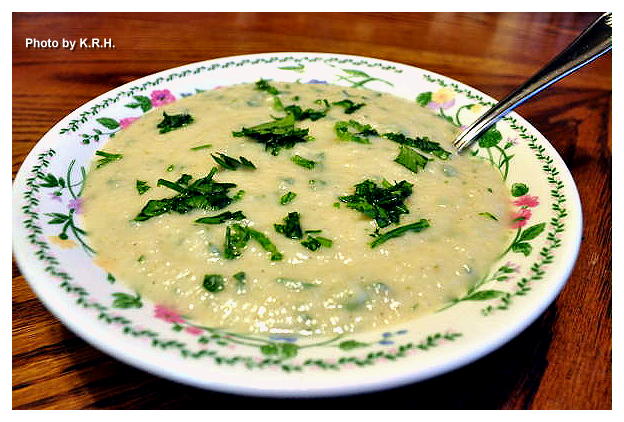
Cream of Parsnip Soup...
I have a confession to make, I have never actually made or eaten a parsnip soup until tonight. I have eaten parsnips in soups, and stews and in other dishes but I had never before had an honest parsnip soup. Why? I couldn’t say. I actually like parsnips quite a bit, they have a great sweet and subtly spicy flavor that I enjoy, and yet I rarely buy them when I go out shopping. They almost never feature on my dinner table. In fact if it weren’t for my recent zeal for Irish cooking I might never have tried parsnip soup at all.
Parsnips you see are a pretty common root vegetable in Ireland and they tend to feature quite prominently in soups, stews and casseroles. Like other root vegetables they make for great hearty fare and are typically quite cheap which makes them an easy, affordable food source for many people. Soups, stews, and broths also hold a special place in traditional Irish cooking as they provide warmth during the long rainy days, and much needed sustenance. Interestingly enough Irish soups were originally made with oatmeal and resembled gruel more then they did the sorts of soups we’re familiar with. Overtime however the traditional Irish soups turned into hearty, heavy, and creamy meals in a bowl and I can tell you from personal experience that if you walk into any pub in Ireland it would be a miracle if you didn’t see soups listed on the menu no matter what time of the year. My husband and I ate a lot of soup when we were in Ireland, even though we were there during the summer we just couldn’t resist those rich creamy soups, because seriously when it comes to creamy root vegetable soups the Irish know what they’re doing.
Though this recipe is super basic, and doesn’t use a lot of ingredients it’s full of flavor. So much flavor in fact that I was quite surprised. The spices are subtle, and the parsnips are slightly sweet, and just a tad peppery. The parsley and onion delivers some texture and another depth of flavor. Overall this soup really amazed me, and I’m so glad I finally tried parsnip soup! One of the other great things about this soup is how fast it cooks. It’s super quick and easy and you don’t really need to pay all that much attention to it. So whip up a batch and enjoy!
Cream of Parsnip Soup
2lb Parsnips peeled and chopped
2 Small Yellow Onions Chopped
8 Cloves Garlic
1/4C Earth Balance
2 tsp Ground Cumin
1 tsp Ground Coriander
3 ½ C water + 1 Vegan Chicken Bouillon Cube
1 C Unsweetened Almond Milk
Celtic Sea Salt and Black Pepper to taste
Fresh Minced Parsley to taste
Sliced Green Onions to taste
- Melt the butter in a medium sized pot over medium-high heat.
- Add the onions, parsnips and whole garlic cloves and saute for 5-8 minutes until the vegetables become tender.
- Add the water and bouillon cube and bring the mixture to a boil. Reduce heat to simmer and simmer for roughly 15-20 minutes until the parsnips are fork tender.
- Transfer the soup to a highspeed blender and blend on high until smooth. Return the soup to the pot along with the almond milk and stir to combine. Add the salt, pepper, minced parsley and green onions and simmer for 2 minutes or until soup is heated through.
- Serve garnished with additional parsley and green onions alongside a nice garden salad.
Tuesday, March 12, 2013
Irish Seitan and Guinness Stew With Champ...
The Irish have a long standing tradition of cooking meat in beer. Soups, stews, casseroles you name it, there are a whole slew of Irish recipes that use stout - typically Guinness - as a flavor enhancer. They’re certainly not the only culture to use beer as an ingredients in their dinner, however I think they make better use of it and get more creative with it then some. This particular recipe appealed to me because it was cold and rainy all day yesterday, which made me want something hearty, chewy, heavy and comforting. While this dish may not be one of those extremely clever uses of stout that I just mentioned it is super satisfying. Flavor wise it’s reminiscent of a more traditional beef stew but with a subtly sweet edge a slight acidic tang, and robust undertones of roasted barley and hops. There’s something really pleasing to my palate about this combination, and the smell of simmering beer made me feel ‘home-sick’ for Dublin. Don’t be surprised if as you’re cooking this stew you begin having daydreams of cobble stone streets, and rowdy overflowing pubs.
Now my version of this recipe differs a little from those that you might find in Ireland because rather then strain out the leeks, onion, carrot and celery after a long cooking time I leave the vegetables in. Traditional recipes also use bacon as a flavoring agent. I originally considered using a vegan bacon substitute in this recipe to achieve the same effect, however I opted to use liquid smoke instead. It's cheap, fast, effective and imparts the perfect smoky-bacon flavor. Of course if you prefer you could use whatever vegan bacon you like, 4oz is the typical amount called for.
Lastly, Guinness - of course - is the recommended kind of stout to use for this dish, however since Guinness - like so many other types of beer and wine - is filtered through the bladders of fish it’s avoided by those who are vegan for animal-rights reasons. In that case any Irish stout will do, but if you’re a little less strict about it then Guinness works perfectly. The Irish say that Stout Beer and Beef are natural partners - which I suppose is why they’re paired so frequently in Irish cooking - but really, you don’t know the magic of stout until you’ve paired it with a good, chewy, home-made Seitan! Forget about beef, Seitan and Stout were meant to be together and I mean that.
Irish Seitan and Guinness Stew
1 Tbsp Olive Oil
1 lb Irish Style Seitan Chopped into cubes
1 Small Yellow Onion Roughly Chopped
1 Large Leek Sliced
3 Carrots Roughly Chopped
3 Stalks Celery Roughly chopped
6 Garlic Cloves Minced
1 1/4 C Water + 1 Vegan Beef Bouillon Cube
1 Bottle of Irish Stout Beer
1/4 C Earth Balance
8oz Cremini or Baby Bella Mushrooms Quartered
3 Large Shallots cut into quarters or sixths
1/4 C Whole Wheat Pastry Flour
Celtic Sea Salt and Black Pepper to taste
2 tsp Liquid Smoke
Sliced Green Onions to serve (Optional)
Minced Fresh Parsley to Serve (Optional)
- Heat the oil in a pot over medium-high and add the carrot, celery, onion, and leek. Saute for five minutes until the vegetables are bright and just beginning to become tender.
- Add the minced garlic, the stock, the stout, and season with salt and pepper. Cover and simmer gently over low heat for 20 minutes.
- Meanwhile melt the Earth Balance in a frying pan. Add the cubed seitan, quartered mushrooms, and chopped shallots. Saute over medium-high heat for 5-8 minutes until seitan is nice and brown and shallots and mushrooms are tender.
- After 20 minutes add the browned seitan, mushrooms, and shallots to the pot. Simmer for another 10 minutes.
- After 10 minutes add the flour and stir to combine. Simmer for five minutes to let thicken and then add the liquid smoke and simmer an additional five minutes.
- Remove from the heat and let rest for 10-15 minutes to let flavors mingle. Then serve in large bowls with a heaping scoop of Champ and garnish with Fresh parsley and green onions.
Typically and Irish Seitan and Guinness Stew would be paired with a hearty scoop of Mashed potatoes smothered in butter. However I decided to jazz things up a little and so rather then serve my stew with plain old mash, I decided to make Champ. Champ is a traditional dish that’s basically a glorified form of mashed potatoes. It’s a common side-dish in Ireland and is typically paired with stews, sausages or other grilled meats. It’s most associated with Northern Ireland but you can find it all over the country. What makes it different then a traditional dish of mashed potatoes is that the potatoes are mixed with fresh spring onions that have been simmered in milk, and often other fresh herbs are thrown into the mix for good measure. Chives, Parsley, and Basil are all common addition, and even green peas can be thrown into the mix. For my version of Champ I decided to keep it basic and traditional, after all it was going to be soaked and smothered in Seitan and Guinness stew anyway. Make sure each serving of champ is accompanied by a good dollop of non-dairy butter, as the traditional way of eating champ is to make a well in the center, fill it with butter, then dip your champ as you eat. Yum!
Champ
6 Medium Sized Russet Potatoes peeled and cubed
4 Baby Yukon Gold Potatoes peel left on and cubed
1 Bunch Green Onions
1 1/4 C Unsweetened Almond Milk
1 tsp Garlic Powder
½ Tsp Celtic Sea Salt
1/4-1/2 tsp Black Pepper
Earth Balance to serve
Fresh Minced Parsley to serve
- Fill medium sized pot with water and bring to a boil over high heat.
- Once boiling add the potatoes and cook until fork tender and soft. Once desired doneness has been reached drain the potatoes and return them to the pot.
- While potatoes are cooking simmer the green onions and the milk in a small saucepan over medium heat. Simmer for 5 minutes until onions are bright green and tender.
- Add the simmered milk and green onions to the potatoes, season with garlic, salt and pepper and then mash, or use an electric hand mixer to whip the potatoes into a creamy consistency.
- Serve alongside Seitan and Guinness Stew, and garnish each serving with a generous dollop of Earth Balance and a sprinkling of fresh minced Parsley.
Labels:
Carrots,
Celery,
European Fusion,
Garlic,
Green Onions,
Holiday Food,
Leeks,
Mushrooms,
Onions,
Parsley,
Potato,
Seitan,
Shallots,
Veganize-It
Subscribe to:
Posts (Atom)