Showing posts with label Alternative Health. Show all posts

Wednesday, July 16, 2014

Spotlight Food - Sea Vegetables...

What do you know about sea vegetables? Have you ever had them? Do you like them? This amazing nutrient dense food has been consumed in various parts of the world for centuries, but has only become popular in North America over the past decade or so. I’m still amazed by how many people haven’t tried the various different kind of sea vegetables out there, and even more amazed by those who claim not to like them. Granted they’re an acquired taste, I’ll give you that. They taste like the ocean, some people think they taste ‘fishy,’ and the flavor can be a bit strong for some, but once you get used to it, sea vegetables are such a wonderfully health supporting food that you’ll start craving them, I swear!

I remember the first time I ever ate seaweed. I was a kid, maybe 10, and I hated it. My dad was really into seaweed at the time, he’d buy bags of it from the health food store to eat as it was or to make sushi rolls. He’d give me pieces to try and I always thought they were nasty. Fast-forward to highschool when I started eating sushi, I wouldn’t say that I loved seaweed then, but I grew comfortable with it. Fast-forward to me becoming vegan and it took a while, but eventually I warmed up to it. Now I love some nori sprinkled over a salad, some dulse on a sandwich, some wakame in my miso soup. I love seaweed chips, I love toasted nori sheets, I love all those fun little seaweed snacks you can pick up at the Asian markets. I love that pungent, aromatic, sometimes salty ocean flavor, and the best part is that sea vegetables are so incredibly good for you, so you can feel good about eating them.

History/Cultivation 

A lot of us commonly think of sea vegetables os seaweeds as being an integral ingredient in Asian dishes, but the truth is that many cultures around the world have been enjoying this rich, nutrient dense food for centuries. Asia may have the longest recorded tradition of consuming sea vegetables - more then 10,000 years - but many other countries located near water also have a history with seaweed, such as Scotland, Ireland, Norway, Iceland, New Zealand, the South Pacific Islands, and even parts of costal South America.

What a lot of people don’t realize about sea vegetables is the overwhelming variety of them.  More then a thousand types of seaweed exist, and they’re broken down into three distinct categories based on color, brown, green, or red. Each type is unique, having a different shape, texture, and taste. They grow in two places, marine salt waters and freshwater lakes and seas. They may grow on coral reefs or rocky landscapes and can grow at virtually any depth provided sunlight can penetrate through the water to where they reside, as like plants, seaweed needs light for survival. Interestingly sea vegetables are not considered to be either plant nor animal, but are classified as algae.

Health Benefits 

It might surprise you to learn that sea vegetables offer one of the broadest ranges of minerals of any food, containing virtually all the minerals found in the ocean. In addition to offering a unique variety of phytonutrients and antioxidants. They’re also an excellent source of iodine, manganese, B Vitamins, potassium, iron, zinc, and phosphorus.

Sea vegetables also provide anti-inflammatory, anti-cancer, anticoagulant, antithrombotic, and antiviral benefits due to their unique sulfated polysaccharides. Sea vegetables anti-inflammatory benefits seem to take place by blocking selectins - sugar protein molecules - and from inhibiting an enzyme called phospholipase A2.  During an inflammatory response selectins allow inflammatory signals to be transmitted into the cells, so by blocking selectins response, inflammatory signaling can be lessened.  Over activity of the enzyme phospholipase A2 is widely present in unwanted inflammatory problems, and is important for creating the omega-6 fatty acid arachidonic acid (AA.) AA itself provides the basis for a wide variety of pro-inflammatory massaging molecules and in fact many corticosteroid medications lower inflammation by blocking PLA2.

Sulfated polysaccharides are also responsible for sea vegetables cardiovascular benefits, as they can decrease the tendency of blood platelet cells to coagulate and form clots.  Sea vegetables have also been shown to help reduce total and LDL cholesterol.

Sea vegetables sulfated polysaccharides have also shown anti-viral activity, most notably in lab research conducted on Herpes Simplex Virus 1 and 2. It was shown that by blocking the binding sites used by HSV-1 and HSV-2 for cell attachment that sulfated polysaccharides help prevent replication of these viruses. Though we do not yet known whether or not dietary intake of sea vegetables can help prevent HSV replication in individuals with HSV.

Sea vegetables may be of particular benefit in the prevention of estrogen related cancer, particularly breast cancer. As intake of sea vegetables appears to modify various aspects of a woman’s menstrual cycle in such a way that over time - tens of years - the total cumulative estrogen secretion that occurs during the follicular phase of the cycle gets reduced.  Since the overproduction of estrogen can play a role in the risk of breast cancer for women who are estrogen sensitive sea vegetables can offer some unique benefits here. It’s also important to remember that cholesterol is required as a building block for the production of estrogen and intake of sea vegetables has repeatedly shown to lower cholesterol.

Sea Vegetables may also be particularly helpful when it comes to colon cancer, and research has focused heavily in this area with a special emphasis on the loss of calcium-sensing receptors (CaSRs) in colon cancer cells, and the ability of sea vegetable extracts to alter CaSR-related events. Of course since chronic, unwanted inflammation and chronic oxidative stress are both risk factors for development of cancer it’s possible that sea vegetables could be helpful in prevention of numerous cancers.

Sea vegetables may be able to help us increase our cells' sensitivity to insulin, help us prevent overproduction of glucose by our cells, and help us take existing blood sugars and convert them into storable starches. All of these factors would help us increase our blood sugar control, and lower our risk of type 2 diabetes.

Brown algae like kombu/kelp, wakame, and arame can be particularly concentrated sources of iodine, and for some health conditions - like hypothyroidism, in which the cells of the thyroid make too little thyroid hormone - increased iodine intake can provide important health benefits.

The antioxidant content of sea vegetables is also rather impressive, because sea vegetables not only contain measurable amounts of polyphenols like carotenoids and flavonoids, they also contain other phytonutrient antioxidants, including several types of alkaloids that have been shown to possess antioxidant properties. Coupled with measurable amounts of antioxidant vitamins (like vitamins C and E) and antioxidant minerals (like manganese and zinc), sea vegetables can be expected to help us reduce our risk of unwanted oxidative stress and many types of cardiovascular problems that are associated with poor antioxidant intake.

So you see, sea vegetables are really amazing!

Sea Vegetable Types - 

Arame - Brown Algae, limited to the temperate Pacific Ocean waters around Japan, though it is often cultivated in South Korea. It has a mild, semi-sweet flavor and firm texture.

Bladderwrack - A Brown Algae, the most common algae on the shores of the British Isles. It is typically found on the coasts of the North Sea, the Western Baltic Sea and both the Atlantic and Pacific Oceans. It’s been recorded from the Atlantic shores of Europe, to Northern Russia, to Greenland, the Canary Islands, Morocco, Madeira, to the Atlantic Coast of North America, Hudson’s Bay, to North Carolina.  In North America it isn’t used as a food so much as it is an herbal medicine or remedy.

Chlorella - a single cell green algae high in protein and containing a significant amount of minerals. Usually sold as powder, or tablets and is commonly taken as a health supplement, rather then as an ingredient in cooking.

Dulce - A Red Algae, growing on the Northern coasts of the Atlantic and Pacific, as well as Iceland where it’s a popular snack food and has been consumed for centuries as a traditional food.  Usually sold in large dried strips, and is quite tasty on salads or lightly crisped in a pan to place on a sandwich.

Hijiki - Brown Algae, grows along the rocky coastlines of Japan, Korea and China. Somewhat similar to Arame but with a stronger flavor.

Irish Moss - A Red Algae growing abundantly along the rocky coasts of Atlantic Europe and North America.. A common ingredient in some traditional Irish and Scottish cooking. Also commonly used in Asian gelatin like desserts. In North America it’s commonly used as a thickener in many commercial products and has recently found a new use in the vegan community for making vegan cheese, and raw food desserts.

Kombu - Brown Algae, and an edible kelp commonly cultivated on the shores of Japan and Korea. Used extensively in Japanese cooking especially to make soups. It’s also a great addition to making a pot of beans from scratch!

Laver - Red Algae, a common ingredients in Welsh cooking and traditional Welsh dishes such as Laver bread. It’s also commonly found in the cuisines of Ireland, Scotland, Whales, China, Japan, and Korea, and may be one of the first kinds of algae to be cultivated.

Sea Lettuce - Green Algae, widely distributed along the coasts of the worlds oceans. It is particularly common in Scandinavia, Great Britain, Ireland, China and Japan.

Wakame - Brown Algae, grown in Japan and Korea, but also commonly cultivated in sea farms in France off the coast of Brittany, and Tasmania in Australia. It has a subtly sweet flavor and slippery texture. Usually used in soups.

This is by no means a comprehensive list of sea vegetables but it contains the most common ones.

Preparation

So, now that you’ve gone to the health food store and bought some bags of seaweed, what the heck do you do with it? Easy, make Sushi Maki rolls! Or if that’s too much time and trouble for you make a sushi salad! All your sushi ingredients diced up in a bowl, no rolling required, just sprinkle the nori over top. You could put it in miso soup, or any other Asian inspired soup, or any soup in which a little ocean flavor is needed. Such as a vegan ‘clam’ chowder. Try it as a salad topping or make a seaweed salad by soaking some arame and then mixing it with some diced vegetables and a nice Asian style dressing. Toss it into a raw kelp noodle dish, or top a stir-fry with it. Heck, just buy some roasted seaweed sheets from the Asian grocery and eat it as is! Super yummy! Get creative with it, and don’t be afraid to try new things.

Sunday, May 18, 2014

Juice Fast 2.0, Day 3 & 4...


Day 3 of my Juice fast was Tuesday, and it went off pretty smooth. I got home from work at around 8am, and was pretty hungry by then so I tucked into a large jar of the Sea Buckthorn Juice from “Superfood Juices” that I’d made the day before. This juice really was scrumptious, but then I’m of the opinion that you really can’t go wrong with Orange + Beet + Ginger. Know what I’m saying?

For Lunch I enjoyed the Grapefruit Mint Juice that I’d made the day before, and it was quite tasty. I love grapefruit juice anyway, and it worked pretty well with the mint, much to my surprise. I also enjoyed another Electrolyte Chia Lemonade.

In late afternoon I enjoyed a Kombucha, as well as another raw-probiotic drink called Kvass. Kvass was a bit hard to swallow, but maybe it’s because I got the ‘roots’ blend, which is beet, sarsparilla, ginger and some other stuff. It was a bit sour for my taste.

For Dinner I enjoyed a bottle of Carrot Goji juice which was a surprising blend. Throughout the day I drank water of course, and lots of it.

I woke up on Wednesday - Day 4 - feeling pretty darn good about the world and about myself. I was feeling so light, and so good. Almost from the start of Day 1 I’d begun to feel better. My skin itched less, and it looked more clear by day two. My stomach felt flat, not bloated, I had no gas, and even though I sweated profusely at work It didn’t have any odor other then the clean, musky scent of sweat. My insides felt clean, and I felt strong and invigorated. I began my day with a bottle of Carrot Dill Juice, followed by a bottle of Green Apple Kale Juice. I drank a lot of water and enjoyed a long walk. I made another batch of juice to last me for the next couple of days.

Lunch was a sampling of the following - Watermelon Goji Juice, Carrot Lucuma Juice, and Lemon Chard Juice. I was running low on produce - specifically greens - and so I had to rely on non-green juices for this batch. Still I was enjoying the excitement of experiencing new juice combinations. Unfortunately, and very suddenly out of the blue I began to feel a bit ill. I’m not sure why but around noon my stomach began to feel ‘funny’ I wasn’t nauseous, or bloated, I didn’t have to go to the bathroom but I felt some kind of gastronomical distress nonetheless, followed by a sudden sensation of light-headed-ness.

Even though I had a double helping of juice for breakfast I thought maybe this was due to not having enough to eat. So I downed a bottle of ginger kombucha - hoping the ginger and the probiotics would help settle my tummy. Which indeed it did, but it did not make me feel any less-light-headed.

As the day wore on I felt more and more light-headed, and then dizzy. My head felt like it was full of cotton balls and bees. Very fussy, very buzzy, very heavy. I felt weak. Everything seemed to take great effort. - Talking, walking, even breathing seemed laborious. I had not experienced these feelings to such an extreme on my previous juice fast and so I didn’t know what to make of them. I needed to take my dog for a walk, and so I went - for just a short 15 minute jaunt around the block and it was hard. My legs felt like lead, picking my feet up off the ground and moving my legs forward was a challenge. They felt so heavy, and yet at the same time I felt as though I had no legs at all, I couldn’t feel them properly, as though they’d fallen asleep. My motor skills were not good. I came home, I drank more water, I laid on the couch silently reading. I spent most of the afternoon on the livingroom couch. It was grey and overcast outside and suddenly I felt chilled to the bone. I was so cold, shivering even though I was dressed in a hoodie and was wrapped in a blanket. I cranked the heat and it did not relieve me. I moved from the couch to my bed and burred myself under masses of blankets. Finally I was warm, but so very tired and weak.

I stayed like that all day, and only got up for lunch which was a glass of the Fennel Mint Juice which I’ll be honest, I did not like. Fennel is a vegetable that’s hit or miss with me, but I wanted to try it anyway. For me it was too strong a taste in this juice. I followed it with some water, and some tea. Lots of hot tea to warm me up inside and out. Mostly peppermint tea, but also some herbal hibiscus tea.

Dinner was Apple Broccoli Ginger Juice which was much tastier then I was expecting. I enjoyed it, with water, but did not feel much better. I went to bed early. I woke up at Eleven, and did not feel much better, but I had to get ready for work. I took two steps towards my alarm clock to turn it off, and nearly passed out. I probably would have lost consciousness completely except when I dropped, I fell against my bookcase and I think it was that hard thwack that woke me out of it. For a few minutes I couldn’t see anything or say anything, my ears were buzzing. I sat silently until my eyes refocused and I could move again.

My first two hours of work were hard, I felt bad, not as bad as I had in the afternoon but still not so great. Light-headed, weak, my body felt heavy. At 2am I took a break and enjoyed some water and a bottle of Lemon Chard Juice. It was very green, but somehow tasty anyway. After that I gradually began to feel better. My next 6 hours of work went pretty smooth. I didn’t feel as weak or as dizzy, I thought I was getting better.

My shift ended at 8am, and maybe 10 minutes before I punched out for the day I began to feel strange again. My husband had slept in, and so I had to wait for him at work, I hung around and talked with a couple of the guys I’ve made friends with. As we talked I felt worse and worse, dizzy, light-headed and everything felt heavy and numb again. I had to sit down. My husband finally arrived to collect me and we went to buy groceries. I couldn’t quite manage this simple task, and so I sat down in the cafĂ© and waited for him to finish up.

As far as hunger goes, I was not hungry at all. The juice kept my hunger pains at bay, and kept my needs in that regard completely satisfied. Nothing I did however seemed to make me feel any less dizzy or any less weak. I didn’t want to quit the juice fast, I was enjoying the experience up until day 4, but since my job is a very physical one I realized that it did not make sense to continue on like this, feeling so ill. Not only did it not make sense but it was potentially dangerous, I could hurt myself, or do irreversible damage. My husband insisted that I break the fast and eat. At first I was very reluctant to do this, but he insisted, he said “At least eat some fruit, something, anything.” the more he talked the more I saw reason. So Mid-morning on Day 5 I broke the fast. I was sad to do so, but by afternoon I was feeling much, much better. I’ll talk about my breaking of the fast tomorrow.

Before I go however I just wanted to say that I don’t want my experience on day 4 to dissuade you or scare you away from fasting. I’m not scared at all, in fact I plan to do another short 3 day fast at the end of the month since I didn’t make the full 6 days I’d initially planned on. Everyone’s body, needs and experiences are different, and I never felt this way on my first juice fast. I think this time around it maybe had something to do with low blood pressure, my blood pressure is quite low to begin with and it might have dropped much too low due to fasting. It might be better for me in the future to do shorter more frequent fasts vs longer infrequent ones. You have to find what works for you, and I still maintain that under normal circumstances fasting is a transcendent experience.

You can Read about Day's 1 and 2 Here

Monday, May 12, 2014

Juice Fast 2.0, Day 1 & 2...


After giving it a bit of thought I’ve decided once again to embark on a Juice Fast. If you remember I did one in January of 2013, and blogged all about it Here, HereHereHereHereHere, and Here  Overall I enjoyed the experience, but for some reason once it was over the things the thoughts that lingered with me the most were the negative thoughts. The hard moments, the cranky moments, the things I didn’t like, and I wasn’t interested in doing another juice fast anytime soon.

Well, it seemed like this year had one hell of a beginning for me. The decadent party food never seemed to stop, I’d get on a health kick that would last a few days or a week and then something would come up. Some reason for decadence and I’d fall right off that wagon all over again. Then we went on vacation, but it wasn’t the same as when we went to Montreal. The vegan restaurant were few and far between. We lived mostly on rice and beans and fruit which is what I enjoy, but then we came back and it was a tidal wave of decadence. Then I had some personal stuff going on - some hectic job related stuff, and the pressure of finishing my school project and I’ll be honest my eating became irregular and chaotic at best. I went from extremes of not eating anything at all, to eating everything! Up and down up and down, and add on top of it that I’ve been testing tons of recipes for 3 vegan cook books - well, I was just never able to get a handle on my eating long enough to get myself back on track.

It occurred to me in the middle of last week that this crazy cycle needed to end, and it needed to end now. I’ve been feeling ‘gross’ off and on for a while now. I’ve been feeling bloated, and gassy, and my stomach has been in all kinds of distress. These are not great feelings, and I haven’t felt very good about myself because of all of this. A juice fast seemed the most logical place to start, and so without spending too much time agonizing over the decision I jumped right into it.

I started Sunday, and I’ll be going for Six Days. Meaning I’ll officially be able to eat solid food again Saturday.

I was anticipating a lot of discomfort, a lot of crankiness, a lot of hunger and so far that hasn’t been the case for me. In fact, I’ve found this juice fast to be going very smoothly, and it seems much easier then the one I did last year. I’ve hardly felt hungry at all, except for when it comes time to my needing a juice, and yesterday it seemed ad though I didn’t even need that much. I haven’t so far experienced any negative effects. I was really tired yesterday, but I don’t know if that had anything to do with juicing or if it’s just because I’m still getting used to this new schedule. Or maybe it was because of the physical activity I engaged in yesterday. Who knows.

The weird thing, is that even though I’m not particularly hungry I keep thinking about the foods I want to eat. It’s strange not eating, and when you’re not eating it’s amazing how aware you are of the fact that you’re not eating. It’s amazing how many food related thoughts we have in a day. Interestingly enough right now the things I’m craving most are just raw vegetables, salads, raw cauliflower, carrots, olives, kale salad, almond butter. Nothing crazy, nothing decadent, I think this is a good sign, a sign that I’m getting on track already. I plan to follow my 6 day juice fast with a 5 day raw food cleanse, and hopefully that’ll set everything right again. But now you probably want to know about the juice right?

Well Sunday started off with a 20oz glass of water. Followed by a 8oz glass of Citrus Apple Juice from Julie Morris’s book “Superfood Juices.” this juice contains apples, oranges, and sea buckthorn juice. This was super delicious and a great way to start the day.

Mid morning I followed that with a 20oz glass of water and then an 8oz glass of Green Apple Kale Juice from the same book. This juice contains apples, kale, cucumber, celery and spirulina. Also quite tasty - though a bit ‘green’ for me, I added a couple of drops of liquid stevia.

In Mid afternoon I enjoyed 8oz of Carrot Dill Juice - from the same book - which consisted of carrots, dill, cucumber, celery, Swiss Chard, and hemp seeds. It’s not a pretty juice but it’s actually very tasty. I thought the dill would be too much, but this juice has a sweetness from the carrots, and a creaminess from the hemp seeds that can’t be matched.

Between six and seven-thirty for dinner I had 24oz of Cooling Kale Juice - from the same book - it contained honeydew, cucumber, kale, apple, mint and lemon and was so good! I really loved this one, not overly green, and very refreshing. I followed this up with a 16oz bottle of unflavored kombucha and that was that. At other points throughout the day I drank water, and it went really well. I felt great all day, and almost immediately I felt less bloated, and less gassy. Amazing how that works, in fact it might be a good idea to just do a 1 day juice fast each month.

As for today - Monday - I started the day the same way with 20oz glass of water. Then followed it with 12oz of citrus apple juice, and a 12oz glass of Celery Greens which is from the same book. This juice contains celery, romaine lettuce, kale, parsley, and lemon. I thought it was going to be really bitter but it was actually quite good.

Then I knocked back some more water and went downstairs to make another batch of juice for the coming days. Since I made Six bottles of juice, and each batch of juice made a little extra that didn't fit in each bottle, all that extra ended up being my lunch. So I had some Maca Yam juice, Some Fennel Mint Juice, Some Grapefruit Mint Juice, some Apple Broccoli Ginger Juice, some Ginger Greens Juice, and some Sea Bucthorne Beet Juice. - All from "Superfood Juices" and I'll discuss each in more detail on Day 3-4.

Even after sampling all those tasty juices I was still a bit hungry and so I made the Chia Lemonade also from "Superfood Juices" This is a mixture of 1 cup coconut water, 1 cup water, fresh squeezed lemon juice and Chia Seeds. Now I know Chia seeds are not juice, and probably don't belong on a typical juice fast, however I decided a small amount of fiber would be okay this time around, because i think the zero-fiber juice fast I did last year was part of why I found it so uncomfortable. When you drink only juice there comes a point where there's nothing left - or not much left - in your insides to get pushed out anymore, know what i'm saying? and that's a strange feeling, and can be somewhat uncomfortable. I like the addition of this small amount of fiber to keep things regular.

Anyway, that Lemonade kept me pretty full until dinner time, and at dinner I drank the Maca Yam Juice which was good, but a little starchy for my tastes. I actually juiced some carrots with the yam as well, since i didn't have 2lb of yams but only 1 1/2lb. Still you could really taste the starch - more as an aftertaste. However the maca, cinnamon and coconut really made it taste like a holiday drink. Like eggnog, or chai or something delicious like that. I also drank a quarter bottle of the Sea Bucthorne Beet Juice which I added a smidge of ginger too and it was delicious.

I'd say that day 2 went by pretty smooth, as smooth as day 1, and far smoother then expected.

I’ll keep you updated all week on my progress so stay tuned!

Friday, April 18, 2014

Parsley Is The Spice of Life...

Parsley is an herb that I use almost as frequently as Cilantro. I buy several bunches of it per week, and like with cilantro I throw it into everything. It’s got a beautiful color, a heavenly smell, and a wonderful taste - but really is it any wonder that I love it so much when Parsley and Cilantro are related? You might not think so but parsley and coriander (cilantro) actually belong to the same family. The Apiaceae family, other members of which include fennel, dill, cumin, celery, carrot, anise, hemlock and lovage. Though there are several varieties of parlay there are really only two types commonly used as herbs.  Curly parsley, and leaf - or Italian - parsley, which is my favorite. Curly parsley is more decorative in appearance, as it’s name suggests it’s rather curly, where as Leaf parsley, also called flat-leaf parsley is flat, and looks a lot like cilantro. The flat variety is said to have a stronger flavor then the curly type but different opinions on this subject abound. The reason I like flat-leaf parsley best is because it’s a lot easier to mince. There is a third type of parsley commonly grown throughout central and eastern Europe called root parsley which produces a much thicker root then the types of parsley cultivated for their leaves. These roots are often used in casseroles, or soups, or simply eaten raw, but they are not to be confused with the parsnip. Though the parsnip is actually the closest relative of parsley in the Apiaceae family, the two taste quite different. Now, I don’t know about you but I find that kind of stuff fascinating.

Unfortunately, as wonderful as parsley is, it is so often neglected in our cooking. Parsley is considered somewhat of a ‘bland’ herb - don’t ask me why, - and is more often then not relegated to the world of artistic plating where it is perpetually stuck playing the part of a mere garnish. A real travesty if I ever heard one. If you just so happen to be one of those people that doesn’t give parsley the time of day, then I hope that by the time you’ve reached the end of this post you’ve changed your mind.

History/cultivation -

Parsley is native to the Mediterranean (Southern Italy, Algeria, Tunisia.)  Though it’s been cultivated for more then 2000 years parsley was first used medicinally before it was consumed as a food. The ancient Greeks held parsley to be sacred and used it to adorn victors of athletic contests as well as for decorating the tombs of the dead. Interestingly enough using parsley as a garnish has a long history that can be traced back to the civilization of ancient Rome.

When  parsley made the shift from medicinal and sacrificial use to culinary use is unknown. However that change is thought to have occurred at sometime during the Middle Ages in Europe. Some historians even credit Charlemagne with it’s popularization since he had it grown on his estates.

Health Benefits -

Parsley contains two components that provide unique health benefits, volatile oil, and flavonoids. Parsley’s volatile oils - particularly myristicin - have been shown to inhibit tumor formation - particularly tumor formation in the lungs -  in animal studies. Myristicin has also shown an ability to activates the enzyme glutathione-S-transferase which helps attach the molecule glutathione to oxidized molecules that would otherwise do damage in the body. The activity of parsley’s volatile oils make it a ‘chemoprotective’ food, and a food that can help naturalize particular carcinogens - such as those found in cigarette smoke or charcoal grill smoke.

The Flavonoids in parsley - especially luteolin - have been shown to function as antioxidants that can help prevent oxygen based damage to cells. In addition parsley extracts have been used in animal-based studies to help increase the antioxidant capacity of the blood.

Parsley is also an excellent source of Vitamin C which is important since vitamin C is the body’s primary water-soluble antioxidant, capable of defeating otherwise dangerous free radicles in all water soluble parts of the body. Since high levels of free radicals contribute to both the development and progression of diseases like atherosclerosis, cancer, diabetes and asthma, people who eat healthy amounts of Vitamin C rich foods may be at lower risk. Vitamin C is also a powerful anti-inflammatory and so it can be useful in conditions such as osteoarthritis and rheumatoid arthritis. Not to mention the importance of vitamin C to the immune system.

Parsley is also a great source of beta-carotene, another important antioxidant working in the fat soluble areas of the body. Diets rich in beta-carotene are also associated with a reduced risk of developing atherosclerosis, diabetes, and cancer. Beta-carotene may also help reduce the severity of asthma, osteoarthritis and rheumatoid arthritis. Beta-carotene is also converted by the body into Vitamin A which is an essential nutrient for a strong immune system.

Parsley is also an excellent source of folic acid which plays a critical role in relation to cardiovascular health.  Folic acid plays a major role in the body’s process of converting homocysteine into benign molecules.  At high levels homocysteine can directly damage blood vessels and significantly increase one’s risk of heart attack or stroke especially in people who may already suffer from atherosclerosis or diabetic heart disease. Folic acid is also a critical nutrient for proper cell division and is vitally important for cancer prevention in two areas of the body that contain rapidly dividing cells - the colon, and the cervix.

Preparation - 

I really do use parsley in just about everything. Typically I add it towards the end of cooking or sprinkle it on just before serving a dish, because it’s really best eaten raw. I love it in soups, or stews - anything with an Italian, North American or European feel. I like it sprinkled on salads, or used in certain Middle Eastern dishes like Tabbouleh. It’s great in tomato sauce, it’s great in alfredo sauce. It’s perfect in horseradish cream sauce to ladle over tofu. It makes a great pesto, it’s fantastic blended into salad dressings. It works fantastically with grilled or broiled cauliflower, and I love it paired with chickpeas. Really it’s hard to go wrong with parsley so the next time you’re at hte market pick up a bunch or two and don’t be afraid to use it. Experiment and enjoy, that’s what cooking’s all about!

Wednesday, April 2, 2014

Coriander Is The Spice of Life...

I probably say this about every spice but I really, really love Coriander. Did you know that coriander is both an herb and a spice? This is because both the fresh leaves and the seeds are used. In North America we commonly refer to the seeds (ground or whole) as coriander, while we refer to the fresh leaves as cilantro.  While I tend to use both in my cooking I typically reserve coriander seeds and powder for dishes of a Mediterranean, Mexican, Indian, or Middle Eastern flair, where as Cilantro I’ll toss into just about anything. I use a ridiculous amount of Cilantro, and probably buy anywhere from 3-4 large bunches of it per week. I love everything about it from it’s unique flavor to it’s smell, and it works well in almost any dish.

Interestingly enough did you know that many people can’t stand the leaves because they experience un unpleasant soapy taste or rank flavor when eating them? This is due to an aromatic chemical compound within the leaves that is somewhat related to a chemical group found in the Stink Bug. Apparently the different perceptions of coriander leaves is genetic - like that whole Asparagus/stinky pee thing - with some people having absolutely no reaction to the chemicals whatsoever, while others can’t stand it. Glad I’m one of the people who can stand Coriander/Cilantro, because I don’t know what I’d do without it! But enough about all that, lets get to some history.

History/Cultivation

Coriander is native to a wide range of areas spanning Southern Europe all the way to South Asia, and since it grows wild in so many areas it’s hard for us to pinpoint exactly where it was first cultivated. There is however plenty of evidence to suggest that Coriander has been in use for a very, very long time. For example fifteen desiccated coriander mericarps were found in the Pre-Pottery Neolithic B Level of the Nahal Hemel Cave in Israel which is potentially the oldest archeological find of coriander. Roughly half a liter of coriander mericarps were recovered from the tomb of Tutankhamun, and since the plant does not grow wild in Egypt archeologists interpret this as proof that coriander was cultivated by the ancient Egyptians.

Coriander also seems to have been cultivated in Greece since roughly the second millennium BC. A Linear B Tablet recovered from Pylos refers to the species being cultivated for use in perfume as well as for it’s culinary/medicinal properties Large quantities of the species being recovered at an Early Bronze Age layer at Sitagori in Macedonia could indicate cultivation of the species at that time..

If you want to get a little less Scientific coriander is also mentioned in the Old Testament of The Bible. It’s also said to have been used by the Romans to preserve meat and flavor bread, and it’s associated with Hippocrates who apparently used it as an aromatic stimulant.

Lastly coriander was brought to the British Colonies in North America around 1670, and became one of the first spices cultivated by early settlers.

Health Benefits 

Recent animal-based research has confirmed that coriander can control blood sugar, cholesterol, and free radical production. When it was added to the diet of diabetic mice, it helped stimulate their secretion of insulin and lowered their blood sugar.  When it was given to rats fed a high fat, high cholesterol diet, coriander lowered levels of total LDL cholesterol and triglycerides while increasing the levels of HDL cholesterol. This effect appears to be caused by increasing synthesis of bile by the liver and increasing the breakdown of cholesterol into other compounds. Finally in rats coriander was also shown to reduce the amount of damaged fats in their cell membranes.

Interestingly in parts of Europe coriander has been traditionally referred to as an ‘anti-diabetic’ herb, and has been documented as a traditional treatment for Type 2 Diabetes.

A study published in the June 2004 issue of the Journal of Agriculture and Food Chemistry suggests that coriander could be a natural way to fight Salmonella - which is a frequently and sometimes deadly cause of foodborne illness. Together US and Mexican researchers isolated the compound dodecenal, which laboratory tests showed is twice as effective as the commonly used antibiotic drug gentamicin at killing Salmonella.

Coriander - like many spices - also contains antioxidants, which can delay or prevent the spoilage of food seasoned with it. Though antioxidants were found in both the seeds as well as the leaves the antioxidant effect of the leaves proved to be greater.

Coriander has also been used as a folk remedy in Iran to treat anxiety and insomnia. While it’s long been used in Indian Medicine as a diuretic, as well as a carminative and digestive aid.

Lastly the essential oil produced from coriander has shown to have antimicrobial effects.

So it’s antioxidant, antibacterial, anti-diabetic, and antimicrobial - what more could you ask for?

Preparation -

I like cilantro in just about anything but some of my favorite ways to use it are in fresh salsa, guacamole, black bean soup, in grain salads like tabbouleh, in dal’s, in curries - especially spicy curries or coconut based curries - in chili, in cornbread, sprinkled over top of roasted potatoes or carrots, in lentil soup - or any soup - sprinkled over top of salad, in chutney, dressing’s, dip’s, and even on pasta. It’s great with lightly sauteed white beans, and goes pretty well with just about any Mexican, Latin American, Indian, Asian, North African, Mediterranean, or Tex-Mex style cuisine.

You can even make a holistic tea out of it by boiling the seeds - though I’ll be honest and say I have no idea what that might taste like.

There’s really so much you can do with cilantro that as long as you don’t have an aversion to it you should just start liberally using it in everything.

Tuesday, March 18, 2014

Peppermint Is The Spice of Life...

Did you know there are about 25 different species of mint? Peppermint is a natural hybrid cross between watermint and spearmint and it is by far one of my favorite things in life. It’s my favorite mint because it has the boldest flavor, rich and cooling with a subtle hint of pepper, and a powerful note of chlorophyll. Other mints such as spearmint are more subtle and mild tasting, though possibly more ‘cooling’ as well. For as long as I can remember I’ve loved the taste of peppermint. As a kid it was all about peppermint candy, and then as a young adult it became more about peppermint tea. Mint of any kind is not something I generally use much in my cooking unless I’m cooking something Middle Eastern, but I do drink vats of peppermint tea regularly! I have always preferred herbal infusions to actual tea, and peppermint is by far my favorite. Some people use it only when they have an upset stomach, or are feeling nauseous and while I do use it for medicinal purposes as well, I really don’t need any excuse to enjoy a hot, steaming mug of peppermint. I love it’s soothing flavor, it’s refreshing aftertaste, it’s calming properties and of course it’s great for what ails your stomach. Regardless of whether I’m feeling sick or in perfect health I’ll drink peppermint tea any day of the year, sometimes in mass quantity.

History/Cultivation 

Mint is an ancient herb that’s been used since antiquity for it’s culinary, medicinal and aromatic properties. Though it’s now cultivated everywhere Mint’s origins lie in Europe, where it is honored in Greek Myth. As the story goes Mint was originally a nymph named Minthe who was so infatuated with Hades, that she wanted to seduce him. Hades who felt a rather mutual affection for the nymph may have gone for it too if not for his wife Persephone, who quickly intervened and out of jealousy and spite transformed Minthe into a plant. Though Hades was upset, he could not undo the spell, and so instead he decided to impart Minthe with the pungently sweet smell characteristic of mint, so that when she was walked upon in the garden her aroma would be a delight to the senses and she would not be utterly forgotten.

Interestingly it’s because of Mint’s characteristic smell that it’s become one of the more popular perfuming herbs throughout history. All around the world from Europe to India to the Middle East Mint has been used as a strewing herb to clear the air both in temples and in homes. Over the centuries mint has also come to symbolize hospitality, in ancient Greece mint leaves were rubbed over the dining tables to welcome guests, and in the Middle East mint tea is still offered to guests upon arrival. Mint was also commonly used in funerary rites in ancient Greece. It was even used medicinally by Native Americans before the arrival of European Settlers. Some archeological studies have dated it’s use back 10,000 years, which is pretty neat.

Health Benefits 

Peppermint has a long tradition of medicinal use and has been commonly used to soothe upset stomach, nausea, vomiting, abdominal pain, bloating, indigestion and irritable bowel. An Italian study published in 2007 reported that 75% of patients who took peppermint oil capsuels for four weeks had major reductions in IBS symptoms compared with just 38% of those who just took a placebo. A similar 2010 study conducted in Iran found similar results, and a 2011 study showed that peppermint acts through a specific anti-pain channel called TRPM8 to reduce pain sensing fibers.

Additionally the German Commission E found that peppermint oil as well as peppermint leaf can be used internally as an antispasmodic in the upper gastrointestinal tract and bile ducts to treat IBS, catarrh of the respiratory tract, and inflammation of the oral mucosa. While externally peppermint oil has been used for myalgia and neuralgia. According to the German Commission E, Peppermint oil may also act as a carminative, cholagogue, antibacterial and secretolytic and has a cooling action.

Of course Peppermint may benefit more then just your gastrointestinal tract. Some resent studies have discovered that Perillyl alcohol - a phytonutrient plentiful in peppermint oil - has been shown to stop the growth of pancreatic, mammary, and liver tumors in animal studies. It has also been shown to protect against cancer formation in the colon, skin, and lungs.  However these results have not yet been equally matched by human studies.

Peppermint oil has also been found to be antimicrobial which means it stops the growth of many different kinds of bacteria as well as inhibit the growth of certain types of fungus.

Peppermint contains the substance rosmarinic acid, which has several actions that are beneficial in asthma. Extracts of peppermint have also been shown to help relieve the nasal symptoms of colds related to allergy. Rosmarinic acid also has antioxidant abilities to neutralize free radicals and has been shown to block the productions of pro-inflammatory chemicals.

Some studies have even suggested that the aroma of Peppermint can increase memory and alertness.

On another note studies have also shown Peppermint to be a rich source of traditional nutrients such as manganese, copper, and vitamin C.

Preparation - 

As I’ve said my favorite way to enjoy Peppermint is through a nice mug of tea. However if peppermint tea isn’t your thing you can simply minced the fresh leaves and add them into salads - the flavor of mint works particularly well with grain salads such as tabbouleh. You can use it in soups particularly Vietnamese or Asian soups - like Pho - or Middle Eastern Soups or Tagine’s. You can add it to fruit soups, raw soups, or cold summer soups for a bit of additional flavor and it’s cooling properties. It tastes great minced and mixed with fresh ripe tomatoes in a tomato salad or try it in gazpacho. It’s great tossed with fried or grilled cubes of eggplant, or try it in a homemade non-dairy yogurt sauce. Add it to fruit salad, pair it with fennel and oranges, throw it into smoothies or turn it into a dessert! Mint Chocolate pudding anyone?

However you decide to try it, just try it. Get creative and let me know what kind of combinations you come up with, I’d love to hear all about it.

May your life be rich in spice and as always Happy and Healthy Eating to you!

Wednesday, February 5, 2014

January Cleanse Part 5...


I’m gearing up to go on vacation again, and so things have been kind of hectic around here. Lots of running around to get last minute things done, and lots of pressure to ger work on my final project for school squared away before I leave. Not to mention work, and all the regular duties of life. So this past week was slightly more slack in terms of the cleanse - meaning, we had some dessert, we ate a burrito from Chipotle, and I allowed myself another latte while I was bathing suit shopping Monday. All in all the week went pretty well, although despite originally wanting to continue the cleanse up until the day we left, I decided to end the cleanse Sunday. I’ll continue to eat healthfully until we leave, but I won’t be posting about it because A) I haven’t got the time, and B) We need to use up all the food we have in the fridge so the meals won’t be all that exciting. Probably a lot of salad, ha.


So in part 4 I left off on Friday. The next day started the same with a 12oz green juice, and then instead of a smoothie I decided to go for something a little different. I was really in the mood for cereal for some reason and my husband had just picked up a bag of unsweetened, rice puffs. The only ingredient is rice! They’re kind of bland to be honest, but I also kind of love that, call me crazy. To the puffs I added 1 tbsp of chia seeds, 2 tbsp of ground flax, some dried cranberries, and some dried golden raisins, then I topped it off with plain almond milk. Super delicious and surprisingly filling.

Lunch was a mixed green salad that I threw together with some of that artichoke aioli for dressing.

Dinner was leftover Chickpea and Root Veggie Tagine from Crazy Sexy Kitchen.

Sunday breakfast was the same, juice, and rice puffs cereal. Salad for lunch. Dinner was an entirely new dish though, and it was super amazing. Right now I’m doing some recipe testing for Richa of Vegan Richa and so for dinner I made her Simple Mung Dal Tadka. This dal was so flavorul despite it being very simple and we enjoyed it so much. I really loved the flavor of the mustard seeds and the asafetida.


Monday we spent a good hour or so juicing in the morning. Unfortunately I forgot to take pictures of our creations. I made the grapefruit/orange mix again, but this time I also added some apple and ginger and it was simply divine. Then I made some very green juice of celery, cucumber, kale, collards, lemon, lime, and spirulina. Then I made some beet juice. One batch had beets, oranges, carrots, and ginger. The other hand beets, apple, ginger, tomato, and lemon. Both excellent and perhaps my favorite mixes after the grapefruit/orange. Over the course of the week I just rotated these juices in the morning. Then followed the same pattern for the rest of the day, rice puffs cereal, salad or leftovers for lunch. Dinners were always new.


Except Monday while we were out we decided to grab an impromptu Sushi Lunch at a place called MoonSun Sushi. We’d never been there before but we were driving by and it just looked so inviting. We ordered green tea, hot plum saki, miso soup and then Avocado rolls, cucumber rolls, shiitake mushroom rolls and vegetable tempura rolls. It was delicious, and really hit the spot. We enjoyed our self so much, and enjoyed the atmosphere of MoonSun Sushi so much that we’re thinking of making Monday Sushi Lunch a regular thing.


Monday we enjoyed the Coconut Cauliflower Curry with Mustard Greens and Spinach from Wild About Greens by Nava Atlas. I was super excited to try this because I don’t know of a lot of recipes that utilize mustard greens. Overall though I thought the dish was just so-so, I felt it was missing something but I couldn’t quite put my finger on it. Still I really applaud the use of mustard greens, a seriously under utilized green!


Tuesday for dinner I made the Indian Chickpea Blinis with Cashew Coconut Chutney from Crazy Sexy Kitchen. These little chickpea pancakes were delicious! And the chutney was to die for. The picture I’ll admit looks a little brown, but don’t let that fool you. This is probably one of the best things I’ve made out of CSK, I’m sure I’ll be making this regularly now.


Wednesday night for dinner we had the simple yet wonderfully flavored Asian Noodles with Black Vinaigrette from Crazy Sexy Kitchen. This is like a Soba noodle salad full of delicious raw veggies like cabbage, red bell pepper, yellow bell pepper, snow peas, carrots, sprouts and I added green onions. The vinaigrette was a basic Asian style dressing with sesame, rice vinegar and agave. Very tasty!


Also on Wednesday I just couldn’t help myself. I wanted dessert, and so I made the Black Eyed Pea-nut Butter Pie from Kathy Hester’s wonderful book The Great Vegan Bean Book. This pie sounded so unique I had to give it a shot, and so I picked up some frozen whole wheat pie crusts - didn’t feel like making my own - and whipped this together in now time. It’s super simple, all it is is black eyed peas, peanut butter, agave, almond milk and chocolate chips. It’s practically guilt-free and so I didn’t feel to bad about enjoying this throughout the week. At less then 200 calories per slice how can you go wrong?


Since my husband doesn’t like peanut butter I decided to make him a treat as well, and so I also whipped up a batch of Kathy Hester’s Double Chocolate Devil’s Food Cookies also from The Great Vegan Bean Book these were super cakey, and super moist, and the fun part is that they’re made with black beans! I also used date sugar in place of the regular sugar called for and added a few drops of stevia for added sweetness. I think in the end they turned out phenomenal and again, practically guilt-free. It’s nice to be able to enjoy a ‘decadent’ dessert without having to feel too badly about it. Most of these my husband ate in no time at all, but I did sample a few over the week. How could I not?


Thursday’s dinner was another dish that I was testing for Richa. It’s Cauliflower, Carrots and Peas in a Coconut Poppy Seed Curry. This was amazing, My husband nearly devoured the entire pot. It had such great flavor and such a great aroma, we just adored it. I served it with a side of some jasmine rice I’ve had in the pantry for way to long. I jazzed it up a bit with some cumin seeds and garlic and it was really a perfect accompaniment to the curry.

Friday was the night we ate Chipotle. I was tired, and stressed, didn’t feel that great and didn’t feel all that much like cooking. Plus I just really, really wanted a burrito you know? So my wonderful husband picked us up some dinner, we got the new Tofu Sofritos Burrito and I’m not gonna lie, it was delicious!

Saturday I made dinner. A new dish also from Kathy Hester’s book The Great Vegan Bean Book. Another curry - I know, we ate a lot of curry this week, so sue me, - I have actually had my eye on this particular dish since I first purchased the book, but for some reason or other I just never got around to making it. The Kalpana’s Black Eyed Pea Curry was really worth the wait though. I loved the flavors a bit tangy, a bit spicy, everything you could want in a curry. I was kind of burnt out on rice though and so instead I steamed kale to serve with it, and it was a great way to enjoy this yummy curry.


Sunday nights dinner was pretty basic. It was just a big bowl or rice, steamed sweet potatoes, steamed kale, red cabbage, avocado, green onions and yellow bell pepper dressed in an Asian Ginger Sesame sauce. Very tasty, and exactly the kind of thing I enjoy eating, only I was kind of in a rush when I got home from work and forgot to take a photo.

So that wraps it up. The cleanse has been fun, I’ve felt really good eating so clean over the past month, and I’ve really enjoyed sharing it all with you. I didn’t loose weight as most people do on cleanses but I think that has more to do with the fact that I hardly exercised at all this month. The best feeling for me is just the satisfaction of knowing Im doing something good, and you know, I didn’t miss sugar as much as I thought I would. I allowed a little here and there on the cleanse but it’s nowhere near the amount I’m used to consuming and somehow it ended up being a perfect amount. I think I’ll continue the juicing trend when I get back from vacation because I really enjoyed that a lot, and I definitely need to incorporate more big salads into my daily routine, I loved that about the past month. So many salads. I also really love the idea of finding new ways to satisfy sweet cravings and I think I’ll probably make Kathy Hester’s desserts more frequently rather then go for the bad stuff.

So I hope you enjoyed this experiment as much as I did.

Thursday, January 30, 2014

Cumin Is The Spice of Life...

Long time readers of this blog may remember that there was a time when I did a series entitled “The Spice of Life” in which I featured a different spice and told you about it’s cultural history, as well as it’s healing properties or potential. It’s been a few years since I did the last one, I got side-tracked with other things and school took up so much of my time that I didn’t have any time leftover to really do personal - non-school-related - research, but I really miss doing those posts, and I think it’s great information to share and so my goal for the year is to start doing them again.  Starting today, with one of my favorite spices of all time - Cumin! I absolutely love cumin, I adore it, I use it liberally in a lot of my cooking, it is fantastic and wonderful, and makes food taste great, but that’s not even the best part.

Cumin -

History/Cultivation 

Cumin is a flowering plant in the Apiaceae family, native from the East Mediterranean all the way to India. For millennia it has been used as both a spice and as a medicine. In fact there’s evidence of cumins use in Indian archaeological sites that date back to the second millennium BC and some New Kingdom Archaeological sites in Egypt that date as far back as the 11th century BC, where it was used - at least in part - in the mummification process of the Pharaohs. Cumin is even mentioned in the Bible, both as a culinary spice, as well as a form of currency! All this is to say that Cumin has been around for a very long time, and was once highly prized.

It’s hard to say exactly where it was originally cultivated, some say Iran, some say Egypt, some say the Mediterranean.  The ancient Greeks and Romans used cumin widely in their cooking, and the Greeks actually kept jars of it on their kitchen tables as we would do with pepper today. During the Middle Ages cumin was one of the most common spices used in Europe, where somehow it became a symbol of love and fidelity. It was carried in the pockets of wedding attendees, and women would commonly bake it into bread to give to their soldier husbands as they left for war. Certain Arabic traditions also consider cumin a symbol of love and fidelity and even consider it to have aphrodisiac properties.

From Europe Cumin was introduced to the Americas by Spanish and Portuguese colonists. Though popularity of the spice dropped off in Europe after the Middle Ages it still remains an widely used and extremely important spice in the Middle East, and India. Interestingly today India produced 70% of the world cumin supply, and consumed 90% of it’s own supply! (63% of the world production) Other producers of Cumin are Syria, Turkey, Iran, Egypt, Morocco, China, and Chile.

Health Benefits 

Cumin has long been used in Ayurvedic medicine as a digestive aid. In fact in Sanskrit Cumin is known as Jiraka, Jira meaning “That which helps digestion.”Ayurvedic medicine also uses Cumin as a way to enhance appetite, taste perception, vision, strength, and lactation. It’s also used to treat ailments such as fever, loss of appetite, diarrhea, vomiting, abdominal distension, and edema. Though it has been used for centuries as a digestive aid medical science is just starting to prove it. Recent research has shown that cumin may stimulate the secretion of pancreatic enzymes which are compounds necessary for proper digestion and nutrient assimilation.

Recent research has also suggested that Cumin may have anti-carcinogenic properties. In animal studies cumin was shown to protect laboratory animals from developing stomach or liver tumors.  It’s thought that this is due to cumins potent free-radical scavenging abilities as well as the ability it has shown to enhance the liver’s detoxification enzymes. Since free radical scavenging and detoxification are important for the general maintenance of wellness, cumin’s contribution to our overall health may reach even further then that, only time will tell.

Cumin is also a significant source of iron which helps to boost our energy and is integral to enhancing our immune system. Iron is particularly important to children and menstruating women. 2tsp of Cumin contains 15% iron, 7% manganese, 4% copper, 3% Calcium, 3% magnesium, 2% Phosphorus, and 2% B1.

Preparation 

There are many ways to enjoy cumin. It’s typically used most in North African, Middle Eastern, Spanish, and Indian cuisine. So use it in curries, korma’s, and dal’s. You can use it to flavor chili, stews, and soups. It’s often used in hummus, and chili as well as other Spanish or Tex-Mex dishes. You can add cumin to a black bean salad or a black bean dip or even a black bean salsa. Add cumin seeds to bread, or flatbread, or incorporate them into homemade pizza dough. You can rub vegetables with a little olive oil and sprinkle cumin over them and roast them for a delicious side dish. It makes a great compliment to any hearty bean or lentil dish, and adding cumin seeds into brown rice gives the rice a really nice aromatic flavor, add some dried apricots and almonds for extra pizzazz. You can even saute vegetables in a little oil and cumin along with other spices you might like and serve it atop a plate of rice or cous cous for a North African flavor.

If you’re interested in a more medicinal use you can make cumin tea by boiling cumin seeds in water and then letting them steep for 10 minutes. This concoction is reported to be both warming and soothing.

Lastly the combination of black pepper, cumin and honey is considered an aphrodisiac in certain Middle Eastern countries, whether or not it actually works is anyone’s guess , but it is a tasty way to dress vegetables, tofu or tempeh. Only I’d urge you to replace the honey with agave instead, for a cruelty-free option.

May your life be rich in spice! And as always happy and health eating to you!

If you enjoyed this post check out -

Close Is The Spice of Life
Sage Is The Spice of Life
Thyme Is The Spice of Life
Dill Is The Spice of Life
Black Pepper Is The Spice of Life

Sunday, January 26, 2014

January Cleanse Part 4...

I really love everything I’ve been eating this month. I love clean meals, and whole foods prepared simply, but I also love decadence, and I have a bit of a sweet tooth, so this week was kind of weird for me. I feel entirely satisfied by everything I’m eating but my brain keeps day-dreaming about things like pizza and dessert. Unfortunately I had a few ‘slips’ this week but in the grand scheme of things it wasn’t all that bad.

Monday started off the same as all the other days, water and a orange/grapefruit juice. - Definitely a favorite combo of mine. I followed that up with this Luscious Fruit and Flax Smoothie that I talked about earlier this week. Seriously it’s so good! And that actually kept me going right until dinner. Monday was kind of busy for us, we were out and about and so there wasn’t a lot of time to stop and make lunch, plus we ate dinner earlier then normal so it kind of worked out.

Fruit and Flax Smoothie 


For dinner I made these delicious Black Bean and Roasted Sweet Potato Burgers from Kris Carr’s “Crazy Sexy Kitchen” they’re full of black beans, sweet potato, onion, brown rice, garlic, cumin, chili powder, tamari, and cornmeal, and they are amazing! No lie, I could probably eat these everyday. Instead of eating them on a burger bun with all the fixin’s though I opted for a healthier approach and served them atop a green salad that had romaine, spinach, diced tomato, green onion, and avocado. The greens were lightly dressed in the leftover Organic Green Garlic Dressing I bought the night before.

Black Bean Sweet Potato Burgers 
On a salad 


Monday night I was also feeling something of a sweet craving. After being so good all month I really just wanted something that felt decadent, but I didn’t want to fall completely off the wagon and so I made these Chocolate Chip Chickpea Cookies from Kathy Hester’s book “The Great Vegan Bean Book” Now. I know what you’re thinking, “Chickpeas in a cookie?” it sounds wrong, and maybe even a little bit disgusting but they are AMAZING! Even my husband loved them and he’s skeptical always skeptical about beans. What’s really great about these cookies is that they’re simple and not all that terrible for you. There are only 81 calories per cookie, and they’re made with whole wheat pastry flour, baking powder, baking soda, salt, chickpeas, non-dairy milk, vanilla extract, sugar, and chocolate chips. I only used ½ Cup of sugar instead of the recommended 1 cup so they were even better! The cookies are also suppose to have chopped pecans which I love, but my husband doesn’t like nuts and so I opted to leave those out. I was truly amazed at how moist and fluffy these cookies were, and I’m super excited to try some of Kathy’s other beany desserts. Of course I probably ate one or two more then I should have but I also started going back to the gym Monday - FINALLY - so I think it works itself out.

Chickpea Chocolate Chip Cookies 


Throughout this cleanse I’ve come to the conclusion that it’s not going to be very realistic for me to train my body/tastebuds to not want sugar or sweets ever, but I think re-training myself to be satisfied with only a little - rather then gorge myself on a lot - is doable for the long term.

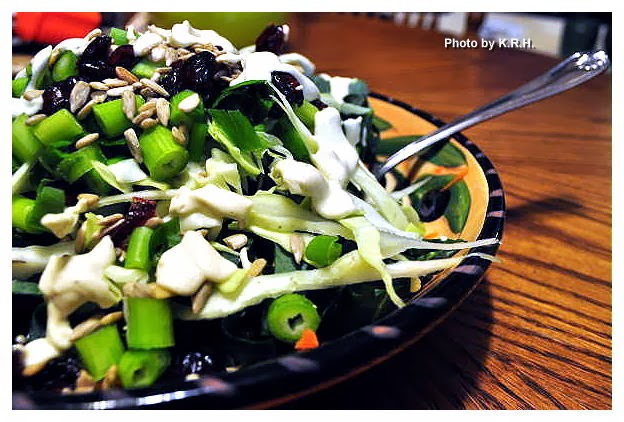
Tuesday I stared with a green juice and then another Fruit and Flax smoothie. For lunch I made a big green salad. It was kind of like a coleslaw only it was full of collard greens, green cabbage, shredded carrots, green onions, sunflower seeds and cranberries. As a dressing I made Kris Carr’s Artichoke Cashew Aioli which is made with cashews, water, lemon juice, apple cider vinegar, olive oil, agave, garlic, salt, artichokes, tarragon, parsley, shallot and lemon zest. I thinned it out with a bit of water so it was more like a dressing and it tasted amazing over my salad.

Collard Green Cabbage Salad
With Cashew Artichoke Aioli


Dinner was left over Black Bean and Sweet Potato Burgers atop another salad. The salad was basically the same this time except it had corn instead of avocado and was dressed with chipotle olive oil and pineapple vinegar. Delicious!


Wednesday started off with another green juice, but instead of following it up with a smoothie I decided to have some home-made cereal. I felt like something chewable, and I wanted something fiber-rich and filling. So I made my favorite cereal. It’s a bowl of rolled oats, flax seed, chia seed, sunflower seeds, sliced almonds, dried cranberries, dried blueberries, raisins, fresh banana and almond milk with a few drops of vanilla stevia. I also added in some fresh diced pineapple since I had some. It’s so good, and kept me full all day.

Home-made Cereal 


Dinner was new, and it was kind of a feast. First we had Zucchini Carpaccio from Kris Carr’s “Crazy Sexy Kitchen” which is raw thin sliced zucchini drizzled with olive oil and garnished with parsley, sea salt and black pepper. Super simple and yet so flavorful.

Zucchini Carpaccio


With it we had the Sauteed Chard from CSK which was super simple too. Just chard, garlic, shallot, tamari, olive oil, and nutritional yeast.

Sauteed Chard 


I also made the Pastrami-Spiced Carrots with White Bean Sauerkraut Puree from CSK which was AMAZING! Truly the standout dish, I mean this may be my new favorite recipe for carrots. All you do is rub them in a little olive oil, then some Montreal Steak Seasoning - Quebec Beef Seasoning in my case - and roast them for about 25 minutes until they’re tender but still crisp. Then you pari them with a deliciously flavored white bean puree. Kind of like a hummus but it’s got that tangy umami flavor thanks to Dijon Mustard and Sauerkraut. What an inventive way to use kraut by the way, I never would have thought about it!

Pastrami-Spiced Carrots 
White Bean Sauerkraut Dip


Lastly we had the Polenta Squares with Marinara from Colleen Patrick-Goudreau’s book “The 30 Day Vegan Challenge” I like polenta well enough, but I’d never had these fried - or you can grill them - polenta squares before. Since I was really craving fries I thought why not go for a healthier option, and it was magical.

Polenta Squares with Marinara 


Later for dessert I had 1 square of Endangered Species Dark Chocolate. Just one square! Do you know what an accomplishment that is for me?

Thursday was pretty much the same as Wednesday except I started with orange/grapefruit juice. I had the same cereal and that kept me full all day.

For Dinner I was feeling like noodles and so I decided to make the Double Mushroom Jap Chae from Terry Hope Romero’s “Vegan Eats World” Her recipe is pretty simple and still tastes really traditional. It uses Sweet potato noodles, sesame oil, soy sauce, garlic, brown sugar, gochuchang, shiitake mushrooms, black cloud mushrooms, bok choy, onion, carrot, green onion, and sesame seeds. Only I didn’t have shiitake or black cloud mushrooms and so I subbed in Woodear Mushrooms and Chinese Black Fungus. I also didn’t have bok choy but she says you can sub in spinach if you prefer so that’s what I did. I also took her suggestion and added some diced baked tofu. The end result was incredible, and so satisfying.


Double Mushroom Jap Chae


Friday began the same again. Orange/Grapefruit Juice, and a small glass of green juice as well. I had a small bowl of cereal, and then in late afternoon I had some leftover polenta squares with marinara and the remainder of the Pastrami-Spiced Carrots and white bean sauerkraut dip.

Around six I grabbed a Suja Mango-Feugo Juice which was incredible.

And when I got home from work that night I enjoyed a nice steaming bowl of this delicious Chickpea and Root Vegetable Tagine from Crazy Sexy Kitchen. It’s got chickpeas, carrots, sweet potatoes, russet potatoes, lemon, raisins and olives. Along with red pepper flakes, turmeric, cumin and cinnamon. It was suppose to be green olives but I didn’t have any and so I used kalamata instead. I served it with couscous and it made a wonderful hearty meal for a cold winter night.

Chickpea and Root Vegetable Tagine 


Overall Aside from a few cravings I felt pretty good. Good energy level, felt pretty accomplished, was in a positive mood etc... but the biggest thing was I started back at the gym. Weights, and swimming how I missed thee! Due to schedule conflicts I only got to go 3 nights out of the week, but 2 nights I did some exercise - light weights, sit ups, pushups - at home, and now that I’m no longer sick I started walking again. Each day I went out for a thirty minute walk in the afternoon. Though I’d like to have gone longer I think 30 minutes in this arctic temperature is about as much as my dog can handle.

Until next time.