Showing posts with label Chinese 5 Spice. Show all posts

Monday, July 30, 2012

Baked Sunchoke Sandwiches with Five Spice Slaw...


I’ve been rather neglectful of the blog of late I know, and for that I’m sorry. It’s just that a multitude of other things have accumulated and I’m finding it very difficult at the moment to divide my time. I know I last left off with updating about my vacation to Germany but I thought since it’s been such an awful long time since I posted a recipe I should take a few moments to do that instead.


In truth I haven’t been cooking much, or rather I have been but I’ve been making very simple food, nothing worthy of blogging about. This dish however I made just before going on vacation and it was simply superb! Really it’s perfect for a hearty lunch or a light dinner, because really, who doesn’t love a big ‘ole sloppy sandwich every once and a while? And, how often do you get to use sunchokes? Not often enough in my opinion, so I hope you enjoy, and I promise to get back to posting regularly again.


What I like best about this sandwich is the subtle hint of anise from the five spice powder. You get this great punch of Asian flavor combined with the unique taste of sunchokes, fantastic combination, trust me!


Baked Sunchoke Sandwiches with Five Spice Slaw 

1 lb Sunchokes,
Sea salt and Black Pepper to taste
1 French Baguette
Sliced Tomato to serve
Thai chili sauce to serve (optional)

Five Spice Slaw 

2 Carrots Grated
2 Celery Ribs diced
1 Red Bell Pepper diced
4 Garlic Cloves minced
Green Onions to taste
1 ½ C Red Cabbage finely shredded
½ C Non-dairy Mayo (I like Earth Balance)
1 ½ tsp Sesame Oil
1 tsp Coconut Amino’s or Soy Sauce
1 ½ tsp Chinese 5 Spice Powder or to taste
Sea salt Black pepper
1 Packet Stevia or to taste (Optional)
2 tsp Apple Cider Vinegar
½ Bunch Cilantro Minced

- Pre-heat oven to 400'F

- To make the Sunchokes make sure you rinse and clean them very well. They tend to be quite gritty. What I like to do is soak them in a big bowl of warm water for a few minutes. Then I scrub them good and give them a rinse.

- After they’ve been washed you want to slice them relatively thin. You can do it with a mandolin or a knife, whichever you prefer. No need to peel the chokes as long as you wash them well.

- Next spray a baking sheet with non-stick spray. Then spread the sunchoke slices out in a single layer. Depending on the size of your pan you might need to do this on two pans. Sprinkle with sea salt and black pepper to taste then place in the oven.

- Bake at 400'F for 10 minutes a side, or until the sunchokes have turned a nice golden color. Be careful not to burn or crisp them. You still want them a bit soft.

- Once done remove from the oven and set aside to cool.

- To make the Five Spice Slaw mix together carrots, red pepper, red cabbage, celery, cilantro, garlic and green onions in a big mixing bowl.

- In a small bowl whisk together the Mayo, sesame oil, coconut amino’s or soy sauce, Chinese 5 spice powder, apple cider vinegar, salt, pepper, and stevia to taste. Taste for flavor and adjust seasonings as needed.

- Pour the dressing over the Slaw and mix to thoroughly combine. Taste and adjust flavor as needed.

- To assemble your sandwich slice the Baguette in half crosswise, then make a slit lengthwise down each half.  Layer in the baked sunchokes, top with a few slices of tomato, and a heaping amount of slaw. Then drizzle a little Thai Chili Sauce over top if desired, and enjoy!


PS: Gluten-Free if using Coconut Amino's or GF Tamari. Soy-Free if using Soy-Free non-dairy Mayo


Thursday, June 7, 2012

Curry Kapitan with Coconut and Chili Relish...


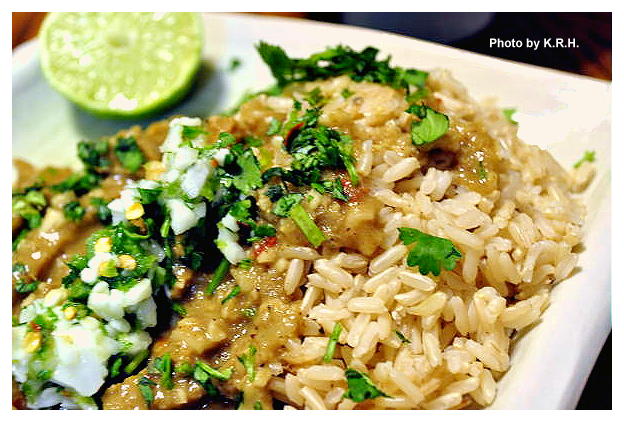
My latest foray into Malaysian Cooking. Curry Kapitan is traditionally made with chicken, and it’s said that the dish recalls the traditional role of the Chinese Kapitan, who was a man of considerable social standing amongst the Malay and Chinese people in old Melaka. Possibly invented by the Peranakans - the Malay-Chinese - to present to the Kapitan or to celebrate his role. It owes it’s flavor to the cultural melting pot of Old Melaka, and to the traditions of Chinese, Malay, Portugese, and Indian cuisine. Of course for my version I used homemade seitan instead of chicken, and decided to use soy sauce for a salty taste instead of dried shrimp paste.


This dish is nothing if not flavorful. The aroma alone is mouth-watering, but the taste... incredible! Though the ingredient list may seem long, this dish actually comes together rather quickly and it is worth every ounce of effort. When I first set out to make this dish I had no idea what to expect, and there were a few moments at least where I thought the whole thing would end in disaster. However when it came time to eat, and I took my first bite of curry Kapitan I was in love. The flavor is so complex that it’s hard to describe, but it has every flavor note you could possibly want in a dish. You can adjust the seasonings to make it as hot or mild as you like, but a little bit of kick is part of what makes this dish so fantastic. Use the chilies as a garnish, with a squeeze of lime and you won’t be disappointed. It tastes even better the next day!


Curry Kapitan with Coconut and Chili Relish 

For the Rempah 

½-1 tsp red pepper flakes
1 large red onion
10 cloves garlic
thumb sized piece of ginger
1 tbsp soy sauce
½ tsp ground turmeric
2 tsp Chinese five spice powder
1/4-1/2 tsp ground cinnamon

For the Curry 

2 Tbsp tamarind paste
Flesh from half of 1 Fresh Thai Coconut (roasted)
2 tbsp peanut oil
1 15oz can coconut milk + 1/3 c water
1-2 Pack Stevia
1 ½ lb Seitan (Homemade or Store bought)

For the Chili Relish 

½ - 1 Jalapeno Minced (Depending on how spicy you want it)
½-1 Red Chili Minced or ½-1 tsp red pepper flakes
½ Bunch Cilantro Minced
Flesh from half of 1 Fresh Thai Coconut
Juice of 1 Lime


To Serve

1 Lime
Extra Cilantro minced
Cooked Brown Rice

- First you must open your coconut. To do this the easiest way is to get a cleaver. It doesn’t have to be a good cleaver, it doesn’t have to be a $500 one, a $50 one will work just as good. Use the cleaver to whack your coconut a couple of times to break through. Drain the liquid out into a bowl or measuring cup and refrigerate to dink later, it’s not needed for the recipe.

- Once the liquid has been drained from the coconut you can split it in half. Use your cleaver and give the coconut a great whack in the middle. If like me you’re not strong enough to get the cleaver all the way through the coconut in one whack, and not skilled enough to keep hitting it in the exact same spot, use a rubber mallet to hammer the cleaver down through the coconut. This works really great, and fast.

- Once your coconut is in half use a spoon to scoop out the delicious white flesh. Once all the flesh has been removed rinse it under cold water and rub any filament away. Pat the coconut dry, and then slice it thin. Reserve half the amount of coconut in a bowl, to use as part of the relish and dry roast the other half in a pan over medium heat until it’s golden brown. Be careful not to burn it. The coconut should emit a slight nutty aroma.

- Once the coconut is a nice golden brown remove it and grind it either in a food processor or mortar and pestle until it resembles corse sugar grinds. Place in a bowl and set aside.

- Now to make the Rempah. In a food processor blend together the garlic, ginger and onion. Add in the soy sauce and pulse to combine. Stir in the turmeric, cinnamon and five spice powder.

- Heat the oil in a large pan over medium-high heat and stir in the rempah. Fry for five to eight minutes until the mixture becomes fragrant.

- Add the seitan to the pan and fry another 3-5 minutes, to let the seitan brown a little.

- Add in the coconut milk, water, Tamarind, stevia and season with sea salt and black pepper. Bring the mixture to a boil, then reduce heat and let simmer for 10-20 minutes. Add in the reserved roasted coconut.

- In the meantime combine all the relish ingredients in a bowl.

- Serve the Curry Kapitan over a bed of brown rice, garnished with extra cilantro, some squeezed lime, and the chili relish.


*** Note - To make this dish Gluten-Free use Wheat Free Tamari and a soy-based ‘meat’ or tofu. To make this dish Soy-Free use Coconut Amino’s instead of soy sauce.***

Saturday, May 19, 2012

5 Spice Fiddleheads and Bunapi Mushrooms...


Fiddleheads are the unfurled fronds of a young fern. They are harvested seasonally, in early spring before the fronds have opened and reached their full height. I knew what fiddleheads were, and I’ve come across recipes for them before, but until a few days ago I’d never tasted them, nor even seen them in person. Apparently they are the new ‘in’ thing but I didn’t really know what all the fuss was about. So of course, when they made their appearance in my local market last weakened I knew I’d have to try them. If only to see if they lived up to the hype, and because it’s become something of a rule for me that whenever I’m faced with a vegetable I don’t know or have never tried, I must eat it.


My first thought upon eating one raw was “Wow, this tastes exactly like a fern.” A reaction that my husband found greatly amusing, and if like him, you too, are wondering how do I know what ferns taste like, it’s simple. I did grow up in Vancouver after all, amongst a rich natural landscape, and I was a Tom Boy as a child. Meaning I spent all of my childhood playing out doors, especially in the woods, - of which there was no shortage in my neighborhood - and when you’re the sort of child that spends her days climbing trees, and building forts and, tree houses, you inevitably find yourself doing a bit of foraging. So yes, I’ve eaten wild ferns, and wild berries, and tons of other random, wild vegetarian. - Which by the way I don’t recommend unless you absolutely know what you’re doing! - So when I first bit into that raw Fiddlehead it brought back a flood of memories of days spent in trees, playing at being a ‘wild thing.’ I can’t say the flavor of ferns is a particularly delicate one, and it is something of an acquired taste to be sure. Cooked fiddleheads on the other hand are an entirely different vegetable. When you cook them they become far milder, almost bland, with a hint of sweetness and a wonderful chewy texture. My second thought upon eating a blanched fiddlehead was “Interesting.” my third thought was “Amazing.” Like tofu, they really soak up the flavor of whatever you cook them with, they absorb so much which I love, but the thing I love most about them is their texture. I can’t really explain it, but something about it really appeals to me.


Though I wouldn’t go so far as to say they are my new favorite vegetable, nor do they even make it onto my top ten, but they are definitely a treat. A wonderful spring surprise to brighten up and liven up your palate. So if you see them, do give them a try, their season is very short so you have to snap them up when the opportunity presents itself.


So, about this recipe, since I’d never cooked with fiddleheads before I wasn’t really sure what to do. I did a google search and pretty much every recipe I found came back using fiddleheads as a garnish to meat. A few other recipes had them thrown into pasta, and many more still had them cooked in butter with morel mushrooms. None of these things appealed to me, and none of them seemed particularly creative or interesting. However I did like the idea of cooking the fiddleheads with mushrooms. Not morels though. As it happened I still had a package of Bunapi mushrooms that I’d bought at the Japanese market, and so I decided why not try them, and do an Asian inspired sort of dish? - By the way Bunapi mushrooms also known as White Beech are a unique sort of Japanese mushroom with a crisp texture and slightly nutty flavor. If you can’t find them you could always substitute shiitake or oyster mushrooms. - I’ve also been kind of addicted to Chinese 5 Spice Powder lately, and so I thought I’d try and work that into the recipe too. In the end the whole thing came together perfectly, far exceeding my expectations. The flavors of this dish are a complex mixture of sweet, salty, and spicy, and it’s just so delicious you’ll definitely be craving more.


5 Spice Fiddleheads and Bunapi Mushrooms

5oz Bunapi Mushrooms stem base removed and separated
7oz Fiddleheads
8 Garlic Cloves Minced
1 Thumb sized piece Ginger grated
2 Shallots minced
2 tsp Sesame Oil
2 Tbsp Soy Sauce or coconut aminos
½-1 Tbsp Brown Rice Syrup
½-3/4 tsp Chinese 5 Spice Powder
1/4-1/2 tsp Crushed Red Pepper Flakes

- First bring a medium sized pot of water to a boil, add the fiddleheads to the pot and boil for 2 minutes. Quickly drain and then plunge into a bowl of ice cold water to stop the cooking process. Once cooled drain the fiddleheads and pat dry, set aside on a plate.

- Heat the 2 tsp of sesame oil in a large pan over medium-high heat. Add the garlic, ginger and shallot and saute for 5 minutes until fragrant. Add in the crushed red pepper flakes and saute another 2-3 minutes until the shallots are soft.

- Whisk soy sauce, brown rice syrup and five spice powder together in a small bowl and set aside.

- Add in the Bunapi mushrooms and the Fiddleheads saute for 5 minutes. Add in the reserved sauce and saute another 3-5 minutes until the sauce has absorbed a bit and the mushrooms and fiddleheads are softened.

- Serve and enjoy!


*** Note - gluten-free if using GF Tamari, soy-free if using coconut aminos.***


FYI - Fiddleheads are reported to be a good source of Omega-3 and Omega-6 fatty acids. They’re also high in Iron, fiber and potassium. They also have a good deal of antioxidant activity as does the bunapi mushroom.