Showing posts with label Tamarind. Show all posts

Monday, January 14, 2013

Indian Spiced Lentil Loaf...


Everyone loves a good lentil loaf right? At least it seems that way. I say that because out of the 100 + cook books that I own I would say at least three quarters of them contain a recipe for a vegan ‘meatloaf’ or some variation of the classic hippy lentil loaf. Now, I was never that big a fan of ‘meatloaf,’ because well... for starters meat shouldn’t come in a loaf, ans secondly when you really think about what it is you’re eating - a big ole slab of ground beef with ketchup and breadcrumbs - it doesn’t really sound that appetizing. Certainly it’s not a very creative dish. A good lentil loaf on the other hand can blow your mind, after all lentils are a really versatile food, and I never fail to be amazed at what they can be made into. Plus on these cold winter nights when you’re dying for something savory and comforting but don’t want to do a lot of work a lentil loaf is perfect. They’re quick and easy to throw together with minimal active time. Once you have it in the oven baking you can take a shower, read a book, do some yoga, or just relax with a hot cup of tea.


Lentils loafs are also rich in nutrients. You get protein from the lentils, plus lots of healthful nutrients, vitamins, minerals and antioxidants from the array of spices and vegetables you decide to put into them. The problem though - at least for me - is that so many of the lentil loaf recipes floating around out there are the same. It’s always the same kind of lentils - usually brown - with the same basic combination of vegetables - onions, carrot, celery, - and the same combination of herbs - parsley, thyme, salt, pepper, basil, oregano. - Vegetable brother is another typical component as is soy sauce and are almost always topped with ketchup or BBQ sauce. Now, don’t get me wrong, I like this combination - a lot - but as you know I like variety. I’ve never been the type of person who makes the same thing over and over again and so I require a little more creativity in my life.

I had been thinking a lot about lentil loafs last November when I happened upon an interesting recipe in Robin Asbell’s book “Big Vegan” it was a French inspired lentil loaf with Herbs de Provence and a Dijon Mustard glaze, yum! I was immediately excited and so I made the loaf. It was beyond excellent, and it got me thinking about what other kind of cultural twists I could throw into a lentil loaf to shake things up a bit. Initially I wrote down a bunch of ideas that I’m eager to try out, but since Indian food is one of my - and my husband’s, - favorites, that seemed the most natural direction to go in first.


When I first came up with the idea I had no idea how I was really going to do it. I had no idea if it would be good or if it would even be edible, but in the end I really surprised myself because the loaf turned out really fantastic. It tasted like a big samosa covered in mango chutney. It had all the great flavors I love about Indian Cuisine, the sweet, the spicy, the pungent, all rolled up in one easy package. My husband loved it too and so we enjoyed this delicious Indian spiced loaf for 2 days as dinner and 2 days as leftovers in lunches. It was the perfect hearty meal for those cold nights that proceeded the beginning of the Christmas season.

One thing to keep in mind about this recipe however is the fact that this makes a very large loaf. It was too large for my regular loaf pan and so I baked it in a cake pan instead. If you’re not looking to make quite so much you could easily half the recipe, but remember that halving it will mean a shorter cooking time also. Anywhere from 25-40 minutes less, depending on the consistency of the loaf at the time you pour it into the pan. Though if you were so inclined to make the recipe as is it tastes fantastic as leftovers, either on it’s own or stuffed into whole grain pita bread with sliced tomato, onion, lettuce, cucumber and a little additional chutney. Or be a little more traditional and roll it up into some Naan bread. However you decide to make it just enjoy it!


Indian Spiced Lentil Loaf 

1 C Green lentils
½ C Red Lentils
3 C Water
1 1/4 C Oat Flour
6 Garlic Cloves Minced
1 Tbsp Ginger grated
1 Yellow Onion Diced
1 tsp Mustard Seeds
3 Yukon Gold Potatoes diced
1 Tbsp Peanut Oil
2 C Cauliflower Chopped
1 Large Carrot
½ Frozen Green Peas
5-6 Tbsp Curry Powder
1 tsp Ground Turmeric
½ tsp Ground Cinnamon
1/4 tsp Ground Cardamom
4 tsp Ground Cumin
2 tsp Ground Coriander
Sea salt and Black Pepper to taste
2-4 Tbsp Mango Chutney
2 Tbsp Tamarind Paste
8oz Mango Chutney

- Preheat oven to 400'F/200'C

- Cook Green and Red Lentils in 3 Cups water until tender and most of water has been absorbed. If not all the water has been absorbed by the time the lentils are tender drain in a colander. If lentils are not tender by the time the water has absorbed add more. Once cooked set aside to cool.

- Steam the Potatoes and Cauliflower until just tender, then set aside to cool.

- In a pan over medium-high heat saute the mustard seeds for a few seconds until they begin popping. Add the peanut oil, the onion, garlic and ginger and saute for 5-7 minutes until translucent.

- In food processor combine the cooked lentils, potatoes, cauliflower, onion mixture, and the oat flour. Pulse until just combined.

- Add the Cardamom, Cumin, Coriander, Salt, Pepper, cinnamon, turmeric, curry powder, tamarind paste, and the 2-4 Tbsp of Mango Chutney. Pulse until it the mixture just becomes cohesive, and the spices have been incorporated.

- Turn the mixture out into a mixing bowl. Add in the grated carrot and the frozen peas. Stir to combine. Taste for flavor and texture and adjust seasoning as needed.  More curry powder, chutney, salt etc... If the mixture is too wet add in a bit more oat flour. If it’s too dry add in a bit of oil, water, or more chutney or tamarind paste.

- Grease a 9 inch round cake pan - I used a sprongform pan, - and scrape the mixture into it. Smooth the top with the back of a spatula then top with the 8oz of Mango Chutney.

- Bake uncovered in the oven for roughly 60-75 minutes until the top is bubbling and the loaf seems firm when you insert a knife or wooden skewer into it.

- Remove from the oven and let cool on the counter top for 10-15 minutes before slicing. Serve with a giant salad!

***Note - I chose to make this recipe wheat-free, but to ensure it’s 100% gluten-free make sure you buy gluten-free oat flour, or make your own by using gluten-free oats. Alternately if you do not have a wheat or gluten intolerance you can use any type of flour that you prefer.***

Thursday, June 7, 2012

Curry Kapitan with Coconut and Chili Relish...


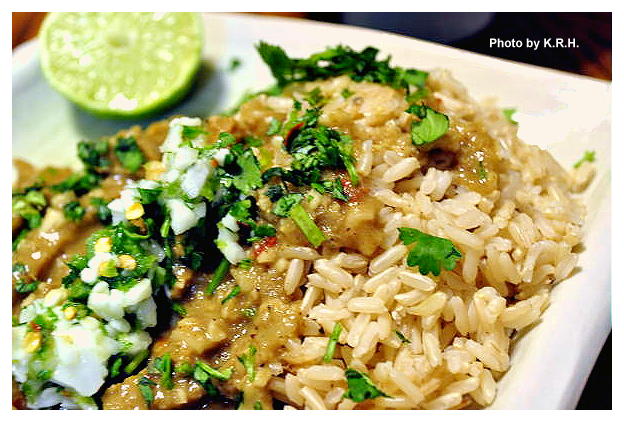
My latest foray into Malaysian Cooking. Curry Kapitan is traditionally made with chicken, and it’s said that the dish recalls the traditional role of the Chinese Kapitan, who was a man of considerable social standing amongst the Malay and Chinese people in old Melaka. Possibly invented by the Peranakans - the Malay-Chinese - to present to the Kapitan or to celebrate his role. It owes it’s flavor to the cultural melting pot of Old Melaka, and to the traditions of Chinese, Malay, Portugese, and Indian cuisine. Of course for my version I used homemade seitan instead of chicken, and decided to use soy sauce for a salty taste instead of dried shrimp paste.


This dish is nothing if not flavorful. The aroma alone is mouth-watering, but the taste... incredible! Though the ingredient list may seem long, this dish actually comes together rather quickly and it is worth every ounce of effort. When I first set out to make this dish I had no idea what to expect, and there were a few moments at least where I thought the whole thing would end in disaster. However when it came time to eat, and I took my first bite of curry Kapitan I was in love. The flavor is so complex that it’s hard to describe, but it has every flavor note you could possibly want in a dish. You can adjust the seasonings to make it as hot or mild as you like, but a little bit of kick is part of what makes this dish so fantastic. Use the chilies as a garnish, with a squeeze of lime and you won’t be disappointed. It tastes even better the next day!


Curry Kapitan with Coconut and Chili Relish 

For the Rempah 

½-1 tsp red pepper flakes
1 large red onion
10 cloves garlic
thumb sized piece of ginger
1 tbsp soy sauce
½ tsp ground turmeric
2 tsp Chinese five spice powder
1/4-1/2 tsp ground cinnamon

For the Curry 

2 Tbsp tamarind paste
Flesh from half of 1 Fresh Thai Coconut (roasted)
2 tbsp peanut oil
1 15oz can coconut milk + 1/3 c water
1-2 Pack Stevia
1 ½ lb Seitan (Homemade or Store bought)

For the Chili Relish 

½ - 1 Jalapeno Minced (Depending on how spicy you want it)
½-1 Red Chili Minced or ½-1 tsp red pepper flakes
½ Bunch Cilantro Minced
Flesh from half of 1 Fresh Thai Coconut
Juice of 1 Lime


To Serve

1 Lime
Extra Cilantro minced
Cooked Brown Rice

- First you must open your coconut. To do this the easiest way is to get a cleaver. It doesn’t have to be a good cleaver, it doesn’t have to be a $500 one, a $50 one will work just as good. Use the cleaver to whack your coconut a couple of times to break through. Drain the liquid out into a bowl or measuring cup and refrigerate to dink later, it’s not needed for the recipe.

- Once the liquid has been drained from the coconut you can split it in half. Use your cleaver and give the coconut a great whack in the middle. If like me you’re not strong enough to get the cleaver all the way through the coconut in one whack, and not skilled enough to keep hitting it in the exact same spot, use a rubber mallet to hammer the cleaver down through the coconut. This works really great, and fast.

- Once your coconut is in half use a spoon to scoop out the delicious white flesh. Once all the flesh has been removed rinse it under cold water and rub any filament away. Pat the coconut dry, and then slice it thin. Reserve half the amount of coconut in a bowl, to use as part of the relish and dry roast the other half in a pan over medium heat until it’s golden brown. Be careful not to burn it. The coconut should emit a slight nutty aroma.

- Once the coconut is a nice golden brown remove it and grind it either in a food processor or mortar and pestle until it resembles corse sugar grinds. Place in a bowl and set aside.

- Now to make the Rempah. In a food processor blend together the garlic, ginger and onion. Add in the soy sauce and pulse to combine. Stir in the turmeric, cinnamon and five spice powder.

- Heat the oil in a large pan over medium-high heat and stir in the rempah. Fry for five to eight minutes until the mixture becomes fragrant.

- Add the seitan to the pan and fry another 3-5 minutes, to let the seitan brown a little.

- Add in the coconut milk, water, Tamarind, stevia and season with sea salt and black pepper. Bring the mixture to a boil, then reduce heat and let simmer for 10-20 minutes. Add in the reserved roasted coconut.

- In the meantime combine all the relish ingredients in a bowl.

- Serve the Curry Kapitan over a bed of brown rice, garnished with extra cilantro, some squeezed lime, and the chili relish.


*** Note - To make this dish Gluten-Free use Wheat Free Tamari and a soy-based ‘meat’ or tofu. To make this dish Soy-Free use Coconut Amino’s instead of soy sauce.***

Monday, June 4, 2012

Indo-Malaysian Shami Kebabs...


Just incase you thought I was finished experimenting with Malaysian cooking, this post it to assure you that I’m not. I’ve just been very busy lately preparing for vacation, so I haven’t been cooking quite as much as usual, and much of the cooking I have been doing has been for the express purpose of cleaning out my fridge before I take off. Before I do however, this dish really needs to be shared!


Even though a Shami Kebab isn’t exactly the sort of kebab we here in the west are used to, they are delicious. Originally of Indian Origin these kebabs are traditionally made from a mix of lentils and ground lamb. They are a popular item at the Malay and Muslim Hawker stalls and are often served alongside a dish or rice, and a sambal, however they are also sometimes eaten as a burger which is sort of how I chose to enjoy mine.


Of course my Shami Kebabs were not made with ground lamb, (Ew!) Instead to get that kind of texture and ‘sticking together’ effect I decided to use two different kinds of lentils, as well as cashews and mushrooms. The end result was so fantastic and delicious that both my husband and I failed to see how the dish could have in any way been improved by the addition of lamb. These kebabs, or patties as they should more accurately be called - are hearty, flavorful, and down right scrumptious. I dare you to eat just one.


Also instead of eating these kebabs with a heavy side or rice, or on a burger bun I decided to slayer them onto a sliced French Baguette, piled with lettuce, tomato, cilantro, mango chutney, and a drizzle of tamarind sauce, and mint yogurt. Now that I think of it a few sliced onions would have gone perfectly on there as well. Next time!


Shami Kebabs 

1/3 C Red Lentils
1/3 C Green Lentils
2 Onions finely diced
10 Garlic Cloves minced
1 Thumb Size Piece Ginger grated
1 Small Green Chili minced (Optional)
6oz Baby Bella Mushrooms finely diced
½ C Cashews Ground into a meal
1/4-1/3 C Chickpea Flour (depending on how wet your mixture is)
2 tsp Curry Powder
1 tsp Ground Coriander
1 tsp Ground Cumin
1 tsp Gram Masala
½ tsp Ground Turmeric
Sea Salt to taste
2-3 Tbsp Earth Balance
½ Bunch Cilantro minced

Optional Garnishes 

Cilantro
Sliced Tomato
Lettuce
Thin Sliced Red or Yellow Onion
French Baguette or Italian Loaf
Mango Chutney

Quick Tamarind Sauce 

2 tbsp tamarind paste
2 packets stevia or to taste
water to thin

Quick Mint Yogurt 

1/4 C Sour Cream
1 Tbsp Lemon Juice
1 Tbsp White Miso
2 Tbsp Water
Minced Fresh Mint to taste
Salt and Pepper to taste

- Rinse Lentils then place them in a medium sized pot and add enough water to cover. Bring to a boil then reduce heat to simmer and cook lentils until the water has absorbed and the lentils are tender. Roughly 20-40 minutes. If your water absorbs before your lentils are tender add more water.

- When lentils have finished cooking drain and set aside.

- Meanwhile melt the Earth Balance in a large pan. Stir in the diced onions, garlic, ginger, and green chili. Saute over medium-high heat for 5-10 minutes until mixture is fragrant and onions are translucent.

- Add in the diced mushrooms, the curry powder, coriander, cumin, gram masala, and turmeric. Saute for 3-4 minutes then add the lentils. Saute another 5-10 minutes until mushrooms are soft and moisture has evaporated. Transfer the mixture to a large mixing bowl and set aside to cool.

- Once mixture is cool enough to handle season with sea salt and pepper and add in the ground cashews, the minced cilantro and the chickpea flour. Thoroughly combine until the mixture becomes cohesive enough to form patties.

- Form the mixture into 10-12 palm sized patties. Place on a lightly greased baking sheet and bake at 400'F for 10-15 minutes. Remove the baking sheet, gently flip the patties over and bake for another 10-15 minutes until the patties are browned and have firmed up. Let cool for 5-10 minutes before serving if serving as a sandwich. It serving with rice serve immediately.

- To assemble your Shami Kebab sandwich. Slice a French Baguette in half crosswise then slice each half lengthwise down the middle so you have two roughly 6inch sandwiches. Slice three patties in half then layer three halves on each baguette. Top with mint yogurt, mango chutney, tamarind sauce, lettuce, tomato and cilantro and serve!


- To make Tamarind Sauce and Mint Yogurt simply whisk the ingredients for the Tamarind sauce in a bowl. Taste, adjust for seasoning and thickness and serve. For Mint Yogurt whisk all ingredients together in a bowl taste for seasoning and thickness and serve.

Monday, May 14, 2012

Hot and Sour Pineapple Seitan Broth...


Everyone has a favorite type of cuisine, it doesn’t matter who you ask, everyone has a favorite. Some might say Italian, and some might say Mexican. Others might say German, or Greek, or Japanese, or Chinese. I love all cuisine’s, and if you asked me to pick a favorite I wouldn’t be able to narrow it down to one specific country, but I could narrow it down to a continent. Asia. Asian cuisine is by far my favorite, if I could eat nothing else for the rest of my life that would be totally fine with me. I love Chinese, Japanese, Indonesian, Korean, Thai, Vietnamese, Cambodian, Malaysian, Nepalese, and Indian food, I love them all. This is the food I grew up on, and these are the types of restaurants I typically sought out when I grew older - not that they were at all hard to find in Vancouver.


Vancouver you see has a huge Asian population. Over 30% of the cities inhabitants are of Chinese heritage, they are the largest ethnic group in the city. Vancouver has the largest Chinatown in all of Canada, and the third largest Chinatown by population in North America. The city also boasts significant Japanese, Korean, Filipino, Vietnamese, Indonesian, Cambodian, and Indian populations. I loved this growing up, and I spent a significant portion of my teenage and early adult years exploring Vancouver’s Chinatown, which still today remains one of my top 3 favorite places in all of Vancouver. I loved going to the night markets, I loved going to hawker stalls, and food stands. I loved ducking into little shops, bakeries and groceries, and I most definitely loved eating in every Asian restaurant I came across. It is amongst these people, and these cultures that I feel most comfortable and most at home. I miss ‘my’ Chinatown all the time, I miss meditating in the Sun Yet Sen Classical Chinese Garden - one of the most beautiful and peaceful places in downtown - something I typically did 2-3 times a week when I wasn’t working. Some weeks I was in Chinatown everyday, usually alone, which is how I preferred it. For some reason I rarely went to Chinatown with friends, these adventures were always solo, that is until I met my husband, and then the two of us would explore together.


My husband, who loves Asian food as much as I do if not more, found Vancouver to be a magical place. Growing up in Chicago and suburban Illinois he wasn’t exactly exposed to the same level of Asian culture as I was. It wasn’t until he attended University in Southern California that he really experienced Asian food proper, particularly sushi for which he has an undying love. I can’t tell you how many Vancouver days and nights we spent stuffing our faces with all the glorious sushi on offer. Sushi bars you see are to Vancouver what Starbucks is to Seattle. No joke, you can’t throw a rock in downtown Van without hitting at least three Sushi Bar’s or restaurants. They are almost literally on every corner, and they are far more populous then either Starbucks or McDonald’s. As my husband said to me many years ago - and has said many times since - “Even the shittiest hole in the wall Sushi bar in Vancouver is better than the best Sushi Bar in Chicago.” - With which after moving here I would have to agree. While after a lot of searching I have found some very good sushi here in Chicago none of it can ever compare to the sushi I enjoyed in Vancouver, which Is why I typically prefer to make my own, but that’s beside the point.


Together we hit up Korean BBQ’s and Vietnamese Pho restaurants all over the city. We chowed down on Thai takeaway, and Indian curries. We stuffed ourselves on fried bananas in coconut milk, and green tea ice cream. More often than not we were the only white people eating in the restaurants we chose, and half the time we couldn’t read the menus - which weren’t in English - and so had to order by pointing at pictures. I miss this a lot, and I definitely miss the food. Even after living here for nearly 5 years I can’t get used to the endless stream of white faces, I feel awkward being part of the ‘majority,’ and I find the lack of diversity in the suburbs suffocating.


I guess it’s because I’ve been missing Vancouver lately that I’ve been making more and more Asian dishes at home. Lately I find myself particularly fascinated by the foods of Malaysia. The cuisine of Malaysia is one of the few Asian cuisines with which I’m not overly familiar, but it’s always intrigued me. Years ago I bought a Malaysian and Singapore cook book but never made anything out of it because at the time I wasn’t very proficient in the kitchen. When I finally developed my skills in the kitchen I’d stopped eating red meat and pork and was only six months away from turning vegetarian. So the book has just been sitting in my closet collecting dust for the past five years.


Traditionally Malaysian food is not particularly vegan friendly. Malaysia is a pretty ethnically diverse place, and religiously diverse as well, with a percentage of the population being Buddhist. So there are vegetarian dishes but many of them call for eggs. Most people might consider this a problem, but not me. These dishes have been calling to me over the past couple of weeks, and once I get curious about something I find it very hard to get my mind off the topic, so I decided I would try and veganize some of these recipes. When it comes to vegan Asian cuisine I find there are a lot of repeat recipes. Anyone can make a vegan curry, or a vegan stir fry. There are recipes abound for vegan won ton, vegan kung pao, vegan fried rice, and vegan tempura. As much as I love all of those things I like a little variety too, and I want to start making vegan versions of more of the dishes I used to enjoy. As well as new dishes that remind me of the tastes, and flavors I loved back in those days.


The first dish I decided to recreate is a simple Nonya dish. When early Chinese traders settled in ports of Penang, Melaka and Singapore beginning in the 15th century, many of them married local Malay woman. These marriages created an ethnic sub-group of Malay-Chinese, which in Malay are referred to as Peranakan. This group was particularly noted for it’s distinctive dress, it’s lavishly decorated homes and above all it’s cuisine. All the meals were cooked by the woman or Nonyas - the Peranakan word for female - and were an inspired blend of both Chinese and Malay traditions. The style of cuisine is very unique, full of flavor and infused with elements of Indian, Thai, Portugese, and Chinese cooking.


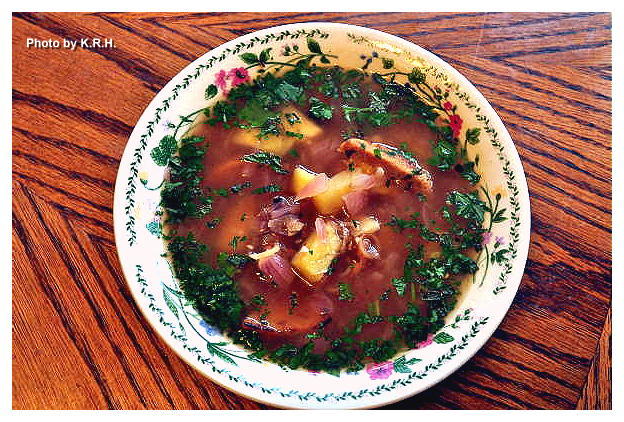
For my first foray into Malay cooking I chose a simple soup dish because It intrigued me, and it inspired memories of many of the sweet, sour and hot dishes I used to enjoy back home. Though the soup is traditionally made with prawns It wasn’t hard for me to decide that seitan would be a perfect substitute. I had some homemade seitan in the freezer that I needed to use, and all the other ingredients I needed were on hand. Though I was initially a little skeptical about how this might turn out I have to say it came out amazing. Really, I enjoyed leftovers of this soup for lunch all week, and it got better and better each day. I highly suggest making it a day in advance and giving it a night to let the flavors develop in the fridge. However it does taste wonderful the first day as well. I really hope you try this delicious soup, and enjoy it as much as I did.


Hot and Sour Pineapple Seitan Broth 

1 Tbsp Peanut Oil
1 Small Red Onion diced
8 Garlic Cloves minced
1 Thumb sized Piece of Ginger grated
1 ½ tsp Red Pepper Flakes
1 lemongrass stalk trimmed and minced or 3 tsp jarred minced lemongrass
2-3 Tbsp Tamarind Paste
1 ½ Tbsp Sugar
1 ½ Tbsp Soy Sauce (or Coconut Amino's)
5 C Water
Sea salt and Black Pepper to taste (Optional)
8oz Seitan (Homemade or Store Bought)
2 C Fresh Pineapple chopped into bite sized pieces
½ Bunch Cilantro minced
Fresh mint leaves, minced to garnish

- First prepare your seitan by slicing it into thin strips.

- Next heat a large pan over medium-high heat and spray lightly with non-stick spray. Add Seitan in batches and fry a few minutes on each side until browned and crispy. When browned on each side remove the seitan to a plate and set aside.

- Heat the oil in a medium sized pot over medium-high heat. Add the diced onion, minced garlic and grated ginger. Saute for 5 minutes until fragrant.

- Add the red pepper flakes, and lemongrass saute another 2-3 minutes until onions become translucent.

- Stir in the tamarind paste and sugar, then add the 5 cups of water. Stir to combine then bring to a boil. Reduce the heat then simmer for 10 minutes.

- Season the broth lightly with sea salt and pepper to taste, and stir in the soy sauce.

- Add the Pineapple and reserved Seitan to the broth and simmer for an additional 5 minutes until the pineapple is soft and both it and Seitan are heated through.

- Add in the minced cilantro and mint leaves. Divide the broth evenly amongst serving bowls making sure each bowl gets a good helping of both pineapple and seitan. Garnish with extra cilantro and mint if desired.

Typically this soup is served as an appetizer because it’s considered an appetite enhancer, however you can also serve this broth over a plate of steamed rice or noodles for a more substantial meal, or eat it as is for a light lunch or dinner. Either way it’s delicious!


*** Note - Soy Free if using Coconut Amino's instead of soy sauce ***

Wednesday, July 6, 2011

Cashew Salad with Tamarind Dressing...


Over the past week and a half I’ve been kept very busy, and so I’m afraid I’ve been a bit neglectful here. There are always articles in the back of my mind begging to be written, always recipes I’m eager to test out, it just so happens that these past few days I haven’t had much time to sit down and do any of it. My birthday was on the 1st of the month, and my husband and I spent the week celebrating as we always do for one another’s birthdays. Movies, dinners out, hanging with friends, going for evening strolls and the like. On the actual day we went out of town for a bit of hiking and then spent the afternoon-early evening exploring Galena, IL, a lovely old historical town. Full of kooky shops and lovely scenic views perfect for photographing. Then of course there was work, and then we had a BBQ for the 4th and then yesterday we spent the entire day at the zoo. An activity I felt extremely conflicted about (more about this In a post to come) though I had a good time. On top of all of that craziness I’ve just recently purchased a stack of new (to me) cookbooks that I’m rather eager to try out, so suffice to say I haven’t been creating many recipes of my own over the past week and a half. Hopefully by the start of next week I’ll be back on track, but in the meantime I did make this delicious Cashew Salad with Tamarind Dressing from a book called Easy Vegan: Simple Recipes for Healthy Eating. So far everything I’ve made from this book has indeed been easy, and so far everything has been tasty as well.

What I really love about this salad is it’s mixture of flavors and textures. You have the wonderful roasted cashews paired with nappa cabbage, and carrot, crisp green onions, and cucumber and the pleasantly sweet mango. The recipe actually calls for dried mango but since I didn’t have any I just used fresh, and I think it worked out beautifully. The dressing was a wonderful blend of sweet and tangy with an interesting yet hard to describe accent from the Szechuan peppercorns. Some would argue that the Szechuan peppercorns aren’t necessary, that it’s just a fancy hard to find ingredient for no reason, but I’m willing to argue that these peppercorns do add a subtle layer to the salad that would be otherwise missed if one were to just use regular black peppercorns. Of course if you don’t care either way about pepper or could care less about subtlety you can always opt out or use regular pepper instead and I’m confident the salad would be wonderful anyway.


So definitely check out this book, for this as well as many other great recipes. I don’t normally buy, like, or even give a second glance to books with titles like "easy...." or "Simple...." that are compilations of recipes with no ‘known’ author, but this book surprised me. It’s definitely worth your pennies.